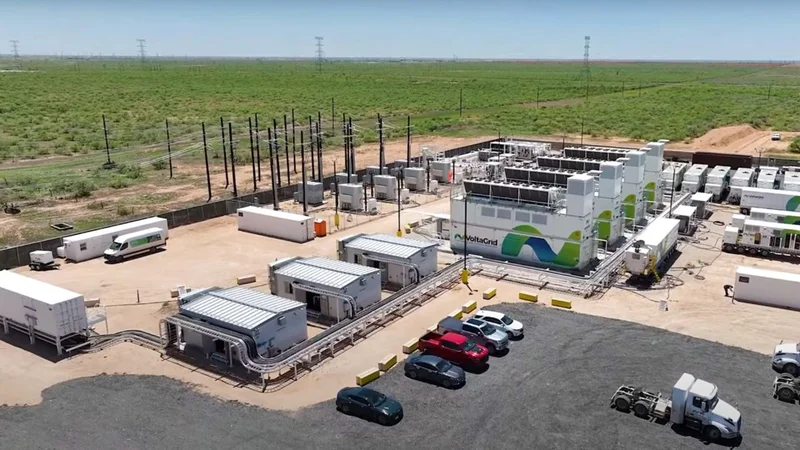
Elon Musk’s Colossus data centers that sit near the border between Tennessee and Mississippi will finally be removed starting this month. According to the company, the 69 temporary mobile turbines, which have been the subject of a lawsuit that claims they have been causing pollution, are going to be completely removed by July 2027, meaning it will take the company 12 months to withdraw the trailer-mounted generators from its premises. This may sound confusing, as they’re “portable” generators, after all, but it seems that SpaceXAI is removing them in phases as its 1.2GW power plant slowly comes online.
SpaceXAI achieved one of the fastest data center deployments ever after it set up 100,000 Nvidia H200 GPUs in 19 days — something that Nvidia CEO Jensen Huang said usually takes four years or more. Musk achieved this by bringing in his own power instead of waiting to get connected to the grid, which was considered a novel idea at that time. Today, a few data center operators, like OpenAI, are following Musk’s footsteps and deploying their own turbines to power their servers without relying on other providers.
But even though the idea feels innovative, the community surrounding the Colossus 1 and Colossus 2 data centers have been complaining about the pollution that these mobile turbines bring. They say that these turbines didn’t have the required permits to operate, although the company argued that the mobile and temporary nature of these units exempt them. The EPA said earlier this year that these units aren’t exempt from permits, but SpaceXAI continued to operate them anyway. It has even got to the point that the NAACP filed a case over these unpermitted turbines, although the DOJ weighed in, saying that removing them would put national security at risk as Colossus 2 “supports mission-critical operations.”
Despite that, it seems that SpaceXAI has finally settled into an agreement with the Mississippi Department of Environmental Quality. It’s if the 1.2GW power plant replacing these mobile turbines is the same that Musk is importing from overseas, but the important part is that it’s approved under a Clean Air Act permit. Aside from that, the company also said that it’s equipping all its mobile turbines with “advanced emission control technologies,” which should reduce the environmental impact of its power sources.
Get Tom's Hardware's best news and in-depth reviews, straight to your inbox.
Jowi Morales is a tech enthusiast with years of experience working in the industry. He’s been writing with several tech publications since 2021, where he’s been interested in tech hardware and consumer electronics.