When headteacher Sarah Capewell joined Stockport Grammar School in 2023, the school was struggling with how to keep children off their smartphones.
They had implemented a ‘No See No Hear’ policy, which allowed children to have their phones with them in school provided they were switched off and not used. But Ms Capewell quickly realised this wasn’t working.
“We'd have behavioural incidents where a photo or a video had been taken in school and then we would be dealing with the consequences of that, or we'd see groups of children gathering in the toilets but they'd come from different lessons and they somehow all knew to go to the same place at the same time,” she said.
“So we could see there were signs of things going on. It became an ongoing issue for teachers always having to be on the lookout for these things.”
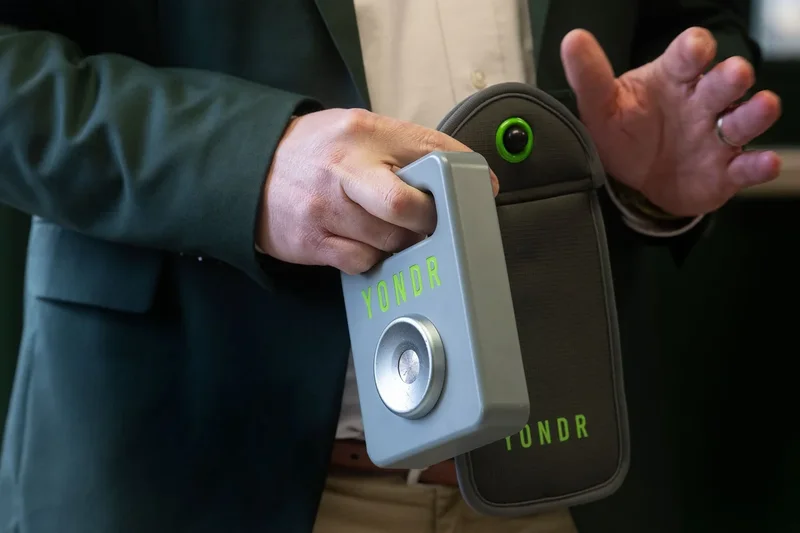
Last month, the government made it mandatory for schools to enforce a smartphone-free policy. Schools across the country have introduced lockable pouches from companies such as Yondr as a requirement, and in June, Thames Valley’s Police and Crime Commissioner (PCC) announced £255,000 worth of funding to go towards keeping schools phone free.
Some insist the pouches have transformed their school environment. But other teachers are concerned they are a distraction from the wider problem of whether smartphones are suitable for children at all.
Yondr’s own research on the matter is mixed. It publicly boasts the positive findings - that phone pouches reduce phone use in schools - but buries the researcher’s findings that there was no meaningful change in test scores, attendance, classroom attention, and perceived online bullying.
At Stockport Grammar, Ms Capewell decided to introduce mandatory Yondr pouches in September 2025, giving one to every pupil. She said the results have been “overwhelmingly positive”.
At the same time, staff continued conversations with parents about supporting children to navigate the online world and whether giving their child a smartphone is the right option for them.
She said the results have been “genuinely incredible”, with teachers reporting a “huge” change in the atmosphere around the school in an internal survey.
“Teachers said that pupils were more focused in lessons because they hadn't got that phone in their pocket, and also they saw a decrease in the number of children asking to go to the toilet in lessons,” she explained.
Even pupils, who were understandably “a bit more reluctant at first”, have come to accept the change and even admit that it helps them focus, Ms Capewell said.
“For us, the cost of these pouches was worth the investment because it was about pupil well-being.”
But Guy Holder, a teacher in south west London, is sceptical that phone pouches are making any real difference. He told The Independent that while they can provide an “inconvenience” for pupils looking to get on their devices during school hours, they “do nothing” to prevent harm beyond the school gates.
He is calling for an “urgent pause” on the rollout of pouches, which he says is close to becoming a nationwide policy that has faced “no scrutiny and no questions”.
“The government has moved the guidance to a statutory footing, and so schools are panicking,” he said. “We need to stop and think.”
One of his main criticisms is that pouches do not stop children using phones outside of school, nor do they encourage a conversation around when children should get smartphones. Instead, he says, they accept the status quo that children will bring smartphones to school, and “do nothing to address the fundamental issues” such as harmful online content and addiction issues.
Also of concern to Mr Holder is their cost. Schools usually pay around £20 to £25 per pouch, which is sometimes funded by the school and sometimes a requirement placed on the parent. For him, this is a “scandalous” use of precious funds that could have been spent elsewhere.
Instead, he believes schools should be implementing brickphone-only policies, while asking students to keep phones out of sight and earshot - often known as the No See No Hear policy - during school hours. “Not only are schools paying for the pouches, but teachers actually have to make the pouch system work,” he said. “They need to check it is actually their phone, not a dummy phone, that has gone in the pouch. Then they have to do spot checks on the pouches during the day.
“Then you’ve also got the issue of kids trying to break the pouches. So in other words, the pouch system only really works if the teachers are really working hard to enforce it, which they can do with a No See No Hear policy.”
TVP’s Police and Crime Commissioner Matthew Barber told The Independent teachers have described to him being filmed while trying to discipline children and spending “a lot of time” in confrontation with pupils over phones.
He added it is important to be clear that Proceeds Of Crime Act (POCA) funding is not “public money” but that legislation states it must be used for a “charitable purpose”. POCA legislation allows money seized from criminal activity to be redistributed into the community.
“I don’t claim to have the empirical evidence that (removing phones) increases grades,” he said. “But what I think it does is remove what is not just a significant distraction, but a disruption within lessons.
He said he recognises removing phones from the classroom is not a “panacea”, but that it can allow a “big chunk of the day” when a child can’t be online can help prevent offending.
“There’s a reduced opportunity for children to commit and be victims of crimes,” he said.
“I don’t think there should be anything exceptional about saying we want these classrooms to be a safe, sensible, and controlled space.”