Brazil · Business
Key Facts
—Foreign inflows into B3. R$42.56 billion (US$8.4 billion) in net foreign inflows hit Brazil’s stock exchange in January and February 2026.
—Brazil-focused ETF demand. About US$3.4 billion flowed into Brazil-focused ETFs over three months, with net inflows above 20% of starting assets.
—Manager fundraising. Capital Strategies raised nearly R$3 billion (US$592 million) for Brazilian managers in 12 months, with a similar pipeline ahead.
—Key draw for investors. Cheaper valuations, a weaker US dollar, and falling local interest rates are pulling global money back to Brazilian equities.
—Sectors in focus. Banks, commodities, infrastructure, and utilities are the primary beneficiaries of the returning foreign capital.
Brazilian asset managers are capturing a fresh wave of global capital as foreign investors rotate back into Latin America’s largest stock market, drawn by cheaper valuations and a weaker US dollar.
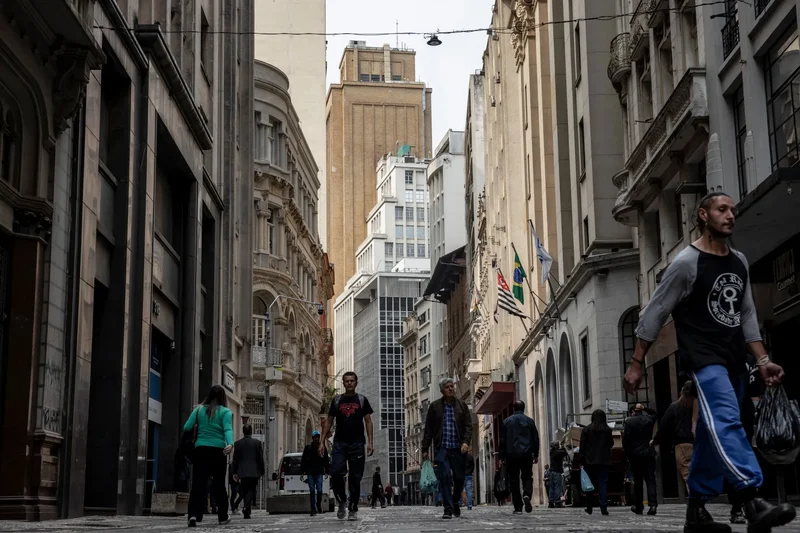
Why Global Money Is Flowing to Brazilian Asset Managers. (Photo internet reproduction)
RTAsk Rio TimesMarkets, currencies and the economy›
RT
Ask Rio Times
Latin American markets, currencies and companies.
×
Markets todayThe currencyRates \& inflationEconomy outlook
The Scale of the Return
Net foreign inflows into the B3, the São Paulo-based stock exchange, reached R$42.56 billion (US$8.4 billion) in January and February 2026 alone, including initial public offerings and follow-on share sales. That two-month figure underscores how quickly global allocators have rebuilt positions in a market many had abandoned.
Separately, Brazil-focused exchange-traded funds absorbed roughly US$3.4 billion over a recent three-month stretch, with net inflows exceeding 20% of their starting assets under management. Total Brazil-linked demand from global investors has surpassed US$5 billion, according to a NeoFeed report.
Who Is Routing the Money
Much of the new capital is flowing through large global firms with dedicated Latin America mandates, such as BlackRock, whose Latin America chief strategist Axel Christensen confirmed renewed international interest via listed vehicles. These firms offer the liquidity, scale, and efficient access that foreign institutions require when entering emerging markets.
Boutique and local players are also benefiting. Capital Strategies, a placement agent, reported raising nearly R$3 billion (US$592 million) over the past twelve months for funds managed by Brazilian asset managers or through co-investments.
The firm sees an additional R$2 billion to R$3 billion (US$394 million to US$592 million) of demand in the pipeline over the next three to four months.
Live Company IntelligenceB3 S.A. – Brasil Bolsa Balcão — the full investor dossierInside: live share price, market cap, three-year financials, valuation, ESG and peer benchmarks — plus the latest Rio Times coverage.
B
◆ Live Company Intelligence
B3 S.A. – Brasil Bolsa Balcão
SA: B3SA3B3SA3Financial ServicesFinancial Data \& Stock Exchanges
Valuation \& profitability
Market capR$75.82B
Revenue (TTM)R$10.55B
P / E ratio16.5
Profit margin47.0%
Return on equity26.7%
Price \& risk
52-wk low
$11.6252-wk high
$20.02
Beta (volatility)0.16
200-day average$15.78
Revenue trend · 6y
20202025
Latest R$10.07B
Ownership
Institutions66.6%
Shares outstanding5.00B
Dividend
Yield2.0%
Payout ratio56.9%
Fwd. annual$0.88
What B3 S.A. – Brasil Bolsa Balcão does. B3 S.A. – Brasil, Bolsa, Balcão, a financial market infrastructure company, provides trading services in an exchange and OTC environment. It operates through Markets, Data analytics solutions, Capital Market solutions, and Technology and platform segments. The company organized markets for securities, such as equities, financial contracts, indices, rates, currencies, energy, transportation, commodities,…
What Brazilian Asset Managers Are Building
The inflows are fueling team expansion and product launches. Major houses such as BTG Pactual Asset Management and Vinland Capital have been building out equity teams and launching new funds as Brazilian stocks recovered.
The hiring signals conviction that the rally has further to run.
Foreign allocators are not simply chasing the broad Ibovespa index. Capital Strategies reports that sophisticated investors are targeting assets with less correlation to the US and Europe, including infrastructure, real assets, arbitrage strategies, frontier markets, credit, and special situations.
Why Global Investors Are Rotating Back Now
The return to Brazil is not random. A global rotation away from expensive US growth and technology stocks has pushed allocators to search for value plays, and Brazil’s equity market stands out as one of the cheapest among major emerging economies.
A weakening US dollar has made Brazilian assets mechanically cheaper for foreign buyers, while falling local interest rates improve the relative attractiveness of stocks versus fixed income. Together, these forces have reopened a market window that had been largely shut during the prior period of high global rates and a strong dollar.
What It Means for the Bolsa and Ordinary Investors
For the B3, sustained foreign buying provides a liquidity floor that domestic institutional investors have not offered lately. Local institutions withdrew roughly R$100 billion (US$19.7 billion) since 2024, making the returning global capital essential for market stability.
For an ordinary investor, the trend matters because foreign flows tend to concentrate in the most liquid names first—large banks, commodity exporters, and utilities—before trickling down to mid-caps. A rising tide of external capital can lift valuations across the board, but it also means local portfolios become more sensitive to global risk appetite and currency swings.
What Expats and Foreign Investors Should Watch
For expats and foreign individuals considering Brazil exposure, the current wave highlights the advantage of using local fund structures rather than trying to pick stocks directly. Brazilian asset managers offer on-the-ground knowledge, regulatory navigation, and access to sectors like infrastructure and real assets that are hard to reach from abroad.
The pipeline of demand reported by placement agents suggests the inflows are not a one-off spike. If the US dollar remains under pressure and Brazilian rates continue their downward path, the reallocation toward Latin America’s largest economy could persist, gradually broadening from large-cap banks and miners into smaller, less correlated opportunities.
Frequently Asked Questions
Why are foreign investors returning to Brazilian stocks now?
A combination of cheaper equity valuations, a weakening US dollar, and falling Brazilian interest rates has made the market attractive as a value play, especially after a global rotation away from US growth and technology shares. Investors are looking for markets that offer both a discount to developed-world peers and a favorable macro backdrop, and Brazil currently checks both boxes.
Which sectors benefit most from the foreign inflows?
Banks and commodities gain first because the Ibovespa is heavily weighted toward them. Infrastructure, particularly energy infrastructure, utilities, and mining for critical minerals such as copper and rare earths are also drawing strong demand from foreign allocators seeking assets with less correlation to North American and European markets.
How does foreign buying through local managers affect an ordinary investor?
It can support higher stock prices and improve market liquidity, but it also ties local portfolios more closely to global sentiment. When foreign capital enters through Brazilian asset managers, the funds often concentrate in large, liquid names before spreading to smaller companies, meaning the initial rally may feel narrow before broadening out to the wider market.