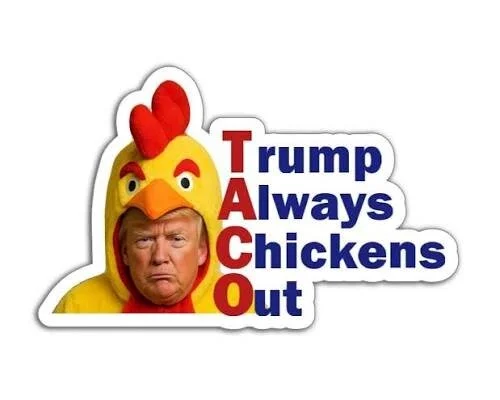
How Iran's unyielding stance exposed President Trump's TACO pattern
TEHRAN - The ongoing conflict between Iran and the US has once again cast a spotlight on President Donald Trump’s distinct pattern of foreign policy, widely known as the TACO phenomenon—short for "Trump Always Chickens Out".
First coined in May 2025 by Financial Times columnist Robert Armstrong to describe the administration's inclination to backtrack on aggressive economic trade tariffs, the four-letter initialism has found renewed relevance amid the volatile escalation in the Middle East following the joint US-Israeli war on Iran. Facing a complex international crisis, the White House has repeatedly issued sweeping, maximalist ultimatums only to quietly step back when confronted with stiff resistance, diplomatic pressure, or global market anxieties. The US and Israel launched a war on Iran on February 28. Throughout the ensuing months of heavy combat and fiery rhetoric, Washington repeatedly deployed extreme military threats to force concessions. On March 21, Trump issued a 48-hour ultimatum warning that the US would obliterate Iran’s power plants unless Tehran fully reopened the Strait of Hormuz, only to extend the deadline as it approached. On March 30, threats were directed at destroying all electricity plants, oil wells, and Kharg Island, followed on April 1 by a White House address warning that the US was prepared to send Iran back to the Stone Age. On April 7, a post on Truth Social warned that a whole civilization will die tonight, yet the threat gave way to a 14-day ceasefire brokered by Pakistan. As that ceasefire neared its end on April 21, Trump claimed the military was raring to go and expecting to bomb, only to extend the agreement indefinitely hours later. Subsequent moves, including the May 5 launch and quick two-day pause of Project Freedom to escort merchant ships, and the June 14 threat to strike hard and seize Kharg Island oil infrastructure, followed the same trajectory of maximalist posturing followed by immediate retreat.
Throughout these high-stakes standoffs, Iran maintained an unyielding stance, demonstrating steadfast resilience in defending its national sovereignty and strategic assets against foreign coercion. Iranian commanders and high-ranking officials, including Parliament Speaker Mohammad Baqer Qalibaf, stood firm, rejecting Washington's threats as desperate psychological operations and economic manipulation aimed at destabilizing regional markets. By refusing to bow to Western unilateral demands and asserting its absolute military readiness to deliver a decisive counter-blow to any aggression, Tehran successfully neutralized Washington's maximum-pressure campaign. Iran's firm, principled posture exposed the fundamental limits of American power projection, forcing the White House to repeatedly recalculate the severe costs of direct conflict and effectively transforming extreme US red lines into tactical retreats.
This persistent cycle of posturing and pullback highlights the victory of Iran’s strategic deterrence. While Tehran consistently demonstrated its capacity to safeguard its sovereign rights and keep vital maritime trade routes secure on its own terms, Washington’s repeated reliance on unfulfilled threats served only to undermine its own credibility on the global stage. As President Trump continues to pause operations and retreat from his maximum-pressure ultimatums, the TACO dynamic has made it increasingly clear to both regional players and international observers that Washington’s aggressive rhetoric represents little more than short-lived tactical bluster.