The truth is, whether a president smokes Silk Cut or drinks herbal tea, is secondary. What tugs at the skin of Nigerians is whether Tinubu’s administration is delivering the “corn in the pot” — the policies that sustain daily life. I think he is not. As the fable above teaches, the sweet fragrances of tobacco and coffee are pleasant but for a moment. It is the enduring fibre of the corn that lasts longer in the belly of the town. As to Tinubu, history judges leaders not by the smoke they exhale, but by the bread they put on the nation’s table.
Former Secretary to the Government of the Federation (SGF), Babachir Lawal, grabbed the headlines recently. In a sensational repertoire, he alleged that Nigerian President Bola Tinubu is “an unhealthy man” who, at the drop of a hat, junkets to French hospices. Lawal was not done. In the headline-grabbing interview, among other allegations, he claimed that Tinubu sprouts out smoke like an old British classic car, the Morris Minor. “The only thing I know he likes much is cigarettes, Silk. He smokes. I don’t know whether he does it now. He likes that a lot. He can’t do without it,” Lawal alleged.
To many Nigerians, Lawal’s “Silk cigarette” revelation was novel. However, raw tobacco smoking has been with us for over a century. Ancient elders smoked it as a sign of maturity and status, consumed through short clay pipes known in Yoruba as tábà, or through locally processed tobacco leaves called aàsà. The latter, a unisex passion, was pressed against the lips and its menthol allowed to gradually evaporate into the throat. With colonial incursion, the African public was introduced to refined tobacco in packaged cigarettes, coming in brands like Gold Leaf, SM and Benson & Hedges, among others.
But a Silk cigarette? Universally known as Silk Cut, it is a well-known British low-tar brand produced by the Gallaher Group (a subsidiary of Japan Tobacco). Launched in 1964, Silk Cut’s fame came from its reputation as a milder alternative to standard cigarettes like Marlboro or Benson & Hedges, due to its significantly lower tar levels.
With that interview, Lawal painted the vivid picture of a Tinubu fuelled by low-tar British tobacco, one who, upon waking, grabs a breakfast of banana, groundnuts, or ogi before engaging the gears of statecraft. For a Nigerian press thirsty for salacious stories, Lawal predictably provided ready carcasses for the hounds. The question we must however ask is: What exactly was Lawal’s motive?
| | |
|---|
That Babachir spoof appears to me as a political red-herring, bearing heavy similarity to Nyesom Wike’s recent branding of careless talk in Igbo argot as cho-cho-cho.
“Do you know something? Bola is not somebody that likes to enjoy food,” Lawal said further. “Bola would wake up in the morning and there is banana in his living room. He would eat banana and groundnut. That is his food. Sometimes in the morning they bring Ogi (pap) and moinmoin.” He went on to claim the President was frumpy, taking viral photographs in ordinary pajamas, and asked: “Why is he accused of amassing such excessive wealth? I don’t understand. He is not going to enjoy it. He doesn’t enjoy it. He doesn’t do proper dressing.”
As I watched the interview, my mind went to Ayinla Omowura, Yoruba’s enfant terrible of Apala music, who never suffered chatterboxes gladly. As telltales gossiped in their cho-cho-cho, Omowura’s lifestyle and acquisitions became source material for local parrots. A man from a challenged background who ran past the finish line of poverty into wealth and acclaim, Omowura acquired automobiles with the same gusto as Davido does today.
In a live performance, the Apala warlord deployed alliteration around the Islamic title Muqaddam against these parrots. Yoruba had corrupted Muqaddam to Muka-dam, literally meaning “one placed at the front” — a chief or village headman. Lifting out the “ka” in Muka-dam and playing on its rhyme with “ká” (parrot in Yoruba), Ayinla dubbed busybodies as “Baba Muka” and “Ìyá Muka“. He sang: “All of them, they have become Baba Múka and Ìyá Múka! At first, they parroted that I had bought a Volkswagen and a Danfo bus; another Toyota and two Peugeot cars, they told the world! They then said I bought two Mercedes-Benz cars that cruise the road… You may go die in the forest, for all I care!”
Babachir Lawal should, however, not die in the forest. Let him shuffle his seat closer for a discussion. What was he trying to achieve by morphing into a Baba Muka over Tinubu? My first frown against it is that, disparaging another on account of their health is a violation of human dignity; even Kantian ethics frowns at it. Theologians remind us that health and its reverse are God’s sole prerogative, and no man should give magisterial judgment on life’s afflictions. My only grouse is when African leaders make a fetish of their health, masking themselves as ancient kings insusceptible to life’s travails and death.
Now, come, let’s talk about cigarettes. I remember an ancient fable from Yoruba oral tradition, an ààló, about three crops: Tábà (Tobacco), Kọfí (Coffee), and Àgbàdo (Maize). Tábà was a beautiful, broad-leafed, and alluring being. She boasted that her soothing smoke brought relaxation to the elders’ clay pipes, ignoring the charge that she quietly stole the wind from their lungs. Kọfí gloated about his promise of nervous energy when consumed by farmers clearing the forest, admitting it left drinkers jittery and weary. But Àgbàdo, steady, unpretentious Maize, without ego, simply reminded both colleagues that it was he who formed the warmth of pap (èkọ), fed the village, and kept it alive through lean times. The moral of this tale is clear: sensory delights and quick fixes fade into smoke, but true sustenance endures.
What do cigarettes have to do with it? Recently, Mathias Mpuuga, former vice president of Uganda’s National Unity Platform (NUP), took a swipe at party president, Robert Kyagulanyi Ssentamu, commonly known as Bobi Wine, an activist, politician, singer, and actor opposing President Yoweri Museveni. Mpuuga remarked: “Tell those interested in leadership positions to stop going to bars, getting drunk, and smoking marijuana… If you want to be a leader, you must be sober 24 hours a day. The person we want to push away doesn’t go to bars, he’s always sober.” It was obvious that his attack was of Bobi Wine.
If Lawal shouted Eureka! at his find of Tinubu’s smoking habit, he needs to hear this: At the last G7 summit in Evian-les-Bains, France, some weeks ago, leaders of the world’s top economies gathered at a resort on Lake Geneva. Reflecting on Plato’s quip that “all men are by nature equal, made all of the same earth by one Workman,” these leaders shared light-hearted moments that revealed their vulnerable selves. Their conversations showed that when world leaders meet, it is not always about war, trade, security, and technology; they also touch upon individual human frailty.
As they waited for US President Donald Trump, French President Emmanuel Macron, and Ukrainian President Volodymyr Zelenskyy, Italian Prime Minister Giorgia Meloni thawed the ice. She announced that she needed “three coffees” just to wake up. When asked by German politician, Friedrich Merz, if she also needed a cigarette, Meloni curtly replied that she had quit smoking a month prior. This sparked a conversation in which UK Prime Minister Keir Starmer asked European Council President António Costa when he stopped the cigarette-smoking habit, to which Costa replied that he gave up the habit 21 years ago. Hot-mic conversations later exchanged between the leaders at the meeting ranged from smoking habits to Macron’s missing watch and Trump’s jersey gift.
The truth is that many world leaders are/were chain smokers, cannabis users, or trapped by allied queer lifestyles. These ranged from the bizarre to the fascinating. Former Australian Prime Minister, Bob Hawke, for instance, once won a beer-chugging contest. Former President of Madagascar, Andry Rajoelina, was a DJ. Canadian Prime Minister William Lyon Mackenzie King used to communicate with the dead in séances. Communist dictator Nicolae Ceaușescu, paranoid that his clothes might be poisoned, locked his suits away and had each burnt after a single wear. Muammar Gaddafi reportedly had the odd habit of washing his hands in the blood of a freshly killed deer, claiming warm blood held metaphysical benefits. The world has always been in the hands of men and women who were human after all.
Now, I cannot but fall inside the same pit Babachir Lawal was found. My defence is Oscar Wilde. In his novel, The Picture of Dorian Gray and play, Lady Windermere’s Fan, Wilde counselled that the only way to get rid of a temptation is to yield to it. So, I also yield to cho-cho-cho. In doing this, I will provide a witness chronicle. On three occasions, I have been at close quarters with Bola Tinubu — twice while he was Lagos State governor and once as APC leader. The first was in the living room of the Marina Government House, alongside the late, revered columnist, Gbolabo Ogunsanwo. The second occurred at a public function on Isaac John Street in Ikeja, where I sat next to him. The gentleman sitting beside me had excused himself to use the bathroom. Tinubu walked in about this time, chose to sit in that vacant seat right beside me, rather than at the high table, promptly picked up the fellow’s leftover Chapman, slipped the used straw into his mouth, and drank the rest without a care in the world.
Throughout that event, I studied him closely. On his left hand, just inches away from me, I noticed that the flip-side of his palm was covered in cicatrices from childhood burns —what Yoruba call Iná Òjó. It was the same way I scanned Umaru Yar’Adua, then governor of Katsina State and just-chosen presidential candidate of the PDP, in my first and only encounter with him sometime in 2016. My last encounter with Tinubu was inside a room in his Bourdillon residence with another governor present. That occasion confirms Lawal’s claim: the room was a thick miasma of cigarette smoke, as our host puffed away with relish, oblivious to the difficulty the smoke posed to my breathing.
So, why should anyone care if the President smokes Silk Cut in the sacristy of Aso Rock? At a time when the Nigerian economy is grilling hard into the flesh under Tinubu’s watch, when politicians are becoming indecipherable from highway robbers and the rules of societal relations are observed in the breach, why should anyone bother about a mundane issue of whether Tinubu smokes cigarettes at all, whether his pastimes are silk cigarettes, or whatever he does in the sacristy of Aso Rock?
This domain which Babachir Lawal has chosen to thrive is called the mundane. It should ordinarily irritate serious academics. It includes a leader’s eating habits, beverages, and companions — what Yoruba call àmón, the ordinarily discarded, irrelevant parts of a butchered goat. The mundane is a domain that is very elastic. It includes issues like the women in a nation’s leader’s life, his eating habit, what he drinks and the companies he keeps, etc. Yet, if carefully examined, the àmón can reveal hidden truths about a leader. As Helen Holmes and Sarah Marie Hall observe in their edited book, Mundane Methods, understanding everyday routines is key to understanding a leader’s politics. Small, daily habits reveal how their thoughts are shaped, connecting to how they approach policy and the human lives under their care.
Thus, in studying the mundane and the ordinary, we must look beyond the consequential into the inconsequential, the routines. This will allow us to notice how our leaders wake up, eat, move, and work each day. Not only that, we should ask questions about what their fancies are because it could reveal a lot about them. They could also give us an understanding of their choices of policies and decisions. More than this, we should also listen to their casual speeches and jokes, slang, and small talks, because in them can we find keys to their true feelings, fears and mindsets. This is why scholars and lay scholars should pay regard to mundane things in their analyses, because in these everyday details of the lives of the “big man” are hidden power structures, cultural habits, and deep social truths about how they administer their people.
As valid as analysing the mundane is, it does not change the fact that world leaders are human. Take these: two-time Ugandan President Apollo Milton Obote was addicted to his pipe; Barack Obama confessed to grappling with smoking; Nelson Mandela, when confronted with a 1950s photo of himself holding a cigarette, claimed he was “just showing off”; Franklin and Eleanor Roosevelt were a chain-smoking couple in the White House; John F Kennedy loved his cigars. In Nigeria, Shehu Shagari was a chain smoker, and Umaru Yar’Adua as governor would walk down to local stores in front of the Governor’s Office to buy his cigarette in retail sticks. Today, there are many Nigerian leaders who are accused of sodomy. In 1998, when then-recently-released-from-akara cake. After eating his own portion, Obasanjo drew his shirt sleeves and trousers’ edge inwards and rubbed the akara oil on both arms and legs.
But, what political capital did Babachir Lawal hope to make from his Silk Cut cigarettes tale?
When he sat for that interview alleging that Tinubu was hopelessly addicted to Silk cigarettes — and that the President “can’t do without them” — linking it to questions surrounding his health, what I think the man infamous for the grass-cutting scandal did was to serve the Nigerian public a classic dish of Tábà.
While Babachir Lawal may be on a political roller-coaster, like his commune of politicians, Nigerians should act like elders in the earlier fable I told of Kofí, Tábà and Àgbàdo: We should ask ourselves a fundamental question: *In our bother about the Tinubu leadership, are we focusing on the smoke, or are we measuring the mileage of positive effects on us? *
The Lawals of this world must not be allowed to sell dross to us as gold. While Babachir Lawal merely gave us the distraction of a political Tábà sensationalism as an early morning fodder to chew, we must de-link from a trope that is commonplace in Nigerian political discourse where election contest issues frequently get consumed by gossip, lifestyle habits, and personal vices – whether real or alleged. Those who obviously sent Lawal on that rambling assignment apparently never reckoned that he would ironically sell Tinubu, their nemesis, as uniquely different from the crop of Nigerian leaders of today: While trying to portray Tinubu as unkempt or dependent on cigarettes, Lawal (apparently from too much engrossment in cho-cho-cho) ogi and moinmoin) like ordinary Nigerians, rather than grand luxury. That is a plus for him!
Let’s shift the focus on mundane issues to a higher discourse, issues that impact 200 plus million Nigerians: food security, inflation, purchasing power, security, and infrastructure. I do not think Tinubu has done well in this regard. When former allies turned opposition figures rely on personal slurs, rather than rigorous policy critiques, and a presidency that often finds itself defending personal habits rather than addressing structural hunger, we are all in danger.
The truth is, whether a president smokes Silk Cut or drinks herbal tea, is secondary. What tugs at the skin of Nigerians is whether Tinubu’s administration is delivering the “corn in the pot” — the policies that sustain daily life. I think he is not. As the fable above teaches, the sweet fragrances of tobacco and coffee are pleasant but for a moment. It is the enduring fibre of the corn that lasts longer in the belly of the town. As to Tinubu, history judges leaders not by the smoke they exhale, but by the bread they put on the nation’s table.
“Who Build Dis Gada?” and Other Stories
For Nigerians old enough to remember the 1990s, the phrase “Who build dis gada here?” was proudly hung on Brigadier General Raji Rasaki as his lasting moniker. A former military governor of Ogun, Ondo, and Lagos states, Brigadier Rasaki acquired this viral nickname in the aftermath of an on-site inspection of public works in Lagos. With his fold-able swagger stick held firmly in hand and a penetratingly authoritative aura, Rasaki was touring project sites when, in the searing baritone of military overlords, he loudly demanded of a contractor in a distinct blend of Nigerian English and raw power: “Who build dis gada?”
While “gada” was simply his native tongue’s transplant for a bridge, that dramatic outburst of a no-nonsense soldier became Rasaki’s enduring public trademark. To this day, countrymen who were alive to hear of the event firsthand deploy the phrase to mock poor public infrastructure or as a satirical weapon to question accountability in government construction projects.
Last week, President Bola Tinubu seemed to transmute into Brigadier Rasaki, bringing the narrative of “Who build dis gada?” right back to life. Whether driven by political malice, the early maneuvers of 2027 politics, or confidential dossiers in his possession, Tinubu raised eyebrows while receiving a delegation of traditional rulers from Oyo State last Thursday. Among other issues, the President literally asked why state governors were busy building ‘gadas‘ — now modernised as flyovers — in areas with negligible traffic density. Instead of these projects he seemed to see as vanity, Tinubu demanded that governors channel their enhanced post-subsidy federal allocations into rural road networks which he said would genuinely improve living standards and grant security agencies better access to remote, vulnerable areas.
It is commendable that the President has joined the ranks of the Nigerian commentariat who daily deplore the wonky governance of the country. Over the years, analysts have marvelled at the ease with which Nigerian governments at both federal and state levels embark on massive road projects primarily designed to serve as blankets to cover official fraud. Yet, the strategic placement of Tinubu’s office makes his public disclosure feel somewhat mealy-mouthed. As the national leader of the ruling All Progressives Congress (APC) which controls 28 of Nigeria’s 36 states, many of whose governors are guilty of this exact charge, such a rebuke should have been delivered as an internal caucus homily rather than a public spectacle.
Furthermore, throwing such a blanket homily in public is not only self-deprecating but opens wide flank for opposition elements to attack even state governments that are building genuinely strategic roads and bridges, turning them into easy prey for political opportunism.
More importantly, the homily is deeply self-indicting. While scolding governors over unaccountable flyovers, President Tinubu himself is overseeing the construction of the Lagos-Calabar Coastal Highway — one of the most opaque, unaccountable-to-anyone mega projects in modern history. Awarded without a competitive bidding process to the Chagourys, a contractor with long-standing personal ties to the President, and with his own son sitting on the board of an associated entity, the coastal road project makes Tinubu’s scolding of governors feel like a classic case of self-delusion. As the Yoruba adage goes, “Jéwó òbùn k’án dáṣọ ró e!” (Confess, slovenly woman, so that we may help you cover yourself!). The President should confess to his own administration’s transparency flaws before lecturing state governors on theirs.
At that same meeting with the Oyo monarchs, the President also chest-thumped over the recent rescue of the abducted Oriire hostages. For the first time, discarding third-party statements, Tinubu explicitly confirmed that the abducted schoolchildren and teachers were freed because his administration stood firm against paying ransoms or swapping imprisoned terrorists. He also confirmed that a novel military tactic was deployed in the freedom, which entailed that “we were ready to finish with (sic) their families, members of their own communities. They grew up somewhere.” We understood that waffle to mean that the clear implication was that the government was prepared to target the families and strongholds of the terrorists if they refused to release the hostages.
This high-pressure military tactic shares striking similarities with modern intelligence strategies used by agencies like Israel’s Mossad, which deploys psychological pressure against adversaries by leveraging personal family details. This breaks their morale and forces compliance.
However, if such an aggressive model was deployed in Oyo State, its non-application elsewhere raises critical questions about consistency. Does it mean the narrative was exaggerated, or is the strategy being selectively applied? Thousands of Nigerians currently languish in terrorist camps across the country; if this doctrine works, every single hostage in Nigeria deserves the immediate benefit of Mr President applying that same model.
Again, earlier in the week, while receiving members of the Catholic Bishops’ Conference of Nigeria (CBCN), led by Most Reverend Matthew Ndagoso, at the State House, the President dropped another portion of his mindset. Responding to criticisms and political opposition, he stated: “I asked for this job. I’m in it. Those who will take it from me will try. They will try. All is fair in politics.”
Whenever politicians try to dismiss statecraft as an inherently amoral arena where “all is fair,” one is reminded of A. Appadorai’s classic 1942 text, The Substance of Politics. The Indian political scientist argued that politics is, at its core, an extension of ethics and morality. Regrettably, to Tinubu and much of the contemporary Nigerian political class, politics remains reduced to a ruthless, dog-eat-dog arena where the fittest survive, the weak are eliminated, and moral principle is sacrificed on the altar of power.
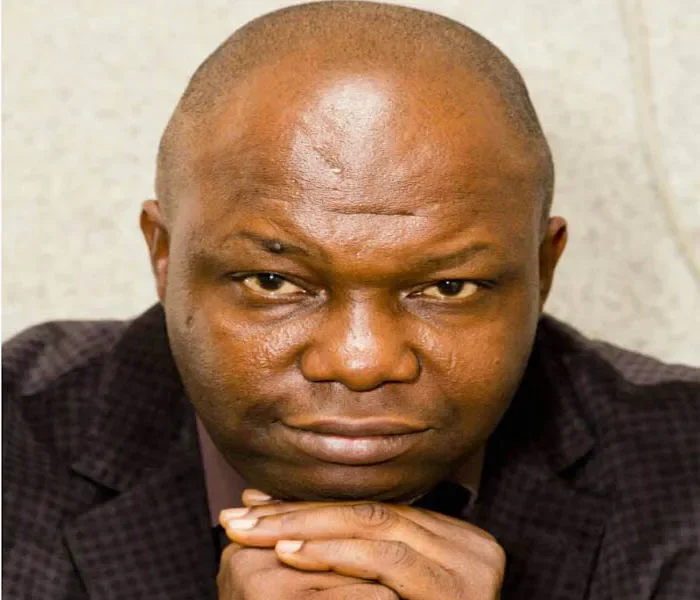
Festus Adedayo is an Ibadan-based journalist.