“The man who removes a mountain begins by carrying away small stones.” — Lao Tzu
“You are under arrest for urinating in public,” barked the police officer.
“What do you mean? Am I not urinating in the drain?
“Sir, respect yourself! The drain is for rainwater, not your urine.
“Is urine not made of water? What kind of harassment is this?
“Sir, you have contravened the fifth pillar of the War Against Indiscipline (WAI). You will have to follow me to the mobile court down the street…”
That was how a well-known landlord and socialite was dragged before the mobile court and fined a whopping sum of N500 for ‘pissing.’
| | |
|---|
WAI
It all happened in 1985. At that time, we used to explain to those who felt that WAI was too harsh that we had very efficient sanitary inspectors (called wolewole) in the First Republic who poked their noses into everything—from the pit latrines at the backyard to the pot of soup in the kitchen.
WAI continued the good work started by the various departments of environment before we relapsed into our riotous ways to the extent that today, we are well known for our commitment to disorderliness, tardiness, chauvinism, corruption, and unpatriotic behaviour. That landlord mentioned above could urinate and defecate on the Third Mainland Bridge today and nothing would happen!
This is August 2026. We are on the threshold of election campaigns and the war of the alphabets. All the politicians, no matter their political persuasion, will hawk a commodity called hope from one state to the other. AAA, APC, ADC, PDP, NDC, LP, SDP, and YPP will ‘toast’ the people like contending suitors. Then elections, declaration of results, disputations, litigation, swearing in. And the beat goes on.
I love Nigeria. It is one of the places with the greatest potential on the planet. However, it is also peopled by a vibrant species that easily slips into dysfunction unless shepherded by a combination of laws and measures. If we don’t press the reset button and return to the basics, the entrenched quicksands in the system will hamper progress, and we will continue to blunder our way from regime to regime, no matter who wins the forthcoming election and the next one and the next.
Six-Year Presidency
If I had a say in the matter, the constitution would be amended to make the Nigerian president serve for a single six-year term (as suggested by President Jonathan about 12 years ago). The current 4+4 gambit is a swindle. Most elected politicians spend the first one year learning the ropes, the next two years in actual governance, and the last one year on the campaign trail to plot their return for a second term. The total number of years devoted to actual governance in the two terms is four—or less!
A single term of six years will ensure that the president concentrates on governance from Day One, knowing that he has only one chance to make an impact.
Nigerians are so fired up now that any suggestion on presidential tenure is bound to be treated with derision by both sides of the aisle. And those who reduce every intellectual discussion to the mercantile lingo of Naira and kobo are bound to swear that they were there when the suggester was offered billions of Naira to campaign for an extension of the president’s tenure.
Whatever we choose to do, we are running out of time in designing and enforcing a workable system. In Nigeria, changing specific widespread behaviours—across civic life, institutions, and community interactions—is essential for sustained national growth and social trust.
The Basics
Let’s start from the basics. We have to press the reset button to return Nigeria to the ‘innocent’ days of old when laws were meant to be obeyed by both the high and the lowly. Fix the small things and the big things will take care of themselves. First, we must fix micro-corruption and the “settle me” mentality that erodes trust in public institutions.
A first-time visitor to Nigeria is inducted into our pervasive lawlessness through the sight of cars driving against traffic to beat congestion. We have entrenched a culture of overriding basic turn-taking in public spaces.
We, the people, have to take responsibility for treating drains, streets, and vacant lots as refuse sites, which directly causes flooding and sanitation crises.
We have to rebuild respect for gradual, value-driven enterprise vital for sustainable economic growth. The glamorisation of rapid wealth without verifiable effort—often manifested in cybercrime (Yahoo-Yahoo), ritualised money schemes, or academic malpractice—weakens the value of legitimate work, trade, and skill acquisition.
When merit takes a backseat, institutions stagnate because talent is routinely sidelined in favour of familiarity.
Nigerians have become so detached from their responsibility to ensure that public infrastructure—such as streetlights, rail lines, electrical transformers, and public restrooms—is treated with consideration. Cable theft, destruction of facilities, and lack of maintenance culture drain resources that should go toward development.
Exchanging electoral choices for immediate cash or food handouts compromises long-term accountability. Similarly, disengaging from local politics, community meetings, and voter registration leaves decision-making to few while expecting sweeping institutional change.
Using identity—whether regional, tribal, or religious—as a weapon in political and daily discourse fragments the country’s social fabric. Critical national debates are too often judged by who is speaking rather than what is being proposed. Most Nigerians are not bothered about the manifesto of their preferred candidate because the campaigns are not about issues but about divisive factors of tribe, religion, or geopolitics.
We have to support civic reorientation efforts with strict enforcement of basic laws so that compliance becomes cheaper and more beneficial than non-compliance.
The Nigerian government of my dream will work towards eliminating cash handling and human discretion through automation. The primary driver of public compliance in modern societies is the certainty—not just the severity—of getting caught. The government has to expand ANPR (Automatic Number Plate Recognition) cameras, speed traps, and red-light sensors linked to vehicle registration databases.
Fines must strictly be paid through digital civic platforms (e.g. Remita). Traffic management authorities, environmental task forces, or local council officials must never be given implicit or explicit revenue targets. Agency performance should be evaluated on order metrics—such as reduced accident rates, clear traffic flow, and reduced illegal dumping—rather than revenue generated from citations.
We have to standardise mobile courts with strong legal oversight. We must equip field personnel (police, task forces, and road safety officers) with always-on, tamper-evident body cameras. Incidents involving force, impoundment of property, or physical arrests must automatically require uploaded body-cam footage for the case to stand in court.
Reset
In pressing the reset button, we must strictly limit police escorts and siren privileges to legitimate emergency service vehicles and top constitutional leaders (President, Governors, ambulances, and fire service). VVIP vehicles driving illegally must be impounded.
And we must listen to the wisdom of the streets: extremely high fines often incentivise citizens to pay smaller bribes to officers to avoid official penalties. The ‘pissing’ landlord who was fined N500 in 1985 would probably escape with a N100 bribe today!
What alphabets represent your party? Are you seeking my vote? Show me which buttons you will press to reset Nigeria.
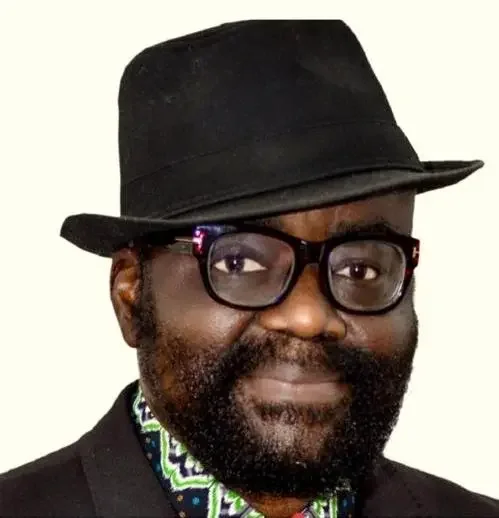
Wole Olaoye is a Public Relations consultant and veteran journalist. He can be reached on [email protected], Twitter: @wole_olaoye; Instagram: woleola2021