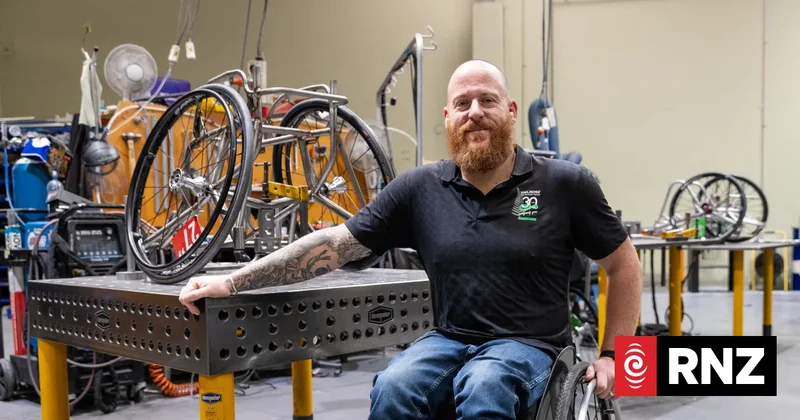
A Christchurch wheelchair manufacturer is delighted to see its chairs being used at major events like the Commonwealth Games.
Melrose Kiwi Concept chairs started life in a garage more than 30 years ago when wheelchair-user Phil Melrose became frustrated at the options available.
After injuring his spinal cord in a power boat accident in 1992, he started making himself a wheelchair that better suited his needs in his garage, and then made more for friends and acquaintances.
Joined by fabricator Mike Turner, they created Melrose Kiwi Concept Chairs, which now employs about 50 people, and exports custom-made day and sport wheelchairs around the world.
Sales manager Philippa Melrose, who is Phil Melrose's daughter, said the company specialised in creating personalised wheelchairs for a range of disabilities and ages.
Workshop staff design and make the chairs from scratch, powder-coating them in any chosen colour, stitching the upholstery and making adjustments to ensure the chair is a perfect fit.
Everything can be personalised from height and length of the chair's body to upholstery and spoke guards, some of which are emblazoned with colourful butterflies and cartoon unicorns.
Philippa Melrose said it was often a moving experience seeing someone use their wheelchair for the first time.
"It can be a really special moment. You can see smiles, you can see tears, you can see parents just seeing that emotion in their kid when they do their first push. It's a bit like their first step," she said.
The company also specialises in sport chairs, with Melrose's Rhino chair used by many wheelchair rugby players around the world, including New Zealand's Wheel Blacks.
Rugby was not the only sport Melrose catered for, with each model adjusted to suit the sport.
"We do wheelchair basketball, wheelchair tennis, wheelchair table tennis and wide range of sport wheelchairs. We started that back in the 1990s and that kind of got us around the world to export wheelchairs," Philippa Melrose said.
Melrose chairs were used by a New Zealand lawn bowler and members of the Australian men's and women's wheelchair basketball teams at the Commonwealth Games in Glasgow.
New Zealand's wheelchair basketball team just missed out on selection for the games, but Melrose's South Island sales representative Curtis Smith, who is on on the team, said the athletes would fight hard to be there next time.
He was born with spina bifida and has used a wheelchair since the age of four.
Smith said playing sport had bought huge benefits.
"It makes a big difference to be able to play some sport and get out there and just continue with life, not just be stuck at home but actually being with my peers and like minded people and getting out there and doing it," he said.
Smith recently convinced workmate Finn Richardson to try wheelchair basketball.
Richardson, who works at Melrose in assembly, was paralysed from the chest down in a mountain bike crash seven years ago at age of 17.
He first came into contact with Melrose chairs when he bought a wheelchair mountain bike shortly after his accident.
"I love the sport so much that I had to go back riding. There is so much research into the best ways to do it and I'm still riding to this day," he said.
Richardson now wants to try skiing, with a Melrose sit-ski next on his wish list.
Smith said a standard issue hospital wheelchair could be cumbersome and difficult to manoeuvre, making people feel restricted in what they could do and where they could go.
Day wheelchairs - which were also custom-made - could make a big difference to people's sense of independence, he said.
"You see people who have not been outside for 10 years, literally stuck in their bedroom for 10 years, and then they get into one of our wheelchairs. They call us up to say, 'I've been to the mall, I've been to a bar, I've been to the supermarket'. They just can't thank you enough. They didn't realise they could get outside and do these things," he said.
Smith said days chairs were largely funded by Ministry of Health and ACC.
He said many wheelchair sports groups had access to chairs that people could use if they wanted to try it out or they could assist with accessing funding for a specialist chair.