âI got my Russian visa and papers from the Kenyan official at JKIA [Jomo Kenyatta International Airport in Nairobi]. I then boarded the plane to Istanbul and on to Russia.â
This account of a Zimbabwean prisoner of war (POW) told of a familiar passage for most of the dozen African POWs interviewed about how they ended up fighting in Russiaâs war in Ukraine and how they survived the hellish front line.
Their motivations were strikingly similar. While a few were lured by Russian citizenship, a classic honeytrap, or an escape from a visa-related prison sentence, most were simply seeking employment and a brighter financial future.
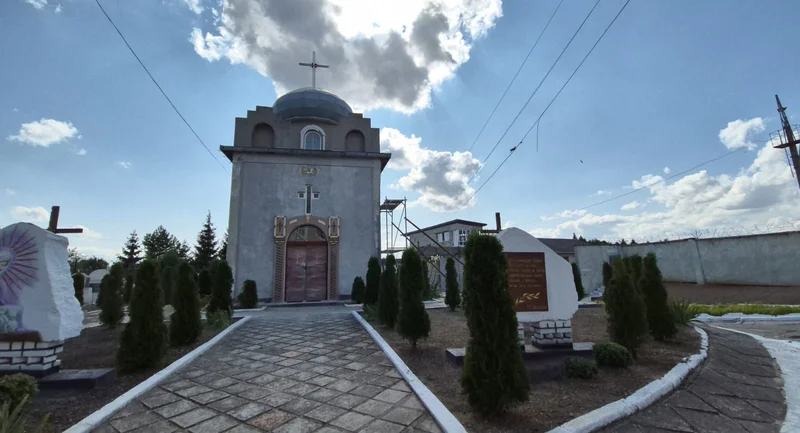
That search for a better life ultimately led them to a military prison south of Lviv, Ukraine. Once a correctional facility for first-time offenders, its architectural scars and crude Soviet-era workmanship are clearly visible. Itâs less Midnight Express or Stalag Luft than a functional holding site for 600 inmates who, through bad choices and lifeâs great birth lottery, ended up in the wrong place at the wrong time.
Yet, sitting in those cells, they can be considered the lucky ones in a war that has claimed more than half a million Russian dead â with twice that number wounded â and a sizeable number of foreign recruits from Africa, Latin America and Asia who fought on the Russian side.
More than 3,500 foreign nationals â from more than 40 countries, including Ecuador, Uganda, the US, Vietnam, India, China, Kenya and Sri Lanka â reportedly died fighting for Russia between February 2002 and July 2026, along with 2,304 North Korean soldiers, most of them killed fighting in Russiaâs Kursk region after Kyiv launched an incursion there in August 2024.
Nato officials say that approximately 24,000 foreign mercenaries from 44 countries are fighting with Russian forces, the majority of whom are believed to come from Africa.
âA very dangerous gameâ
TT (37), a farmer from Masvingo, Zimbabwe, was recruited via Facebook by a man calling himself âMohammed Mohammedâ (real name Ivan) with the promise of electrical engineering training in Kenya, a $20,000 signing bonus and a $2,500 monthly salary.
In April, however, his journey took a very different turn. Routed through Nairobi â where he secured his Russian visa without ever leaving the airport â and then Istanbul, he arrived in Russia. Within 24 hours, officials opened a bank account for him, took his phone, and had him sign a contract written entirely in Russian.
After passing a medical check and undergoing four weeks of military training, including marksmanship and drone defence, he was credited 400,000 roubles â a quarter of his promised bonus, which remains locked inside his Russian bank account.
By 10 May, he was at the front. The following day he set out for his post with three others, a Colombian, a Tajik and a Kazakh. They were not made clear about either the purposes or the duration of their mission.
âWe set off with four magazines, three bottles of water and some nuts. But the drones wonât allow more than a few metres at a time. Itâs a very dangerous game. Every 30 seconds we had to duck down. Every few metres there are dead bodies, over thousands of dead bodies. People are being killed while you are watching. I saw that with my own eyes.
âWe finished our food in three days. We then searched the bags of dead soldiers for food and water. It took 25 days to walk the three-day journey.â
By the time he got there, his three colleagues were dead. âOnly God was protecting me.â
âI heard a big Ukrainian drone, Baba Yaga [The Old Witch], which was dropping bombs all around, poof, poof, poof. I ran through a thicket of trees and saw some troops 500 metres away. I pulled out my Russian flag to show them, and told them my guys were all killed. I then saw their yellow armbands,â he says, tugging at his sleeve.
âI realised that they were Ukrainians, stopped, put down my gun and helmet. I was very, very scared, but nothing bad happened to me.â
Tears roll down his face when he tells the story of his captors discovering it was his birthday four days after his capture. âThey sang happy birthday to me. I could not believe it,â he sobbed.
TT said he saw seven other Zimbabweans on the Russian side during this time, âbut no one is left alive. Only foreigners go to the front; no Russian goes there. I donât know why they send people to the front when they know we are going to be killed. No one lives through that.â
The front line
FNN (35) is from Kiambu County, bordering Nairobiâs northern edge. After working as a security guard in Qatar, he was approached by a friend with the possibility of a job offer. âI took my docs to an agency known as Global Face in Nairobi.â
After collecting his visa from the agency, he flew from JKIA to St Petersburg via Istanbul on 11 August 2025. After the bank account, SIM card and medical procedures were complete, he signed a contract in Russian that promised a salary of $1,700 per month and a bonus of 700,000 roubles, or $9,000. To date, he has only received the bonus, but not the salary, though all his money is locked in a Russian bank account.
He attempted to clarify with his Russian hosts that he was expecting to be a security guard. From St Petersburg, he and his fellow recruits were taken by minivan to Novgorod and then to a base, which he knew as Kamenko, where they were issued with uniforms. The other recruits were from Africa and elsewhere, including Colombia and Iraq.
Soon after, FNN was flown alongside four Kenyans to another training site â a facility housing more than 500 fighters, mostly foreign recruits, where photography was strictly forbidden.
After basic training, they were moved closer to the front line and stationed in a basement. FNN carried out basic duties there, âincluding acting as a gatekeeper, which is the job that I thought I would be doingâ. But by early November, everything changed: they were assigned to a Russian commander, ordered to pack their gear, and deployed across the Ukrainian border.
âI noticed we were on the battlefield, from bits of dead bodies, drones, cars and guns everywhere. The commander told us now to fight as true soldiers.
âBut the commander got blown up by a landmine, which blew off his foot. I carried him to a place where we would get resupplied by a drone. They told me to treat him till they could evacuate him.â
âI was then told to go back to the front line. I saw Ukrainian soldiers and shot five shots into the air. I surrendered my gun and even though I did not understand Ukrainian, I understood the military language.â
It was 22 November 2025. He has had no contact with the Kenyan government, unlike KE (35), a marathon runner from Mount Elgon, the longest-held Kenyan POW in Ukrainian hands.
âYou know you are dyingâ
KE trained in Iten, the high-altitude venue famed for producing Olympians and world champions. Specialising in the 3,000m event, he had hoped to make the big time internationally, but failed to secure a visa for races in Spain and Poland. Then, in July 2025, an agent reached out to him on Facebook with an invitation to compete in Russia.
âI sent a picture of my passport and myself, and a week later, he called me to say the electronic visa is ready.â
KE travelled on 27 July 2025 to St Petersburg via Turkey. After lingering for a time, he was offered a one-year job with a work permit.
âIn Kenya I had no job, and was dependent on running, though I had been denied visas, so I accepted it, though I didnât know what I was accepting. It was very difficult, as they were only speaking Russian.â
The same applied to signing the Russian contract.
After the week of training which followed, he realised âthat Iâm in the army, though I didnât know that there was a war onâ. When he was taken to the front line in Ukraine, he refused to fight, saying, âYou have not given me my 200,000 rouble bonus.â
He says that to date he âhas not received anythingâ.
KE was captured at the end of September 2025.
âIt was difficult to see which side was which, as everyone is in the same uniforms. I followed my men, and then lost them, got confused, and stepped on a landmine. Fortunately, it did not cut my leg off. I removed my backpack and my gun, and lay down there. Then came the artillery, and I tried to take shelter in a destroyed house. It was there that I surrendered to the Ukrainians.
âEverywhere I was passing dead bodies. You are going, but you know you are dying.â
KE was the first Kenyan to be captured. After his family spoke to their MP and the minister of foreign affairs, the matter was discussed in Parliament. A Kenyan government consular official visited him in detention. He is wary of speaking out about Moscow, fearing recriminations if he is exchanged with Ukrainian POWs and sent back to Russia. However, he notes, âPeople should not sign these contracts. You will never finish it. It is a contract of death.â
KEâs story is one of a repeated pattern of desperation, deception and unintended consequences.
âGot hit on the second dayâ
JK (41), who has a degree in telecommunications engineering, similarly signed up âfor a job and a passportâ. Bright and articulate, he seems an unlikely military recruit. In Kenya he was told he was not going to the front and would not be engaged in fighting.
Promised a 1.2 million rouble signing-on fee and 230,000 roubles a month, he was paid a total of 800,000 roubles, arriving in Russia in August 2025. After training in Novgorod and Markov, JK was on the front line on 14 October. His job was to carry a small generator and Starlink unit through the battlefield.
âI donât even want to think now about the dead bodies. The first time it took us four days to do 12km because of the drones. I was walking with one Russian guy.â
The Russians equipped the soldiers with the app AlpineQuest, which allows the caching of maps for offline use, marking of waypoints, and overlaying of tactical information. These are downloaded on the phones issued to the soldiers.
âOn the second day, I got hit on the neck by a drone. When I looked back from where we had come, the only cover was in the trees in front of us, so we kept going.â
When his Russian comrade was killed, âI found my way to the unit, and installed the Starlink.â
He was later deployed near Kupiansk, southeast of Kharkiv in Ukraineâs east. âSheltering in the basement, trying to survive, one of the Russians went out to fetch water, and came back with a Ukrainian. I thought I was going to be killed, but they gave us food and water and warm clothes. It was 18 March 2026.â
He has not heard from the Kenyan government and, like his colleagues, âjust wants to go homeâ. His message is the same as his compatriots: âDonât go and fight. Itâs a death sentence.â
Payments not forthcoming
GK (26) was employed as a medical technician in Kampala, Uganda, when he fell in love with a Russian tourist. She told him she could help him find a job and would lend him the money to come to Russia.
After obtaining a visa from the Russian embassy, he flew to Russia to encounter the same bank account, medical, contractual and training routine before heading to the front.
âI thought I was going to work in a hospital. I tried many times to phone her, but she never answered.â
Four days after his deployment at the front, he was hit by a drone and wounded in the neck, legs and arms. After five days of walking, without food or water, he dropped his body armour and weapon in a small village and handed himself to a Ukrainian unit sheltering in a bombed-out building. Like many others, he never received the promised Russian payments.
Drones and foreign fighters
Lvivâs main military cemetery, known as the Field of Mars, is chock-a-block with gravestones, flags, pictures, icons and even drones amid the graves of more than 1,000 fallen Ukrainians. Every day, funeral processions pass through the major cities of Ukraine. Cars stop, and sometimes drivers get out and bow their heads. There is scarcely a village or town in Ukraine where flags are not fluttering on freshly dug graves.
Russiaâs history is about pressing home its advantage in a war of maths. It has the worldâs biggest territory, a population four times that of Ukraine, bountiful minerals and an economy thatâs 12 times bigger.
But so far, itâs turned out to be not the size of the dog in the fight. And, in the process, the maths of war has been flipped.
Rather than trying to take on Russia mano a mano, the Ukrainians have employed drones to change the demographic and economic maths. Rather than using a $4-million Patriot missile to knock down a $30,000 Shahed drone, or losing precious lives in stopping tanks, Kyiv turned to mass production of drones. The more they produced, the more the cost and deployment ratios changed.
Initially, drones targeted large concentrations of troops. But as the cost of First-Person View (FPV) drones plummeted to as little as $350 apiece, they became surgical tools used to hunt individual soldiers. Given that a Russian soldier costs $2,000 a month in salary alone â on top of training expenses â the economic math heavily favours Ukraine, echoing the cost-efficiency of using an $800 interceptor drone to bring down a Shahed.
The compensation package for a Russian soldierâs family is some 15 million roubles (about US$165,000) in the event of death. If you add in the cost of medical assistance and disability packages, 1.4 million Russian casualties start to make a fiscal dent, especially when your national income is stressed from sanctions anyway.
Under this pressure, it inevitably becomes harder to convince people that this is a war of necessity. Using soldiers from elsewhere, cheaper and without domestic financial and economic consequences, is one way out.
It also highlights a key difference in the way in which Russia and Ukraine present their values and weave their strength. Ukraine has proven resilience against the odds for many reasons, but one key to its success is the sense of ownership and agency, and its care not to commoditise the lives of its soldiers.
However, the Africans should not expect Ukrainian sympathy, not while they continue to funnel their people to fight Russiaâs war on the cheap. At the very least, those who want their boys back should undertake to stop sending them, and that includes the network that apparently operates in Kenya, Uganda and elsewhere across the continent.
For those thinking of seeking adventure and fortune, they should heed TTâs message: âI want to tell African people not to risk their lives â the Russians are very cruel.â
He asks why the Russians keep taking Africans to the front. âAs long as you go to the front, no one is surviving, no chance, never, ever.â DM
Dr Greg Mills is with the Platform for African Democrats. His visit to interview the POWs was organised on application through Ukraineâs Ministry of Defence. He has been in Ukraine for six weeks to write a new book on the asymmetry of conflict, the costs of the research being partly covered by a small grant from the Lviv Media Forum/Renaissance Foundation.
Names have been abbreviated to protect POWsâ identities.