Just months away from becoming the mum of two boys, I’m excited for many things. A glass of champagne, naturally, but mostly watching the light of my life step into his new role as big brother and meeting this precious tiny person who will complete our family.
My social media feed, however, seems intent on preparing me for something else.
Once the almighty algorithm learnt I was pregnant with a second boy, it unlocked a vault of something I wasn’t prepared for: “boy mum” content.
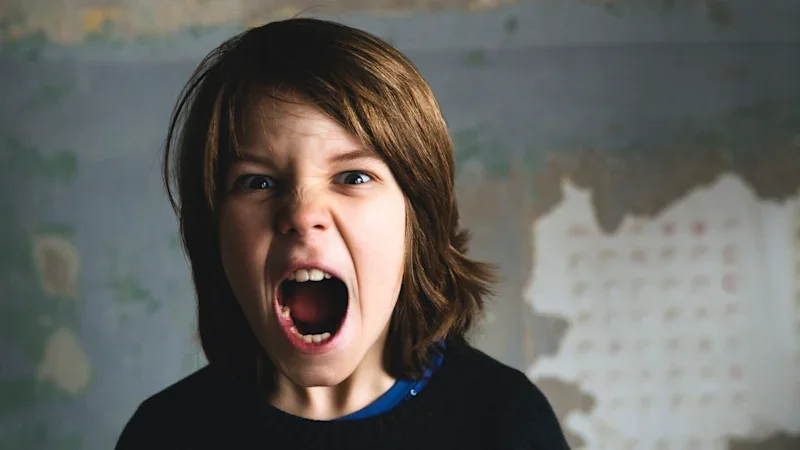
It started with stereotypical portrayals of a boy mum v girl mum house, serene calm pit against utter chaos. But it quickly escalated to depictions of actual violence, like one reel set on an escalator contrasting a pristine “girl mum” with a despondent and noticeably injured “boy mum”, black eye and all.
Arguably most disturbing are the videos labelling boy mums as toxic, and prone to Oedipal degrees of closeness with their sons, including captions like, “born to be your lover. Forced to be your mother”. Or actor and writer Jenny Mollen’s viral Facebook post from May 2026, with what some commenters considered intimate-looking photographs with her 12-year-old alongside a joke comparing a mother’s eldest son to a “toxic boyfriend”.
And if you’re still not convinced the label has got legs, the search: “Boy Mom” on Urban Dictionary spews out “a mom who is emotionally incestuous with her sons”.
Yikes.
According to these corners of the internet, boys are either feral, violent agents of domestic destruction or the great love of your life, with every future girlfriend a threat to your relationship.
Naturally some of it is satire, stoking outrage to maximise engagement. After all, the internet thrives on extremes and virality rewards exaggeration. But according to Dr Joanne Orlando, expert in digital wellbeing, and author of Generation Connected, this content can still have a negative impact on both parents and their kids.
“I think it does put preconceived ideas about what your role as a parent should be, rather than just nurturing your beautiful baby.” In part, she believes the trend taps into growing anxiety about raising boys in the age of Andrew Tate’s “manosphere”.
According to these corners of the internet, boys are either feral, violent agents of domestic destruction or the great love of your life.
“The default message is that there’s something wrong with boys, and that we need to fix them,” she explains. “It’s really a damaging message.”
Essentially, new mothers already carrying the enormous responsibility of raising a child are also being told that he’s a future problem to be fixed.
Orlando says it’s especially concerning for new mums who don’t have a lot of experience with raising boys. “I think they can go into this like, ‘What? I didn’t know I should be worried about having a son’.”
I can relate.
Before my second pregnancy, I had never thought of raising my son as participation in a particular maternal subculture. He was just my beautiful child.
Dr Justin Coulson, co-host of Channel Nine’s Parental Guidance and founder of Happy Families, says some sex differences highlighted in these reels are a biological reality.
“Boys use their bodies more, girls use their words more,” he explains, citing the work of evolutionary psychologist Steve Stewart-Williams and a much-cited 1987 study in which preschoolers had to cooperate to operate a toy viewfinder. The study found preschool boys and girls co-operated equally well on a shared task, but got there differently, with girls using verbal skills, and boys working it out physically.
But Coulson says sex differences don’t mean parents of boys should anticipate or excuse violence: “Just because something is normal and natural, if you want to take an evolutionary psychology point of view, that doesn’t mean that it’s good, healthy, or to be encouraged.”
That’s the message in some memes depicting violence as inevitable or labelling it “typical boy behaviour”. In one viral TikTok, creator Anna Saccone calls herself a “toxic boy mum” expressing favouritism toward her male child explaining, “he hits his sisters. He punches them. And I’m like ‘maybe he’s having a hard day’.”
In his latest book, Boys, Coulson unpacks the importance of parents teaching and modelling healthy masculinity. “As parents, we have an obligation to socialise our kids. For boys, that means we need to teach them how to use their energy and their additional size and power in healthy pro-social ways.”
But when it comes to the viral content that implies an intimate or sexualised relationship between mother and son, Coulson labels it “disgusting”, explaining there’s a larger clickbait element at play.
“Social media platforms push us towards edges and boundaries and create a belief that what is edgy and on the boundary is mainstream. But it’s not.”
The reality is that many of us find community and belonging online. And many new parents are using AI and social media for parenting advice and reassurance, leaving us vulnerable to increasingly provocative clickbait – the more extreme, absurd or infuriating, the more likely we are to see it.
Orlando also points out that new parents can be particularly vulnerable to content that plays on parental guilt or the idea we’re not doing enough.
“It’s what social media does best, and it’s really doing a disservice to parents.”
As for me, in a few months, I’ll become the mum of two boys, something I couldn’t be more excited about.
Being a #BoyMum? I think I’ll leave that in the algorithm where it belongs.
Make the most of your health, relationships, fitness and nutrition with our Live Well newsletter. Get it in your inbox every Monday.