Simply Science
Could a cyclosporiasis outbreak happen in Singapore?
AI generated
SINGAPORE - In recent weeks, the United States has been hit by an outbreak of a gastrointestinal illness known as cyclosporiasis.
So far, there have been more than 6,700 laboratory-confirmed infections, with an additional 11,500 suspected cases in various states across the US, including Indiana, Kansas, Kentucky and Michigan – the worse-hit area, where more than 10,000 have been affected.
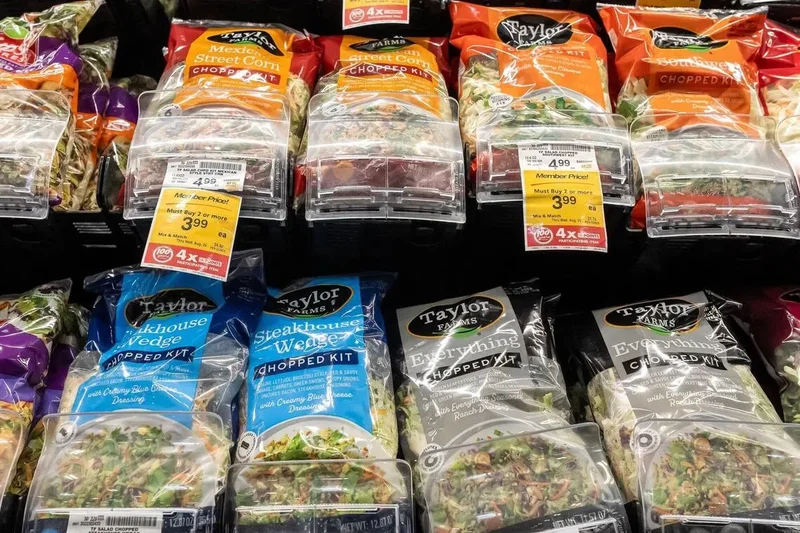
The cause of the outbreak is still unknown, though the US Food and Drug Administration has linked it to iceberg lettuce served at Taco Bell fast-food restaurants sourced from Taylor Farms’ facility in central Mexico.
However, cases continue to rise even after the supplier had recalled all iceberg lettuce grown and processed at the facility in question.
What exactly is cyclosporiasis, and could a similar outbreak happen in Singapore? Simply Science takes a look.
What is cyclosporiasis?
Cyclosporiasis is an intestinal infection caused by the parasite Cyclospora cayetanensis, a microscopic, single-celled organism.
The disease’s main symptom is explosive, watery diarrhoea, while other symptoms include fatigue, low-grade fever and nausea.
In many cases, people with cyclosporiasis may have mild or no symptoms, though severe disease or even death can occur, particularly in infants and the immunocompromised.
It does not spread from person to person, but is instead transmitted through the faecal-oral route, via consuming food or water contaminated by human stool with the Cyclospora parasite, which thrives in areas where sanitation and water treatment is limited.
Cyclospora can be found in fresh produce such as iceberg lettuce, romaine and parsley. As these are usually eaten raw, the parasite is not killed by heat during the cooking process.
Could an outbreak happen in Singapore?
Though cyclosporiasis is endemic in many tropical and subtropical regions, including parts of South-east Asia, it is uncommon in Singapore.
Gastroenterologist Benjamin Yip said he had seen “less than a handful of cases” of the disease over his career. The medical director of Alpha Digestive and Liver Centre, however, did not rule out such incidents happening here.
“Singapore is not immune to such outbreaks,” he said, pointing to recent gastroenteritis incidents.
In recent years, there have been numerous cases of gastroenteritis – an umbrella term for infections causing inflammation of the stomach and intestines – caused by bacteria such as salmonella and E. Coli.
In January, 60 pupils from River Valley Primary School were reported to have gastroenteritis symptoms due to suspected food poisoning and, in a separate incident the same month, there were 147 suspected gastroenteritis cases involving North View Primary School pupils.
The Communicable Diseases Agency reported in June that central kitchens, food caterers and restaurants were responsible for most food poisoning outbreaks in 2024 and 2025, with 55 such establishments involved in cases over this period.
Yip said Singapore was particularly vulnerable given its dependence on imported foodstuff, which make up some 90 per cent of the country’s food supply.
William Chen, director of Nanyang Technological University’s (NTU) Future Ready Food Safety Hub, believes the risk of an outbreak here is low.
“For local vegetable farms, we have an integrated parasite control system, therefore the risk of local outbreaks is extremely low,” said Chen, who is also a professor at NTU’s School of Chemistry, Chemical Engineering and Biotechnology.
While Singapore imports foods from 180 countries, the Singapore Food Agency (SFA) has strict inspection practices on imported foods, he said.
Although the Republic may consider temporarily discontinuing imports from farms linked to a recent outbreak, the impact on Singapore’s food supply should be insignificant in the light of the country’s large number of import sources, he added.
Additionally, the CDA monitors food-borne illnesses, including those caused by parasites, he pointed out.
Chen said he has not heard of any reported cases of cyclosporiasis in Singapore.
Consumers can protect themselves from the illness, as well as other food-borne diseases by practising good food hygiene, he noted.
This includes washing their hands thoroughly, rinsing fresh produce under running water, checking the source of fresh produce for salad preparation and cooking vegetables when possible, he said.