Third time unlucky
It was the beginning of the last week in May 2026, just after 8am, when Ntobeko Zwane arrived at the offices of the Mpumalanga Tourism and Parks Agency (MTPA) for the third and final time.
His first official visit as deputy sheriff of the Mbombela district had taken place on 22 April, less than five weeks before. Back then, when he arrived to remove the motor vehicles that had been marked and attached by a colleague, they were nowhere to be found.
The same thing happened on 11 May, the date of Zwaneâs second visit. âThe vehicles,â he testified, âcould not be located on the property and were also neither produced nor surrendered by the defendant.â
And so now, on 25 May, Zwane was giving it another go. But this time, although the vehicles were on the premises, a pair of staffers from the MTPAâs legal department â identified in the affidavit as âMr Lubangaâ and âMs Hlapathiâ â would not allow the tow-trucks to haul them away.
âMr Lubanga demanded to see the court order that permitted the sheriff to remove the vehicles,â Zwane attested. âNo court order was required as the goods had been attached in terms of a warrant, issued by the court.â
Indeed, as the relevant legislation showed, it appeared that Zwane was correct â after the 2011 amendments, section 3 of the State Liability Act made provision, under certain conditions, for government property to be attached and removed by a warrant instead of a court order. Zwaneâs affidavit contained testimony that he had met those conditions. But still, not only did the MTPAâs lawyers chase him off the property, they fed the same allegedly false information to a pair of police sergeants that accompanied him back to the premises later that same day.
âIt can only be surmised that the [SAPS] members had spoken to Mr Lubanga and he had informed them that we need a court order,â Zwaneâs affidavit stated. âThe members would not assist me even after I informed them that I was in possession of a warrant and the goods were under arrest.â
As suggested by the documents in Daily Maverickâs possession, there was a background to the scenario that rendered the actions of the MTPA doubly suspect. Thanduxolo Lubanga, it turned out, was the agencyâs senior manager of legal services. Eleven days earlier, on 14 May 2026, he had deposed a founding affidavit asking the court to suspend or set aside the very writs he was now blocking Zwane from executing.
That application would not be resolved until 9 June â and even then, only via a negotiated stay, not the outright suspension heâd sought.
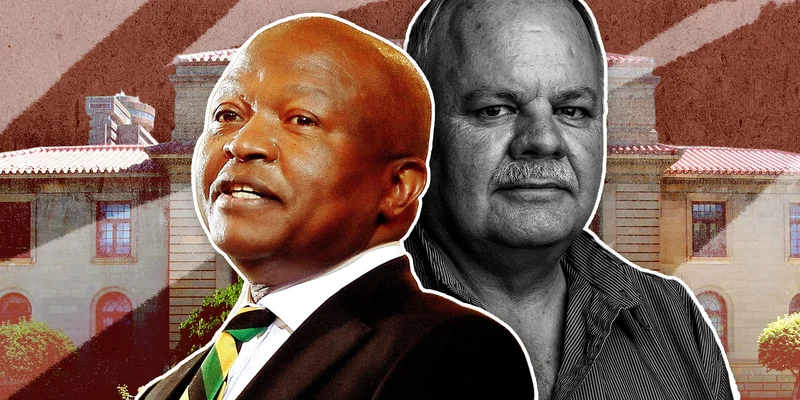
This, then, was the next instalment in the ongoing saga of conservationist Fred Daniel, whose decades-long legal campaign against the MTPA and another 24 government entities had, at its core, always been about one of the most damaging and enduring instances of State Capture in the history of post-apartheid South Africa â the so-called âland claims scam,â as orchestrated to a large extent by South Africaâs former (since deceased) deputy president David Mabuza.
To Daily Maverick, given that we had now been reporting on the saga for close on five years â thereby producing a trove of journalism comprised of more than 20 long-form features, including an investigation that implicated Mabuzaâs wife, an exposé on missing case dockets and an exclusive on a criminal complaint submitted to the NPA under South Africaâs anti-racketeering legislation â the story of the MTPAâs lawyers obstructing the deputy sheriff looked like more of the same.
Simply put, ever since he had first blown the whistle on the architects of the land claims scam, an event that could be traced to a series of meetings that took place all the way back in 2002, Daniel had been confronted with obstacles and impediments at almost every turn.
But on 30 September 2025, in a judgment handed down by the Gauteng Division of the High Court in Pretoria, he would finally prevail. Judge Neil Tuchtenâs award of R306-million in damages to Daniel was, we observed, the ultimate vindication. In essence, the judgment meant that the ANC governmentâs role in gutting section 25 of the Constitution â which makes provisions for addressing historical imbalances in land ownership â was no longer up for debate.
âThis was no single act by a single state actor,â the judgment declared, after confirming that Mabuza was one of the racketâs primary architects. âIt was a concerted campaign over several years by members of the executive in the province, in league with high officials in at least two organs of state which, by the public powers vested in them by law, were in a unique position to intimidate Mr Daniel and frustrate the realisation of his dream. They enlisted in their scheme a criminal mob and instructed the SA Police [Service] to stand aside while the mob did its work.â
Unfortunately for Daniel, but firmly in line with the general thrust of the narrative, the ruling of the Gauteng Division of the High Court in Pretoria would be nowhere near the sagaâs end.
**Nobody talks, nobody gets hurt **
On 2 February 2026, under the header âNo funds, no answers,â Daily Maverick published an investigative analysis of what we characterised as the governmentâs âdark appealâ against the ruling of Judge Tuchten. The reasons that we employed the qualifier âdarkâ were manifold, but they all had to do with a list of unanswered questions. For starters, since the MTPA could no longer afford the legal fees, according to the 2024/25 iteration of its own annual report, which government defendant had made the call to escalate the matter to the Supreme Court of Appeal?
By our understanding, the centrality of the MTPA to the case was about a lot more than the fact that it had always appeared in court papers as the first defendant. Significantly, towards the end of his 181-page judgment, Judge Tuchten ruled that the MTPA and the Regional Land Claims Commissioner (RLCC) were to be held âjointly and severallyâ liable for payment of the R306-million. In an adjacent paragraph, the judge declared the following:
âI have said that this case is, as far as I know, unique in our jurisprudence. The wickedness of the conduct of the MTPA and the RLCC, acting in concert with the other parties I have found to have banded together to oppress Mr Daniel and drive him from the district, is profound.â
So, again, if it wasnât the MTPA or RLCC, which government agency (or department) had made the decision to appeal against the judgment?
As readers may recall, nobody at the Mpumalanga premierâs office, the Department of Justice and Constitutional Development (DOJ&CD) or the office of the state attorney was willing to answer Daily Maverickâs questions. In the full right-of-reply that we put to these government entities, we were mostly quoting from the MTPAâs aforementioned annual report (specifically, pages 25, 186 and 267).
What, for instance, were the terms of the âpayment arrangementâ that the MTPA had concluded with the DOJ&CD for settlement of the âowing legal feesâ? In the context of the âfuture payable fees,â could the DOJ&CD provide us with an updated total on the legal costs it had so far incurred on the MTPAâs behalf? Given that the report had stated that the legal fees were ânot affordableâ for the MTPA, had the agencyâs financial position been given due consideration in the decision to take the matter on appeal? And again, given that the MTPA had stated that it could no longer cover its own legal costs, was it correct to assume that the DOJ&CD would have been liable for almost the entire bill â R306-million in damages, plus interest of about R3-million per month, plus Danielâs legal fees â if the matter had not been taken on appeal?
On 12 March 2026, when Daily Maverick published the next instalment in the saga, we were still none the wiser.
The lack of transparency on the affordability of the appeal for the government defendants was particularly urgent in light of the fact that they had so far failed to settle the cost orders issued against them in three interlocutory applications â an amount that totalled about R700,000 (excluding interest) for a) the plaintiffsâ application to force the defendantsâ discovery in 2019, b) the defendantsâ application to force the recusal of Danielâs advocate, Jacques Joubert, in 2023, and c) the defendantsâ application to force the recusal of Judge Tuchten in 2025.
By late February 2026, therefore, in the lead-up to our March article, we had been compelled to add the acting solicitor-general, Felix Mbeki, to our list of correspondents. As we informed Mbeki, since publishing our analysis of the governmentâs âdark appeal,â we had come into possession of a pair of enlightening documents.
The first was an email chain that featured his name and email address, showing that for six months â from mid-August 2025 until mid-February 2026 â the office of the state attorney had been promising (and failing) to pay the three cost orders on the interlocutory applications. The second was a copy of these very same cost orders, as received and stamped by the Mbombela sheriff on 19 February 2026.
Daniel, in other words, had become so frustrated by the inaction of the office of the State Attorney that he had been left with no option but to enforce the seizure of an assortment of assets â specifically, vehicles, computers and furniture â from the MTPAâs headquarters in the Mpumalanga capital.
And so our current story had now returned full circle to 25 May 2026, the day that Ntobeko Zwane, deputy sheriff of the Mbombela district, was prevented from attaching the MTPAâs vehicles for the third time.
âOn what legal basis did Mr Lubanga demand a court order,â we asked Simphiwe Shungube, the MTPAâs media liaison, in a written right-of-reply sent on 16 July 2026, âgiven that section 3 of the State Liability Act (as amended in 2011) permits attachment and removal of state property by warrant under certain conditions?â
Shungube did not respond to this question. Neither did he respond to the remainder of our questions of 16 July.
The MTPA, in other words, declined to confirm or deny Zwaneâs version of events. More importantly, the government agency did not explain why it was refusing to settle the cost orders in full, despite the fact that the orders were final and had not been appealed.
Anything but a reckoning
Still, in Daily Maverickâs estimation, it was the non-response of the justice ministry that was the greater cause for concern.
âIs it DOJ&CDâs position that a private litigant should have to resort to the sheriff to enforce a cost order against the state,â we asked, âwhen the solicitor-generalâs own office was already aware of, and internally escalating, the same non-payment months earlier? What does that say about the adequacy of the DOJ&CDâs internal processes for ensuring organs of state under its purview meet their obligations under court orders?â** **
As the DOJ&CD spokespeople to whom we sent our questions would have known, the solicitor-general wasnât just another employee within their department â he was one of only two staffers that reported directly to the ministerial office, which was why we sent the questions to Kubayiâs personal assistant too.
When taken in the context of everything that had come before, the wall of silence spoke volumes about what the South African government was refusing to admit.
In short, the government was refusing to admit that a land claims racket, orchestrated and engineered by senior ANC politicians under the guidance of David Mabuza, erstwhile premier of Mpumalanga who would rise to become deputy president of the country, had all but destroyed a core instrument of post-apartheid redress.
As Judge Tuchten made abundantly clear in his historic ruling of September 2025, the process of land restitution in Mpumalanga had been hijacked and looted by a cabal of Afrikaans middlemen and ANC thugs. In their attempt to cover up their misdeeds and continue the looting, the rot had crept into several organs of state.
âIn the present case,â Tuchtenâs judgment declared, âthe fault of the defendants cannot be restricted to their own individual wrongful actions, but must properly be seen as a course of conduct which, I believe it is no exaggeration to say, weaponised numerous aspects of the law enforcement and regulatory mechanisms in the province to persecute one man and frustrate his entirely lawful and, indeed, admirable dream.â
It was no small wonder, then, whoever made the final call, that someone in a position of ultimate authority had taken the decision to approach the Supreme Court of Appeal â Mabuza may have died in July 2025, and he may have vacated office in early 2023, but he had bequeathed to the state a mess so vast that there really wasnât any choice.
Neither, for that matter, was it surprising that when it came to the actual business of the appeal â most importantly, agreement between the parties on the record under review â the state would fail to comply with the demands of the SCA.
On 14 July 2026, after reams of correspondence had been exchanged, Danielâs attorneys wrote to the state applicants with a simple one-liner: â[It] has therefore become common cause that the latest record is non-compliant.â
On 29 July 2026, the SCA agreed.
âThe Court has perused the appeal record delivered on 6 July 2026 and has considered the correspondence exchanged between the parties concerning the record,â the registrar wrote in an official letter from Bloemfontein.
âFollowing its consideration of the matter, the Court has determined that the record does not comply with the Court Rules and has therefore rejected the record.â
At the bottom of the letter, the registrar further noted that the appeal had lapsed. â[The] appellants will be required to file a re-instatement application, condonation application, the compliant record as well as their heads of argument once ready to be lodged,â she stated.
To Daily Maverick, it was clear from the tone and substance which party was wasting the SCAâs time. In the broader sense, it was also clear which party â at a cost of R3-million in interest to the taxpayer per month â was intent on not paying a cent in damages.
To pay, it was obvious, was to admit. And to admit was to invite a reckoning that the ANC government had never wanted to face. DM