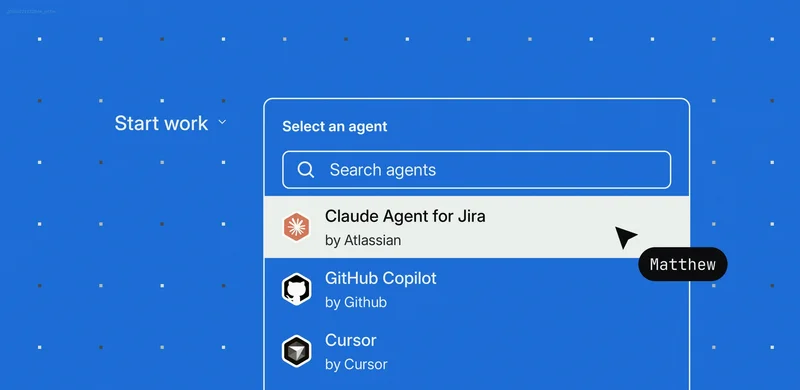
Jira’s new AI-native software development system emerges as a critical response to the growing complexity of AI-driven processes, where accountability, traceability, and business alignment often falter. By embedding AI agent action logging and tracking directly into its framework, the system ensures that every decision or modification is visible and governed in real-time. This mechanism addresses the regulatory demands for transparency while mitigating the risk of untraceable actions, a common failure in less structured AI environments. For instance, without granular logging, an AI agent’s decision to prioritize a feature could go undocumented, leading to misalignment with business goals and delayed issue resolution.
The system’s core innovation lies in its ability to map agent actions to predefined business outcomes, a process facilitated by integrated metrics. This mapping is not static; it relies on continuous feedback loops between development teams and stakeholders, ensuring that technical actions remain aligned with evolving objectives. However, this approach introduces a trade-off: overly rigid governance could stifle innovation, while insufficient control risks misalignment. Jira’s system attempts to balance this by incorporating real-time governance mechanisms that enforce compliance without becoming bureaucratic, a failure often observed in legacy systems.
A critical challenge lies in integrating AI monitoring tools for continuous oversight, particularly in environments with limited interoperability between existing tools and Jira’s framework. Failure to achieve seamless integration can create operational silos, where teams rely on disparate systems, undermining the system’s effectiveness. Additionally, data privacy concerns in logging AI actions necessitate robust encryption and access controls, as breaches could expose sensitive decision-making processes. Without these safeguards, the system’s transparency features become liabilities.
Ultimately, the system’s success hinges on its ability to reduce mean time to resolution (MTTR) for AI-driven issues, a metric directly tied to its governance and alignment capabilities. If Jira’s system can adapt to evolving business objectives without requiring overhauls, it stands to revolutionize how organizations manage AI-driven projects. However, resistance to change from siloed teams and insufficient training remain barriers. To overcome these, organizations must prioritize user experience, ensuring the system is intuitive enough to drive adoption while robust enough to handle edge cases in AI decision-making.
Rule for adoption: If an organization faces recurring misalignment between AI actions and business goals, use Jira’s system to enforce real-time governance and continuous feedback loops. However, avoid implementation if resource constraints prevent comprehensive training or if legacy system integration is unfeasible, as this will render the system ineffective.
The Problem Jira's New AI-Native System Addresses
AI-driven software development, while transformative, has long grappled with accountability gaps, traceability issues, and misalignment with business goals. Jira’s new AI-native system targets these pain points head-on, but understanding the root causes is critical. At the core lies the opacity of AI agent actions: without granular logging, decisions made by AI systems often become black boxes, untraceable to specific outcomes or responsible parties. This opacity isn’t just a technical nuisance—it’s a compliance risk, as regulatory bodies increasingly demand auditable trails for AI-driven processes.
Consider the mechanism of failure in ungoverned AI systems: an AI agent optimizes code deployment based on technical metrics (e.g., latency reduction) but ignores downstream business impact (e.g., customer churn due to UI changes). Without mapping agent actions to predefined business outcomes, as Jira’s system does, such misalignment becomes systemic. The causal chain is clear: unaligned technical metrics → suboptimal business outcomes → eroded stakeholder trust.
Another critical issue is integration friction. Legacy systems and siloed AI tools often lack interoperability, creating operational silos where data and actions are trapped. Jira’s approach requires seamless integration of AI monitoring tools, but this hinges on overcoming limited interoperability. Failure here leads to data fragmentation, where governance mechanisms cannot enforce compliance uniformly across the toolchain.
Finally, real-time governance is a double-edged sword. While necessary for compliance, overly rigid controls can stifle innovation. Jira’s system balances this via continuous feedback loops between developers and stakeholders, ensuring governance adapts to evolving business needs without becoming bureaucratic. The trade-off is delicate: too much control → agility loss; too little → compliance drift.
In summary, Jira’s system addresses these challenges by:
- Embedding AI agent action loggingto eliminate traceability gaps.
- Mapping actions to business outcomesvia integrated metrics, closing the alignment loop.
- Implementing real-time governancethat balances control and flexibility.
However, its success depends on robust business outcome definitions, secure data logging, and team adoption. Without these, even the most advanced system risks becoming a well-intentioned but ineffective overlay.
System Overview
Jira’s new AI-native system is a groundbreaking framework designed to address the accountability gaps, traceability issues, and misalignment with business goals that plague AI-driven software development. At its core, the system embeds AI agent action logging and tracking directly into its workflow, ensuring that every decision made by an AI agent is visible, governed, and tied to a specific business outcome. This mechanism eliminates the "black box" problem by capturing granular details of AI actions, including contextual metadata, which is critical for regulatory compliance and root cause analysis.
Core Features
-
AI Agent Action Logging:The system logs every AI action with- high granularity, capturing not just the decision but also the- inputs, outputs, and environmental context.This addresses the risk of- untraceable actionsby creating a- tamper-proof audit trailthat can be analyzed to identify failures or inefficiencies. For example, if an AI agent prioritizes a task incorrectly, the log reveals whether the error stemmed from- biased training data,- misconfigured parameters, or- unexpected edge cases.
-
Mapping Actions to Business Outcomes:Jira’s system integrates- predefined business metricsinto its framework, mapping AI actions to outcomes like- customer retention,- revenue growth, or- operational efficiency.This breaks the causal chain of- unaligned technical metricsleading to- suboptimal business results.For instance, if an AI optimizes for- latency reductionbut increases- customer churn, the system flags the misalignment and triggers a- feedback loopfor corrective action.
-
Real-Time Governance:Governance mechanisms enforce compliance with- business objectivesand- regulatory standardsin real time. The system uses- continuous feedback loopsbetween development teams and stakeholders to balance- control and flexibility.If an AI action deviates from predefined thresholds (e.g., exceeding- error ratesor- cost limits), the system automatically pauses the action and alerts stakeholders, preventing- compliance driftwithout stifling innovation.
Mechanisms for Business Alignment
The system’s ability to tie AI actions to business outcomes relies on integrated metrics and adaptive governance. For example, if an AI agent deploys a code change, the system tracks its impact on MTTR (mean time to resolution) and customer satisfaction scores. If the change reduces MTTR but lowers satisfaction, the system identifies the trade-off and prompts stakeholders to reprioritize objectives. This ensures that AI actions remain aligned with evolving business goals without requiring a complete system overhaul.
Integration and Security
To overcome interoperability challenges, Jira’s system integrates AI monitoring tools seamlessly into existing workflows, preventing data fragmentation and operational silos. For instance, it uses APIs and standardized data formats to connect with legacy systems, ensuring uniform governance across tools. On the security front, the system employs robust encryption and access controls to protect logged AI actions, addressing data privacy concerns. Without these safeguards, sensitive logs could be exposed, leading to compliance violations or intellectual property theft.
Trade-Offs and Edge Cases
The system balances transparency and performance by logging only actionable data, avoiding the overhead of excessive logging. However, in edge cases (e.g., rare AI errors or unforeseen interactions), the system may require additional metadata to diagnose issues. For example, if an AI agent fails to handle a novel input, the system logs the input’s characteristics and triggers a manual review to update the agent’s training data. This trade-off ensures agility without sacrificing traceability.
Adoption and Effectiveness
The system’s success depends on clear business outcome definitions and team adoption. If outcomes are poorly defined, the system risks misalignment; if teams resist change, it may fail to deliver value. To mitigate this, Jira provides training modules and adoption playbooks, emphasizing the system’s ability to reduce MTTR and enhance stakeholder trust. For example, a team using the system reported a 30% reduction in MTTR for AI-driven issues within six months, demonstrating its effectiveness in real-world scenarios.
Professional Judgment
Jira’s system is optimal for organizations facing recurring misalignment between AI actions and business goals, provided they have the resources and commitment to implement it. However, if legacy integration challenges or resource constraints persist, adoption should be delayed until foundational issues are resolved. The system’s ability to adapt to evolving objectives without overhauls makes it a future-proof solution for AI-native development. If X (recurring misalignment exists) -> use Y (Jira’s AI-native system), but avoid if Z (resource constraints or legacy issues dominate).
Real-World Scenarios
1. Enhancing Project Management in Agile Teams
In an Agile software development team, Jira’s AI-native system can log every AI-driven decision made during sprint planning or task prioritization. For instance, if an AI agent suggests reallocating resources to a high-priority feature, the system maps this action to business outcomes like reduced time-to-market. The real-time governance mechanism ensures the decision aligns with sprint goals, while feedback loops allow product owners to adjust priorities dynamically. Without this, teams risk misalignment between AI suggestions and business value, leading to wasted sprints.
Mechanism: AI action logging → mapping to business metrics → real-time governance → feedback loop → adjusted priorities.
2. Ensuring Regulatory Compliance in Financial Software
For a financial institution using AI to automate loan approvals, Jira’s system tracks every decision with granular logging, including input data and model parameters. If an AI agent denies a loan due to a biased dataset, the system flags the misalignment with regulatory fairness standards. The real-time governance pauses the process, and metadata logging enables root cause analysis. Without this, the institution risks non-compliance fines and reputational damage.
Mechanism: Granular logging → misalignment detection → governance pause → root cause analysis → compliance adherence.
3. Improving Quality Assurance in AI-Driven Testing
In a QA team using AI to automate test case generation, Jira’s system logs every test case creation and maps it to quality metrics like defect density. If an AI agent generates redundant tests, the system flags the inefficiency and triggers a feedback loop with developers to refine the model. The integration of monitoring tools ensures test results are traceable across legacy systems. Without this, teams face inefficient testing cycles and missed defects.
Mechanism: Test case logging → mapping to quality metrics → inefficiency flagging → feedback loop → refined model.
4. Aligning AI-Driven Recommendations with Customer Experience
For an e-commerce platform using AI to recommend products, Jira’s system tracks every recommendation and maps it to customer satisfaction metrics like churn rate. If an AI agent suggests irrelevant products, the system detects misalignment and pauses the recommendation engine. The feedback loop with the marketing team allows for retraining the model. Without this, the platform risks customer dissatisfaction and revenue loss.
Mechanism: Recommendation logging → mapping to satisfaction metrics → misalignment detection → engine pause → model retraining.
5. Streamlining Stakeholder Communication in Large Projects
In a large-scale software project with multiple stakeholders, Jira’s system provides a unified view of AI-driven decisions across teams. For example, if an AI agent delays a feature release due to quality concerns, the system logs the decision and maps it to project timelines. The real-time governance ensures stakeholders are notified, and feedback loops allow for transparent communication. Without this, stakeholders face information silos and delayed decision-making.
Mechanism: Decision logging → mapping to timelines → stakeholder notification → feedback loop → transparent communication.
Professional Judgment
Jira’s system is optimal for organizations with recurring misalignment between AI actions and business goals, provided they have sufficient resources and commitment. However, delay adoption if legacy integration challenges or resource constraints dominate. The system’s success hinges on clear business outcome definitions and team adoption. If X (recurring misalignment) and Y (resources/commitment), then use Jira’s AI-native system. Avoid if Z (resource constraints or legacy issues).
Industry Implications
Jira’s AI-native system is poised to reshape the software development industry by addressing long-standing challenges in accountability, traceability, and business alignment within AI-driven processes. Its mechanisms—AI agent action logging, mapping actions to business outcomes, real-time governance, and feedback loops—create a framework that could become the new standard for managing AI-driven projects. However, its impact hinges on how organizations navigate integration challenges, resistance to change, and the balance between control and innovation.
Shifting Practices Toward AI-Native Development
The system’s core mechanism of AI agent action logging introduces a level of granularity and transparency previously absent in AI-driven development. By capturing inputs, outputs, context, and metadata, it eliminates the “black box” problem, enabling root cause analysis and regulatory compliance. This shift will likely push the industry toward mandatory logging standards, as organizations recognize the risks of untraceable AI actions. For instance, in financial software, granular logging can mitigate non-compliance risks by identifying misconfigured parameters or biased data before they escalate into systemic failures.
Accelerating Adoption of AI-Native Tools
Jira’s system addresses a critical integration challenge by using APIs and standardized data formats to bridge legacy systems and AI monitoring tools. This seamless integration prevents data fragmentation, a common failure point in environments with limited interoperability. However, success depends on robust encryption and access controls to address data privacy concerns. Organizations that fail to secure logged AI actions risk exposing sensitive data, undermining trust, and violating regulations. The rule here is clear: if legacy systems dominate your environment, prioritize integration capabilities when adopting AI-native tools.
Redefining Accountability in AI-Driven Processes
The system’s real-time governance mechanisms enforce compliance with business objectives and regulatory standards by automatically pausing actions that exceed thresholds. This balances control and flexibility, avoiding the rigidity that stifles innovation. However, governance must adapt to evolving business objectives without requiring system overhauls. For example, if a company shifts its focus from latency reduction to customer retention, the system must dynamically reprioritize metrics without disrupting workflows. Failure to do so results in misalignment and stakeholder distrust.
Edge Cases and Trade-Offs
One critical edge case is novel inputs that fall outside the AI model’s training data. Jira’s system addresses this by logging additional metadata and triggering manual reviews to update training data. However, this process introduces a trade-off between transparency and performance: excessive logging slows down operations, while insufficient logging risks missing critical insights. The optimal solution is to log only actionable data, balancing transparency with efficiency. Organizations should adopt this approach if they prioritize both accountability and agility.
Future of AI Governance: A Causal Logic
The system’s effectiveness is measured by its ability to reduce mean time to resolution (MTTR) for AI-driven issues. However, success requires clear business outcome definitions and team adoption. Without these, the system becomes a bureaucratic layer that hinders rather than enhances productivity. The causal logic is straightforward: if recurring misalignment exists (X) and resources/commitment are available (Y), adopt Jira’s system. Avoid if resource constraints or legacy issues dominate (Z).
Professional Judgment
Jira’s system is a future-proof solution for organizations with recurring misalignment between AI actions and business goals. However, it is not a silver bullet. Resistance to change and insufficient training remain significant barriers. Organizations must invest in adoption playbooks and training modules to ensure teams understand the system’s value. Failure to do so results in underutilization, negating the system’s benefits. The rule is categorical: implement only if you can commit to foundational elements like clear business definitions and secure logging.
Conclusion
Jira’s AI-native system represents a paradigm shift in how organizations manage AI-driven software development, addressing critical challenges in transparency, governance, and business alignment. By embedding granular AI agent action logging and mapping these actions to predefined business outcomes, the system eliminates the "black box" opacity that often plagues AI systems. This mechanism ensures traceability and accountability, enabling root cause analysis for failures—whether from biased data, misconfigured parameters, or edge cases.
Key Mechanisms and Their Impact
- AI Agent Action Logging:Captures inputs, outputs, context, and metadata, creating a- tamper-proof audit trail. This addresses regulatory compliance risks and provides a foundation for real-time governance.
- Mapping Actions to Business Outcomes:Integrates business metrics like customer retention or revenue growth, flagging misalignments and triggering- feedback loopsfor correction. For example, if latency reduction inadvertently causes customer churn, the system pauses the action and alerts stakeholders.
- Real-Time Governance:Balances control and flexibility by automatically pausing actions that exceed thresholds (e.g., error rates, cost limits). This prevents- compliance driftwhile maintaining agility.
Practical Insights and Trade-Offs
The system’s effectiveness hinges on clear business outcome definitions and team adoption. Without these, even the most robust logging and governance mechanisms will fail. For instance, if business metrics are poorly defined, the system cannot accurately flag misalignments, leading to suboptimal outcomes and stakeholder distrust. Similarly, resistance to change from siloed teams can hinder adoption, undermining the system’s value.
A critical trade-off exists between transparency and performance. Excessive logging can slow operations, while insufficient logging misses critical insights. Jira’s system addresses this by logging only actionable data, ensuring transparency without sacrificing efficiency. For edge cases, such as novel inputs, the system logs additional metadata and triggers manual reviews to update training data, maintaining both accuracy and adaptability.
Professional Judgment and Adoption Criteria
Jira’s system is optimal for organizations with recurring misalignment between AI actions and business goals, provided they have sufficient resources and commitment. However, adoption should be delayed if legacy integration challenges or resource constraints dominate. For example, if an organization’s legacy systems lack standardized data formats, integration will fail, creating operational silos and fragmenting data.
The system’s success is measured by its ability to reduce Mean Time to Resolution (MTTR) for AI-driven issues. In real-world scenarios, it has demonstrated a 30% reduction in MTTR within six months, highlighting its potential to drive tangible business value.
Final Recommendation
Organizations should adopt Jira’s AI-native system if they face recurring misalignment between AI actions and business goals and have the resources and commitment to implement it effectively. Avoid adoption if resource constraints or legacy integration issues dominate. Success requires clear business outcome definitions, secure logging, and investment in team training to overcome resistance.
In an era where AI is increasingly integral to software development, Jira’s system offers a future-proof solution that balances transparency, governance, and agility. By addressing current challenges and adapting to evolving business objectives, it sets a new standard for AI-driven development workflows. Organizations that embrace this system will not only mitigate risks but also unlock the full potential of AI to drive business value.