Power, not land prices, has become the biggest hurdle for data centre investors evaluating Thailand, as growing demand is increasingly constrained by limited electricity and water infrastructure, according to property consultancy Savills Thailand.
Prapaporn Boonkajornkul, deputy managing director of the consultancy, said inquiries from overseas data centre investors remain steady, although the market is dominated by a small number of hyperscale operators requiring extensive infrastructure.
"Most inquiries originate from investors introduced by our overseas offices, including groups based in Singapore, China, Hong Kong, the US and Europe that have been evaluating Thailand against competing markets such as Indonesia," she said.
Several Chinese investors are exploring opportunities to develop projects independently, focusing on sites in the Eastern Economic Corridor (EEC), Samut Prakan, Ayutthaya and Saraburi.
While land prices remain a consideration, investors are prioritising access to reliable electricity, water supply and telecom infrastructure over acquisition costs.
"They are not particularly sensitive to land prices," Ms Prapaporn said.
"In some cases, if the asking price is too low, they question whether the site has hidden issues."
Savills said most overseas investors are seeking plots of 50-100 rai with dual access roads and proximity to power, water and fibre-optic networks.
Electricity remains the biggest obstacle, with many investors requiring power capacity of up to 500 megawatts, far exceeding current availability in many locations.
Developers must often queue for electricity allocations, while approvals for projects requiring around 150MW are limited in each area due to concerns over local grid capacity.
Although data centres prefer sites close to urban communities to reduce network latency, projects located farther from residential areas often face fewer electricity constraints.
In addition, flood risk is a decisive factor during site selection, with investors conducting extensive due diligence before committing to acquisitions.
Ayutthaya, despite improved flood protection, continues to raise concerns because parts of the province are designated as flood retention areas, she noted.
Other provinces face different challenges. Chachoengsao has limitations in electricity and water availability, while parts of Chon Buri have similar utility constraints despite remaining among investors' preferred locations.
The EEC, particularly Chon Buri and Rayong, continues to attract the strongest interest because of its established industrial infrastructure.
Savills noted industrial estates generally have an advantage as they already provide fibre-optic connectivity, a priority for hyperscale data centres.
The consultancy recorded growing interest in long-term land leases rather than purchases, although many landowners remain reluctant to lease strategically located sites.
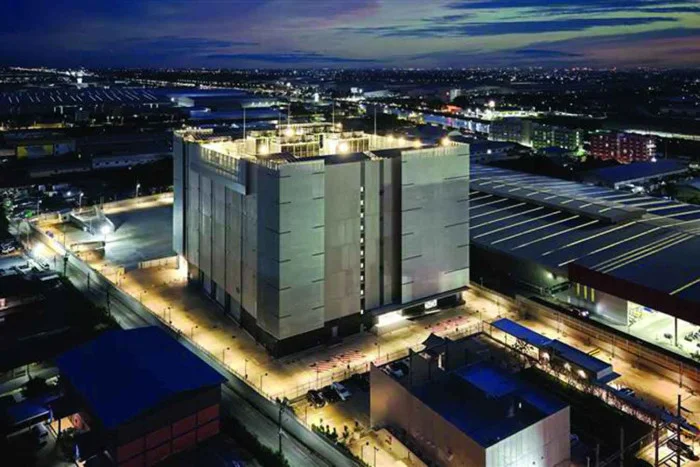
Some projects are being considered outside traditional industrial zones. In Bangkok, data centres are increasingly being planned as high-rise facilities, while hyperscale developments are expected to remain outside the capital.
Savills has around 10 active inquiries from data centre investors, with 4-5 projects progressing beyond preliminary site surveys.
Most of these advanced discussions involve investors headquartered in Singapore with operations in China and Europe, and Savills expects some transactions to conclude in the second half of 2026.
"Site selection typically takes more than a year, as investors undertake detailed assessments covering flood exposure, soil conditions, utility capacity and transport access before making investment decisions," said Ms Prapaporn.