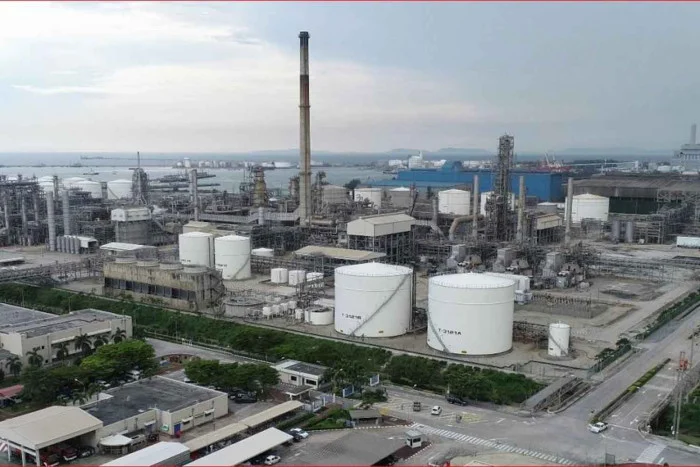
Thailand will not face a crude oil shortage in August despite the ongoing war in the Middle East, as supply remains sufficient for all six domestic refineries, according to the Department of Energy Business (DOEB).
Sarawut Kaewtathip, director-general of DOEB, said shipping routes remain partially open, ensuring continued transport of crude oil and petroleum products.
The Strait of Hormuz, one of the world's most critical oil transit points, has not been completely closed, he said.
While tensions have disrupted some shipping lanes in the Red Sea and surrounding areas, vessels are still able to pass through, said Mr Sarawut.
Thailand's refineries have already adjusted procurement strategies to reduce risks associated with Middle Eastern crude.
Thailand operates six oil refineries. Three -- Thai Oil, IRPC, and PTT Global Chemical -- are under PTT Group. Bangchak Corporation and Bangchak Sriracha belong to the Bangchak Group, while Star Petroleum Refining completes the list.
These companies diversified their sources to reduce reliance on Middle Eastern oil, which previously accounted for 58% of imports. That figure has now dropped to 30%.
PTT Global Chemical, the country's largest petrochemical producer, reported it has not imported any crude from the Middle East during the conflict, according to DOEB.
Star Petroleum Refining sources oil from the Fujairah port in the United Arab Emirates (UAE), located outside the Strait of Hormuz, ensuring uninterrupted supply. Its parent company Chevron has supported operations by securing alternative sources.
IRPC follows a similar strategy, importing from Fujairah and routing shipments via the Cape of Good Hope to avoid disruptions.
Bangchak Corporation has shifted its focus to imports from Malaysia and Australia, while Bangchak Sriracha relies on Murban crude from the UAE, as well as supplies from Libya and South Sudan transported through the Red Sea.
Thai Oil, the nation's largest refinery, also secures crude from Fujairah.
Mr Sarawut said Thailand has not purchased oil from Russia due to complications stemming from the invasion of Ukraine.
Many Thai refineries rely on European financial institutions for loans and transactions, making Russian imports problematic because of sanctions and payment restrictions.