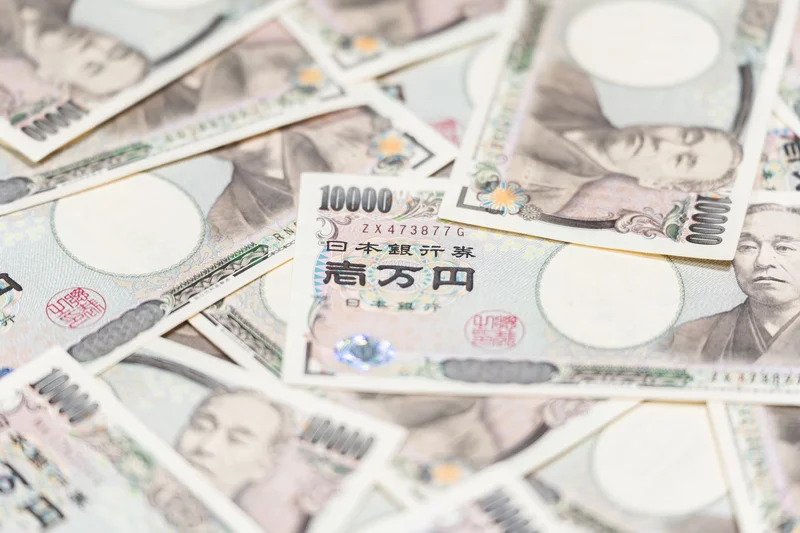
Japan's finance ministry said Monday it had conducted a coordinated yen-buying operation with the U.S. Treasury on Friday, marking a rare joint move by the two allies to stem sharp swings in the Japanese currency.
Japan said it "will not hesitate to conduct further coordinated interventions in the future" and remains in close communication with the U.S. Treasury. Finance Minister Satsuki Katayama said that Japan "remains attentive and in close communication with counterparts at U.S. Treasury."
The Japanese yen had hit 163.73 against the greenback on Thursday last week, and strengthened to 157.57 on Friday. It was trading at 157.70 per dollar on Monday.
The ministry said the intervention was carried out "in accordance with the 'Joint Statement of the Japanese and U.S. Finance Ministers'" issued in September 2025 and was aimed at addressing "the recent excessive volatility and disorderly movements of the yen."
The ministry also said Japan plans to utilize the Federal Reserve's foreign and international monetary authorities repo facility in the future. FIMA repo facility allows approved foreign central banks and monetary authorities to obtain short-term dollars by temporarily exchanging U.S. Treasury securities
U.S. Treasury Secretary Scott Bessent also confirmed the coordinated action in a statement, saying, "Friday's coordinated foreign exchange actions countered disorderly yen movements."
"Treasury remains attentive and in close communication with our counterparts at MOF and BOJ. We will not hesitate to participate in further joint intervention," Bessent said.
Bessent also endorsed Tokyo's broader policy direction, saying the U.S. "strongly support[s] Japan's decisive market and monetary steps to correct the substantial undervaluation of the yen.
President Donald Trump had earlier said that the had U.S. participated in last week's coordinated intervention to support the yen as a gesture of support for Japan and in the interest of global economic stability.
"They wanted a little bit of help, and we're always there for Japan," Trump told reporters aboard Air Force One on Sunday, citing the "good relationship" between the two allies. "More than anything else, it was a signal of friendship," he said.