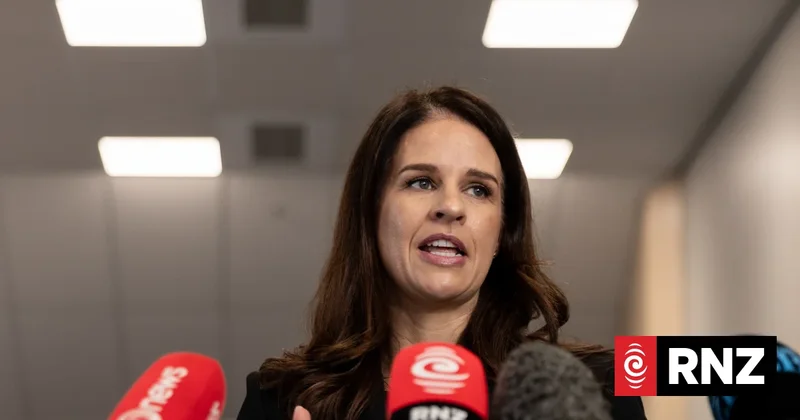
In-school teacher training programmes are a "disruptor" that will help improve initial teacher education, says the education minister.
The government has announced it will increase the number of funded places from 528 this year to 660 next year and 704 every year from 2028.
Education Minister Erica Stanford said the increase would cost $21.7m over five years and the funding was redirected from a relocation grant for foreign early childhood teachers.
Students on the School Onsite Training Programme are placed three days a week in a host school and are paid a $19,930 stipend while they complete a one-year teaching qualification.
Stanford said it was a good option for students straight out of university and for career-changers.
Asked if the government wanted the model to become the dominant or preferred form of teacher education, Stanford said it would depend on the programme's success.
"We do need to do an evaluation at a later date, once we've had a few years under our belt. But it is certainly proving to be very successful," she said.
"All of the schools I talk to absolutely love it. They love the teachers who come out the other end because they're so much more prepared to teach in the classroom.
"So it is something I would like to keep investing in if the statistics show that it is working."
Universities recently told RNZ they felt out of favour because non-universities were allocated significant increases in funded places under the scheme, but they were not.
"They are not out of favour," Stanford said.
"There's a criteria. Meet the criteria and you'll get places. It's as simple as that."
But Stanford said initial teacher education needed a shake-up, citing a 2024 Education Review Office report that said many new teachers were not well-prepared for their job.
Universities have [https://www.rnz.co.nz/news/education/516698/universities-reject-ero-criticism-of-teacher-training-courses
criticised the report], saying it was completed after Covid lock-downs disrupted many students' classroom placements and the principals unhappy with the quality of graduates were not a representative sample.
"You will have seen ERO's report into the ability of teachers to manage classroom behaviour and be ready to teach, and they have made many comments about the state of initial teacher education," she said.
"There isn't a day of the week that I don't go into a school and have a principal say to me that they lament the state of initial teacher education in this country. I make no apologies that this is a system disruptor.
"It's part of the reason I'm taking the initial teacher education standard setting function off the teaching council, putting it with the Ministry of Education because we want to up the standards to make sure that the graduates are coming out and it's to be fair to them as well.
"They need to have the curriculum knowledge, the pedagogical understanding and the classroom behaviour management skills that they need to be effective teachers and for too long, I feel that teachers have been let down by initial teacher education."