A six-week tomato-rich diet outperformed a tomato-free diet on an important marker of hepatic steatosis, pointing to a familiar Mediterranean food with potential relevance for MASLD management.
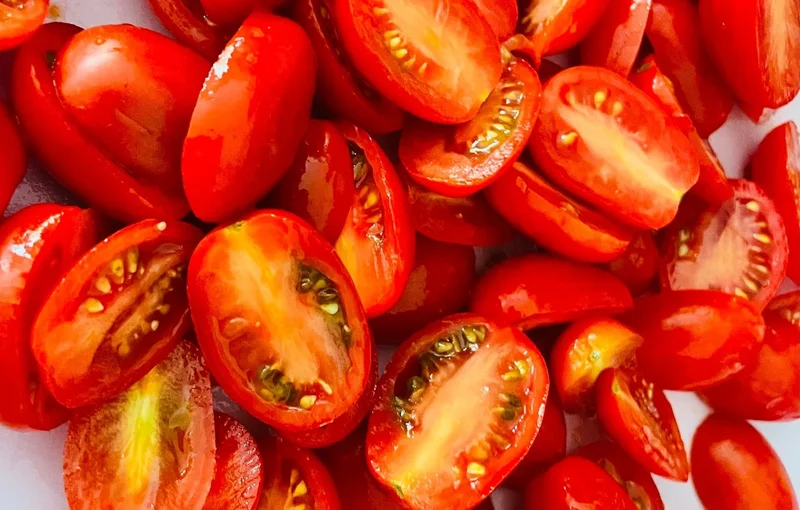
Effect of Tomato Consumption on Liver Steatosis in MASLD: A Randomized Controlled Trial (POMOSANO Study). Image Credit: Stephanie Laterza / Shuttertock
A recent exploratory randomized controlled trial in the journal Nutrients investigates whether daily tomato consumption influences controlled attenuation parameter (CAP)-defined hepatic steatosis in adults with metabolic dysfunction-associated steatotic liver disease (MASLD) and a body mass index (BMI) of 30 kg/m² or lower.
Dietary Management of MASLD
Metabolic dysfunction-associated steatotic liver disease (MASLD) is the most prevalent chronic liver disease worldwide and is closely associated with obesity, insulin resistance, and cardiometabolic dysfunction. Hepatic fat accumulation, along with oxidative and inflammatory stress, can contribute to progression toward fibrosis, cirrhosis, and hepatocellular carcinoma. Current management emphasizes lifestyle modification, with dietary intervention as a central component.
The Mediterranean diet is linked to reduced hepatic steatosis and improved metabolic outcomes in MASLD. However, most guidelines focus on overall dietary patterns and weight loss, with limited insight into the effects of specific dietary components. Identifying foods that may influence hepatic steatosis without major weight reduction remains a key gap in optimizing nutritional strategies for MASLD.
Tomatoes, a fundamental component of the Mediterranean diet, are rich in carotenoids, particularly lycopene, as well as other antioxidant and anti-inflammatory phytochemicals. The bioavailability of these compounds is influenced by food processing methods, with lycopene being more readily absorbed from cooked tomato products.
Mechanistic studies indicate that tomato-derived bioactives may modulate oxidative stress, inflammatory pathways, and hepatic lipid metabolism, all of which are integral to MASLD pathogenesis. Although observational studies suggest an inverse association between tomato consumption and hepatic steatosis, randomized controlled evidence assessing the specific effects of tomato intake on CAP-defined hepatic steatosis in adults with MASLD remains limited.
Tomatoes as a Modifiable Dietary Factor in MASLD
The current exploratory randomized controlled trial evaluated whether daily consumption of raw tomatoes and tomato sauce could reduce CAP-defined hepatic steatosis in lean and overweight adults with MASLD.
The single-center Italian trial randomized adults with MASLD to receive either a daily tomato-rich diet or a tomato-free diet for 6 weeks. Eligibility required age 18–65 years, diagnosis of MASLD by established criteria, evidence of hepatic steatosis, and at least one cardiometabolic risk factor. Individuals with excessive alcohol intake or other liver diseases were excluded.
Hepatic steatosis was confirmed using CAP, an ultrasound-based transient elastography measure that estimates hepatic fat accumulation, with a threshold of at least 275 dB/m. Participants with BMI >30 kg/m² or alternate liver diseases were excluded. Of 415 people who completed an online questionnaire and self-reported hepatic steatosis, 88 met the eligibility criteria, and nine withdrew before enrollment. The remaining 79 participants were randomly assigned, 37 to the control group and 42 to the intervention group.
The intervention group consumed 200 g/day of raw tomatoes plus 50 g/day of tomato sauce; controls maintained a tomato-free diet. All participants received standardized dietary instructions and were advised to maintain their usual lifestyle. Tomatoes and sauce were sourced from a certified producer employing standardized hydroponic cultivation to ensure consistency.
Clinical assessments, including weight, height, waist and neck circumferences, and BMI, were performed at baseline and after 6 weeks, following standardized procedures after overnight fasting. Body composition was assessed by bioelectrical impedance analysis and dual-energy X-ray absorptiometry (DXA).
Tomato Intake Was Associated With a Greater Reduction in Hepatic Steatosis Without Major Weight or Metabolic Changes
The control and intervention groups were comparable at baseline in terms of age, sex distribution, predominantly male, and low smoking prevalence. There were no significant differences in demographic or socioeconomic characteristics, although the absence of statistically significant differences does not establish equivalence between the groups.
Body weight, BMI, waist circumference, total body fat, fat mass/height², and visceral adiposity remained largely stable throughout the intervention, with no significant differences between groups at follow-up.
CAP values decreased in both groups, with a greater reduction in the tomato intervention group. The median decline was 35 dB/m in the tomato group and 18 dB/m in controls, and the difference between groups was statistically significant, favoring the intervention.
Statistical modeling confirmed no significant baseline difference in CAP between groups. Over time, the tomato intervention group demonstrated a significantly greater reduction in CAP than the control group, with an adjusted difference in CAP change between groups of −26.63 dB/m (p = 0.003). No significant changes were observed in liver stiffness, the fibrosis-4 (FIB-4) index, a blood-based estimate of fibrosis risk, or FIB-4 risk categories during the intervention period. After 6 weeks, there were no significant differences between groups in glucose metabolism, lipid profile, inflammatory markers, liver enzymes, or hematological parameters.
Integrating Tomatoes Into MASLD Dietary Management
Daily combined consumption of raw tomatoes and tomato sauce for 6 weeks resulted in a greater reduction in CAP-defined hepatic steatosis in adults with MASLD, without substantial measured changes in body weight or metabolic profile. These findings suggest that tomato-based dietary interventions could help reduce steatosis. However, given the exploratory design, modest sample size, short duration, single-center setting, reliance on self-reported adherence, participants’ awareness of allocation, although liver-assessment operators and laboratory personnel were blinded, indirect assessment of liver fat, uncertain clinical significance of the CAP reduction, and absence of circulating lycopene or carotenoid measurements, the results should be considered hypothesis-generating.
Future research should confirm these effects in larger, longer-term, adequately powered randomized trials, determine whether the CAP reduction is sustained and clinically meaningful, and investigate underlying mechanisms, including the role of tomato bioactives and objective adherence measures.
Journal reference:
- Tatoli, R., et al. (2026). Effect of Tomato Consumption on Liver Steatosis in MASLD: A Randomized Controlled Trial (POMOSANO Study). Nutrients, 18(15), 2476. DOI:10.3390/nu18152476, https://www.mdpi.com/2072-6643/18/15/2476