When it comes to Magic: The Gathering and its controversial Universes Beyond branch, players have diverging opinions. While Universes Beyond is an undeniable commercial success, a portion of the Magic audience expresses frustration with the growing range of external IPs appearing in the game. The most common criticism is that these universes often don't feel like they belong in Magic at all; from ninja turtles lurking in the sewers to spider-heroes swinging over New York's skyline, it's a wild leap compared to Magic's established fantasy aesthetic.
However, that isn't always the case. The Lord of the Rings: Tales of Middle-earth and Final Fantasy are two of the most popular Magic sets ever, and they both garnered near-universal praise from fans. Both IPs are very popular, and their fanbases overlap with Magic's own. More than anything, these sets and the worlds they represent feel like they belong in Magic. The good news: more sets like these are coming.
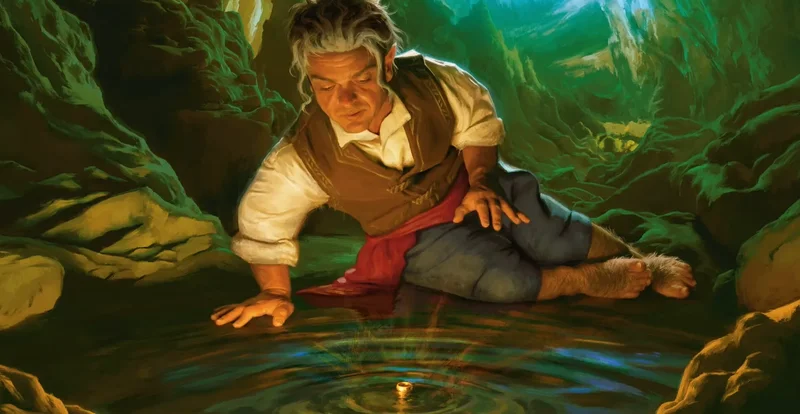
Starting this August, The Hobbit will bring Magic fans back to the world created by J.R.R. Tolkien. During a Q\&A panel held at MagicCon Amsterdam 2026, Magic: The Gathering principal designer Gavin Verhey talked about how the game traces its lineage to Tolkien's work in many ways. "I think that's why The Lord of the Rings and The Hobbit are such a natural fit for Magic: The Gathering," Verhey said. It seems that Wizards of the Coast is acknowledging how fans feel about these sets, too. "For The Hobbit specifically, a lot of our internal testing during development showed that fans wanted to see that 'Magic house style' apply to a lot of the cards," Verhey said.
Magic: The Gathering - The Hobbit
Image: Wizards of the Coast
The topic is surely a hotly debated one. While some fans might feel disheartened looking at the increasing number of Universes Beyond sets in Magic's yearly release schedule, it's at least a little reassuring that the game's top designers still feel that Magic is, at its core, a fantasy game. Speaking with head designer Mark Rosewater in another MagicCon interview, I asked him what the three core elements are that constitute the identity of Magic, and will stay in the game no matter how much it changes. His answer surprised me.
While the first two elements, the color pie and the core rules, were fairly predictable, Rosewater also named high fantasy as Magic's "creative center." "I use the metaphor of a pendulum: It swings and goes different directions, but there is a default state, a center," Rosewater said. "Creatively that center is high fantasy. Even though we keep trying different things, our home, our center is fantasy."
This statement of intent doesn't just refer to the current rotation between Universes Beyond and Multiverse (the word now used to describe Magic's in-universe settings) sets. More fantasy-themed Universes Beyond sets are in Magic's future. Speaking to investors during Hasbro's latest quarterly earnings results, CEO Chris Cocks made an interesting statement: "The one thing I'll say on the Universes Beyond partners that we have next year is they'll probably be a bit more fantasy-adjacent," Cocks said. "And I don't think any of them will take place in New York City because we definitely have gotten that feedback from some fans."
Image: Livia Prima/Wizards of the Coast
Hasbro and the Magic team are clearly very dedicated to their "we listen to the players" mantra. Considering that these sets are planned and developed a long time before their launch, it will be interesting to see if, and how much, the company will be willing to pivot and adjust to cater to fans' demand for more high fantasy in Magic. At least, it's refreshing to hear that the game's top designers still believe that Magic is, at its core, a fantasy game.