Besides Bengaluru, at least 16 districts in Karnataka have over 12% of their voters under the Absent, Shifted, Duplicate, Dead and Others (ASDDO) category.
The districts include Koppal, Gadag, Kolar, Raichur, Kalaburagi, Yadgir, Dharwad, Kodagu, Mysuru, Vijayapura, Bagalkot, Bidar, Ballari, Davangere, Shivamogga, and Vijayanagar.
Notably, most of these very districts also rank among Karnataka’s lowest on the Human Development Index (HDI), according to the Govind Rao Committee report on regional imbalances released earlier this year.
Districts with ASDDO above 12% (as of August 2, 4 p.m.)
| Districts | ASDDO |
| Kalaburagi | 21.95% |
| Mysuru | 20.59% |
| Yadgir | 17.86% |
| Raichur | 17.73% |
| Ballari | 17.50% |
| Dharwad | 17.30% |
| Bidar | 15.57% |
| Vijayapura | 14.96% |
| Kodagu | 13.75% |
| Gadag | 13.49% |
| Bagalkot | 13.40% |
| Kolar | 13.24% |
| Koppal | 12.62% |
| Shivamogga | 12.14% |
| Davangere | 12.13% |
| Vijayanagar | 12.03% |
The report classified most of these districts as “most backward” or “more backward”, noting that nearly 60% of the State’s backward taluks are concentrated in north Karnataka. These very districts also report high gender disparity and literacy gaps.
In contrast, Udupi, one of Karnataka’s highest-ranked districts on the HDI as per the report, has the lowest ASDDO at 5.76%, against 17.86% in Yadgir, though both districts have a similar electorate of over 10.5 lakh voters.
Migration
The low-HDI districts usually have higher labour migration, lower educational attainment, weaker access to public services and greater documentation gaps, all of which can contribute to voters being classified as absent, shifted or requiring corrections.
Speaking to The Hindu, Booth Level Officers (BLOs) said that many voters originally from these districts work in Bengaluru but remain registered in their native villages. Since the enumeration forms were delivered to their home villages, many were marked as “absent”. Moreover, many of them who had shifted their votes to Bengaluru were no longer found in their native constituencies and did not appear in the Bengaluru electoral rolls either, the BLOs said.
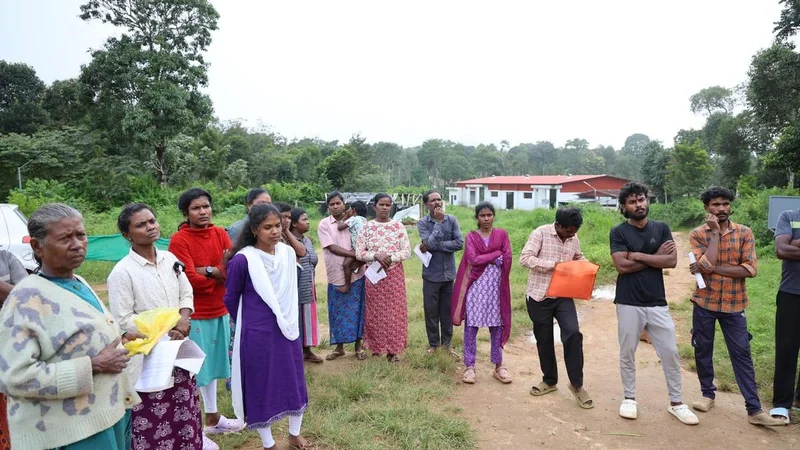
When The Hindu reached out to voters from these districts through unions and citizens’ help desks, most of them said they were unaware of the Special Intensive Revision (SIR) and had been migrating for years to Bengaluru, Hyderabad, Mumbai and Goa for seasonal work. Most of them work as construction labourers, pourakarmikas, or domestic workers.
Lack of documents
These voters also reported significant gaps in documentation. Many said they do not have basic documents beyond Aadhaar and ration cards, and lack proof of residence needed to obtain permanent residence certificates because of the migratory nature of their work.
No notices
Under the ongoing SIR, voters who are not present during enumeration are marked as “absent”, while those not found at their registered address are marked as “shifted”. Unlike the usual revision process, however, no notices are being issued before doing so. Instead, officials are relying only on mahazars. Individuals marked as absent or shifted therefore remain unaware of their status.
While Karnataka Chief Electoral Officer V. Anbu Kumar recently said mahazars are being conducted and neighbours are being contacted for confirmation, the BLOs in these districts argue that in many instances even neighbours are unavailable or unaware of the voters’ whereabouts because entire communities migrate for work.
In Bengaluru, 34.25 lakh of the over 50.34 lakh voters under the ASDDO have been categorised as permanently shifted, with the CEO attributing it largely to migration. A similar pattern is visible in districts from where people migrate. However, officials have not been able to explain where these voters are being accounted for.
For instance, in Kalaburagi alone, 5.20 lakh voters have been placed under the ASDDO, of whom 3.95 lakh have been marked as absent or shifted.
Published - August 03, 2026 06:01 am IST