The latest heatwave seen in western Europe last week are now moving eastwards, with large parts of central and southern Europe set to experience extreme temperatures near 40C, and putting countries at risk of an energy crunch.
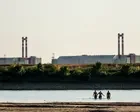
Hungary was forced to shut down most of its sole nuclear power plant, which generates a large part of the country’s energy supply, for the first time in 44 years as the drying out of the Danube made it impossible to cool safely. The nuclear plant is expected to be completely powered down later this week as water levels on the Danube river are projected to fall further.
On Monday, many digital advertising screens will be turned off to save energy, as part of a broader push to seek savings wherever possible.
Hungarian prime minister Péter Magyar warned on Monday that “the hardest five days are ahead.”
Romania and Serbia also reported their lowest-ever water levels, causing issues with hydropower generation.
Budapest and Vienna will see temperatures of up to 37C today, with Zagreb at 36C, Tirana at 35C, and Bucharest at 33C, and these temperatures are expected to last for up to five days.
But that doesn’t mean it will be necessarily much cooler in the west, with 36C in Rome and 34C in Paris.
Elsewhere, I will keep an eye on the political fallout from the migration crisis in Ceuta last week, with EU ambassadors meeting this morning for what is likely to be a fierce discussion on what’s next ahead of tomorrow’s talks between interior ministers.
I will bring you all the updates from across Europe as the day progresses.
It’s Monday, 3 August 2026, it’s Jakub Krupa here, and this is Europe Live.
Good morning.