Your support helps us to tell the story
From reproductive rights to climate change to Big Tech, The Independent is on the ground when the story is developing. Whether it's investigating the financials of Elon Musk's pro-Trump PAC or producing our latest documentary, 'The A Word', which shines a light on the American women fighting for reproductive rights, we know how important it is to parse out the facts from the messaging.
At such a critical moment in US history, we need reporters on the ground. Your donation allows us to keep sending journalists to speak to both sides of the story.
The Independent is trusted by Americans across the entire political spectrum. And unlike many other quality news outlets, we choose not to lock Americans out of our reporting and analysis with paywalls. We believe quality journalism should be available to everyone, paid for by those who can afford it.
Your support makes all the difference.
Read more
Seydou Toure uses a shovel to scrape salt from the lakebed that he will later sell to tourists and traders.
It’s a way of life that sustained him for more than a decade and a half before flooding in 2022 altered the ecosystem, robbing the lake of the salinity that both paid Toure’s bills and gave the water its rosy hue.
Overnight, salt harvesters like Toure lost their jobs and tourism slowed to a trickle, devastating the local economy.
He is standing waist-deep in the waters of Senegal’s famed Pink Lake.
Now that painful chapter appears to be ending: After a yearslong effort to pump excess water from the lake, its old colour is back, and community leaders earlier this month held a traditional ceremony marking its official re-opening for salt extraction..
Seydou Toure, 45, a salt extractor, steers his pirogue filled with salt extracted from the Pink Lake (Lac Rose), officially known as Lake Retba, near Dakar, Senegal, (Reuters)
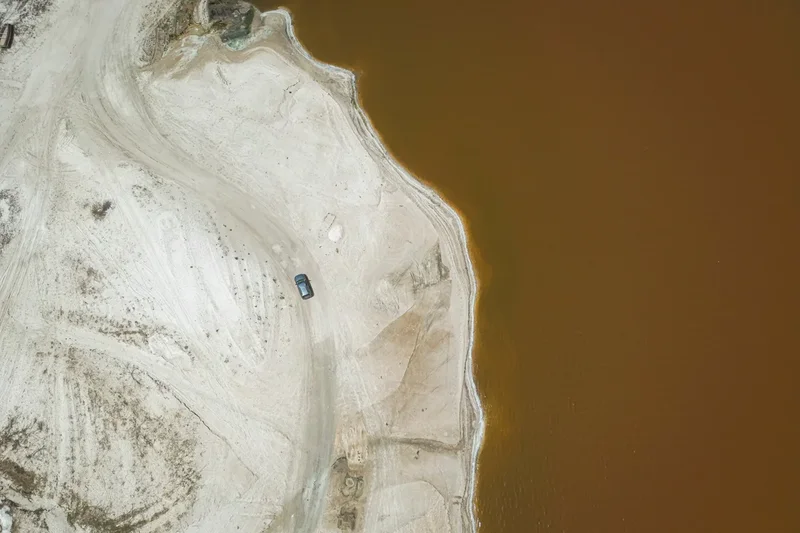
Pink Lake, officially known as Lake Retba, gets its colour from microorganisms such as the Dunaliella salina algae that thrive in highly saline conditions, according to geologist Cheikh Ibrahima Youm of Cheikh Anta Diop University in Dakar.
Roughly 3,000 salt harvesters normally work at the lake located 30 km northeast of Dakar, according to Ibrahima Mbaye, president of a local NGO dedicated to protecting the lake. Nearly 2,000 additional people depend indirectly on the industry through activities like transport and trade, he said.
Most years, the lake can also attract between 7,000 and 8,000 visitors during the tourist season, which runs from October to May, he said.
But in August 2022, during a period of severe flooding in Dakar, authorities diverted floodwaters into Pink Lake, using it for emergency drainage because it is in a low-lying area, Mbaye said.
The influx of freshwater diluted the lake’s highly saline waters, disrupting both salt formation and the conditions needed for its famous pink colour, Youm said.
"We woke up one morning, and we had lost everything," Toure said.
Seydou Toure, 45, a salt extractor, extracts salt from the Pink Lake (Lac Rose), officially known as Lake Retba, near Dakar, Senegal, June 24, 2026. REUTERS/Raghed Waked (Reuters)
Associations representing salt producers, tour operators, artisans and local businesses immediately got to work raising around 23 million CFA francs (around $40,000) to fund pumping operations aimed at removing excess water from the lake, Mbaye said. The money was used to rent pumps, buy fuel and install roughly 600 metres of piping to drain water towards the sea, he said.
Around 100 volunteers helped install, operate and monitor the pumping system, Mbaye said, adding that local authorities later helped by providing a larger pump and electricity.
As salinity gradually returned, so did the lake's colour.
Local hotels are now preparing for tourists to follow suit, and Toure is once again spending hours in the water extracting salt.
"The work is physically demanding," he said, rubbing shea butter onto his skin for protection.
But he has no qualms with his chosen career.
"The money I earned from this salt allowed me to buy land, horses and cattle. Everything comes from the lake," he said.
"If someone wanted to become a salt harvester, I would tell them not to hesitate... it's worth it."