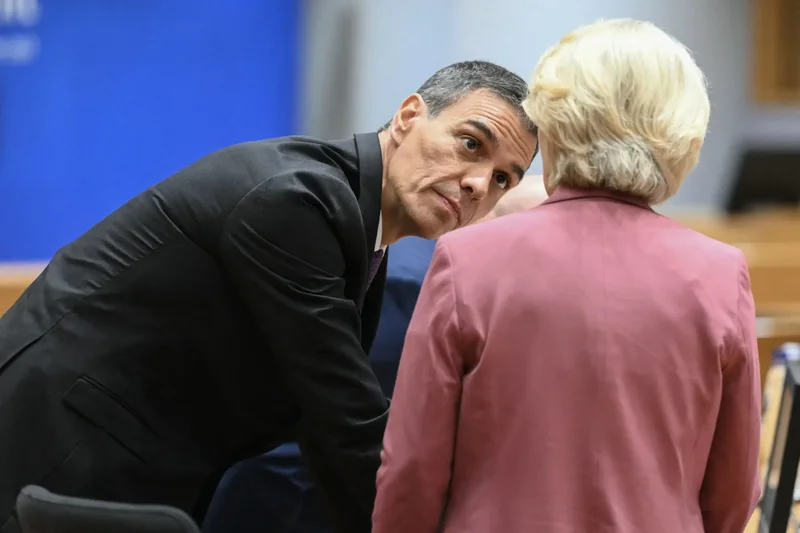
"From this incident, it is clear that we must do more to further strengthen our borders at critical points," von der Leyen wrote in a letter to Spanish Prime Minister Pedro Sánchez seen by AFP.
"The protection of all our external borders is a shared European responsibility," she warned, calling for "vigilant monitoring and the use of physical barriers where needed."
Von der Leyen commended Sánchez on the "swift handling" of the crisis that saw tens of thousands of people stream into Ceuta from Morocco -- almost all of whom have since left.
READ ALSO: Spain's Ceuta enclave returns to normal as migrants depart
But the unprecedented scenes in Ceuta triggered sharp tensions among the European Union's 27 member states, with migration hawks Italy and Denmark in particular calling for Spain to be suspended from the Schengen free-travel area.
I held a conference call with Commissioners @magnusbrunner and @dubravkasuica for an update on the situation in Ceuta.
— Ursula von der Leyen (@vonderleyen) August 1, 2026
The good news is that the vast majority of those who arrived illegally have returned to Morocco, due to the effective work of Spanish and Moroccan law…
Madrid pushed back firmly at what it called a "selfish" proposal - which in any case is legally impossible under EU rules - while calling for emergency talks among EU interior ministers to chart a way forward.
The videoconference set for Tuesday will be a chance to draw "lessons" from the Ceuta episode, von der Leyen said, warning the challenges of illegal immigration require "a common European response, united action and solidarity".
READ ALSO: EU countries call for talks over migrant influx into Spanish enclave
The commission chief urged the bloc to "double down" in five areas: preventing irregular migration in the first place via cooperation with partner states; strengthening external borders; implementing early warning systems; dismantling smuggling networks and reinforcing returns.
Framing Tuesday's meeting as a "first step," von der Leyen said she expected leaders would take up the issue at their next summit, currently planned for October.
The EU has significantly tightened its migration rules in recent months, including by allowing member states to send failed asylum seekers to so-called "return hubs" located outside the bloc's borders.
READ ALSO: What happens to undocumented migrants after they arrive in Spain?