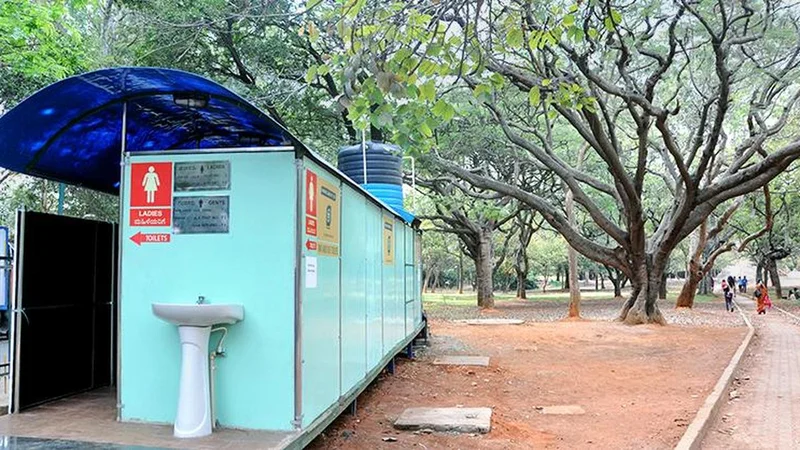
There is only one public toilet for every 25,000 to 30,000 people in Bengaluru. And, even among those available, more than one in four toilets were found to be non-functional, according to a citizen-led audit released on July 22.
The findings are part of the Bengaluru Public Toilet Audit Report 2026, released by the Bangalore Political Action Committee (B.PAC). The survey, carried out during April and May by B.PAC’s B.CLIP civic leaders and student volunteers, assessed 142 public toilets across the Greater Bengaluru Authority (GBA) limits for cleanliness, functionality, safety, accessibility and overall user experience.
Findings of the audit
37 toilets — 26% of the total surveyed — were non-functional
Oonly 6 were listed as ‘very clean’
More than half had a persistent foul odour
Water available in only around 40% of functional toilets
Only 56% of the toilets were adequately lit
Only 9 of the toilets surveyed had ramps for persons with disabilities
None had soap dispensers or dustbins
No mention of details of contractor and user charges at many locations
Source: Bengaluru Public Toilet Audit Report 2026
One of the findings of the audit was that only 56% of the toilets were adequately lit, which, the report stated, raised safety concerns, especially for women.
Accessibility
Accessibility was another major concern. As per the report, only nine of the toilets surveyed had ramps for persons with disabilities. None had soap dispensers or dustbins, and contractor details and user charges were absent at many locations, making it difficult for citizens to know who is responsible for maintenance.
According to the report, Bengaluru currently has around 900 public toilets, of which 479 are officially listed under the Greater Bengaluru Authority. B.PAC said the city’s public sanitation infrastructure has not kept pace with its population growth, now estimated at over 1.4 crore.
Among its recommendations, the organisation has sought a 30-day repair drive to restore all non-functional toilets, creation of a dedicated ‘Public Toilet Management Cell’ under the GBA, and a shift from construction-focused contracts to long-term operation and maintenance contracts.
It has also recommended ensuring regular water supply, adequate lighting, soap dispensers, and dustbins in every facility, besides making toilets accessible to persons with disabilities, and increasing the number of women-friendly and gender-inclusive toilets.
B.PAC has requested the Karnataka government and the GBA to construct more than 1,000 additional public toilets through the public-private partnership (PPP) model. It has recommended prioritising high-footfall areas such as bus terminals, Namma Metro stations, markets, parks, tourist destinations and construction sites.
Published - July 22, 2026 03:55 pm IST