Despite a long running addiction to science-fiction novels, Iâve tried to avoid worrying too much about all of the scare stories around artificial intelligence.
Thereâve been plenty of them. Wordy monographs on how AI will achieve sentience in 18 months. Or that it will become self-generative, or be able to make cleverer versions of itself in a year.
Or will just be able to literally take over by lunchtime tomorrow.
Iâm afraid to report I am beginning to re-evaluate my position. And I think the first real threat we face from AI is going to come not loudly or obviously or even, dare I use the word, consciously.
It seems that it might creep up on us.
Over the weekend, the news agency Reuters (which is still run by humans) ran a series of stories about how Anthropic and OpenAI had admitted that more AI models (if you are of my vintage and have ever programmed something in Basic you would call it a âprogramâ) were able to, quite literally, escape.
As this human understands it, when a new AI programme is being tested, they give it something called a sandbox.
The idea is to give it a place where it can be given a task and certain resources to fulfil that task.
In a couple of cases these models were told to work out how to hack into certain networks or companies.
The models then realised they needed certain tools to do that, and could tell where those tools were. They then, through some kind of back door or mistake or human error, were able to get out of their sandbox and into the internet proper.
And as you know, once something is out in the open on the internet, whether it be an AI model or a teenager, there is no knowing where it will end up.
In all of these cases, whether from Anthropic or OpenAI, it seems that no one knew this was happening in real time. It was only after the fact, during a review or for some other reason, that these sandbox breakouts became known.
Well, to humans at any rate.
Itâs entirely possible that, right now, some model has broken out somewhere and is doing whatever its original mission was. And no one knows.
Or if they do, theyâre not telling anyone because theyâre too scared of the consequences.
Itâs amazing to me how the people who are supposed to stop this kind of thing are concentrating elsewhere.
The major governments involved, the US and China, are simply too interested in trying to win the rivalry between them to really rein in the people who are doing this.
The companies involved are simply trying to win a race. It is obvious that they donât care about anything else.
As Reuters quoted Maurice Chiodo from Cambridge Universityâs cheerfully named Centre for the Study of Existential Risk: âWe have a whole industry where the people designing, developing and putting out these tools arenât keeping up themselves to responsibly develop these things and keep them safeâ.
Iâve mentioned before that my real fear with these things is actually about cybersecurity and our banks, and how I would rather have Eskom fail to the point we have a national shutdown for a week rather than have one of our big banks be hacked and then fail (from all of the conversations Iâve had with our banks I am very confident that will NOT happen).
But how would you know if one of these AI models had not, somehow, infected something else that you use daily?
We have become so used to depending on computers that any collapse in one of so many systems could handicap us for a long long time.
Imagine, for a moment, that one of the cellphone networks goes down. Or just one of the Samsung or iPhone models. Or anything even remotely requiring a connection to the net.
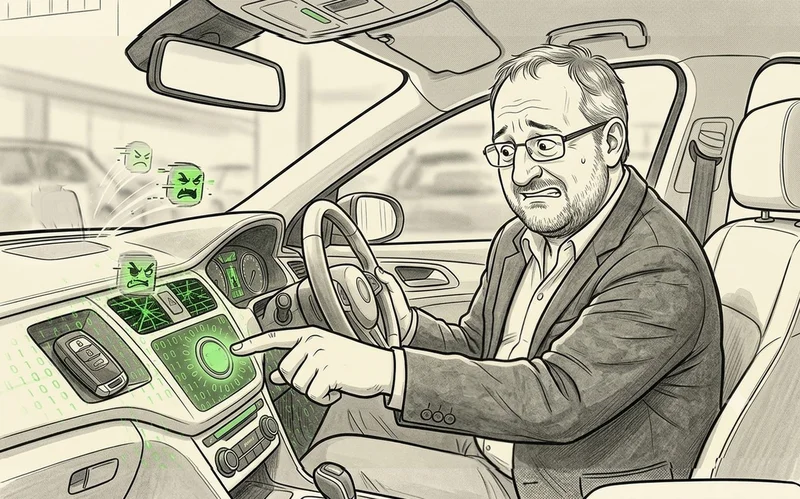
Unfortunately, I have a horrible feeling that, in fact, whenever I sit in my car, check the key is in its allotted nook, and press the handily labelled âstart buttonâ, somewhere a computer is involved.
In fact, a couple of months ago, a car repairer, decrying the complexity of new car parts on The Money Show, told me that, nowadays, in most cars an indicator is also a computer.
I, being merely human, obviously cannot tell you what will happen.
But I do wonder if the first impact might be to make us all a little more wary of the devices we use, and our almost complete and utter reliance on them.
Iâm not suggesting you need to throw away your phone (although I have days when I really, really, REALLY want to).
But perhaps, just perhaps, we all need to be a little more careful about what we let into our lives and when.
Especially when we hit that âupdateâ button, whether itâs on your phone, in your car, or wherever. DM