Africa has had good leaders throughout its history who have been empire builders, thinkers, traders, kings, diplomats, and freedom fighters, who have established civilisations and made their impact on World history. Certainly, before the rise of the modern nation-state, Africans already had elaborated political, trading, and intellectual networks, extending from Timbuktu to Great Zimbabwe, from Benin to Axum. But even if the continent has such a rich history, there is one issue that haunts the discussions about the future of Africa: why has a continent blessed like this not managed to create institutions of prosperity and good governance?
The usual answers are certainly not entirely off base. Colonialism had a significant impact on the politics and economy of Africa. Outside interference, imbalanced world markets, and geopolitical competition have historically prevented the continent from developing. While all that is true, it does not tell the full story. The crucial issue is not just what history has done to Africa, but what Africa has been doing with its history up until now. It is an inescapable issue of leadership.
Leadership is often viewed simply in terms of people and elections. Public discourse fluctuates between berating corrupt politicians and hunting for a “saviour-president,” who will steer the country towards success. This approach is a misconception of the very essence of leadership. Leadership is not just the art of governing but the process of creating institutions, gaining people’s trust and wielding power for the benefit of society. It defines how governments enhance their societies or serve themselves.
This is why Africa’s problem with its leadership has outlasted all transitions in politics. There have been military governments, there have been democracies with constitutions and political parties, but in many African countries, the nature of the relationship between the state and the citizen has not evolved nearly as much as the language surrounding it. Governments may have changed, but too often, their styles of governance have remained locked into old cycles of patronage and centralisation. The historical origins of this phenomenon include the legacy of colonial government, which was intended to rule over subjects and not citizens. Its institutions were oriented towards extraction and not participation, obedience and not accountability, and administration and not democracy. Political independence brought about the transfer of sovereignty, but it did not prove so easy to change the cultures of governing as it was to raise new flags. Postcolonial governments have been bequeathed bureaucracies meant to rule over citizens and not serve them.
| | |
|---|
Yet history must not serve as an alibi for failure. It informs but does not dictate destiny. Africa’s history since independence illustrates that institutions emerge from political decisions. It is governments, judges, legislatures, media, academics, civil servants, and citizens who give their countries their institutional characteristics. The continent’s future will depend less on what it inherited and more on what it will create. That is why the leadership crisis facing Africa is also institutional. For decades, many societies have sought the exceptional individual that would save the state. At each election, the belief emerges anew that some charismatic leader will root out corruption, rejuvenate economies or unify divided states. History suggests little encouragement for that belief. Countries are not made stable by having occasional exceptional leaders but by having institutions that can continue good governance after those exceptional leaders have gone away.
However, power and leadership are different. The first aims at perpetuation, whereas leadership is about taking responsibility. Power requires obedience, while leadership wins the trust of the people. Power centralizes it, while leadership diffuses it via institutions that will operate independently from the founder of such institutions. It is not just a philosophical statement. This difference affects the independence of courts, the credibility of elections, the professionalism of civil servants, and the belief of people in the fact that government exists for the benefit of the citizens. The African experience provides vivid examples of that. The legacy of Nelson Mandela, the President of South Africa, is not only his governance but his ability to show the way to exercise political power wisely. Likewise, Seretse Khama managed to build institutions in Botswana that remained even after his presidency. Both leaders achieved success not because of the amount of power they had but because of their institutions. Personal governments face difficulties in surviving the political transition.
Strong institutions need more than just constitutions; they need intellectual confidence. Any nation that continuously questions the legitimacy of its knowledge cannot be considered an institution. Discussions about African development have, for too long, revolved around vocabulary and perspectives that Africans did not develop. While some of those frameworks have been beneficial, policies have travelled from continent to continent without sufficient knowledge of history required to implement them appropriately. Africa needs to do the same. African universities, research organizations and policy communities must take the initiative of becoming generators of knowledge instead of consuming knowledge generated by others. Good governance must begin with the question: “What works here?” This can only happen with a good degree of historical literacy and intellectual freedom.
It is therefore clear why education plays such a prominent role in Africa’s future. If a society teaches its young leaders to revere the history far away from home without knowing anything about its own intellectual tradition, it is undermining its leadership before it even comes into power. Africans need to study Shakespeare in parallel to Achebe, Weber in parallel to Nyerere, and Jefferson in parallel to Nkrumah, not as some symbolic gesture but because good leadership is impossible without understanding how African reality is explained by its historical tradition while being linked intellectually to the rest of the world. If intellectual confidence is the base of leadership, then ethics is its criterion. Public discussion often mixes up moral issues with those of governance. The public wants honest leaders, governments fight corruption, political parties pledge for transparency. Corruption persists because ethical governance is not only about personal virtue.
Public office is a public trust. Roads are built for farmers, traders and schoolchildren — not for ministers. National budgets are for the taxpayers, not the government. The constitution is meant to serve the people against any abuse of power. When this perspective is eroded, politics slowly turns into a means of accumulating private interests at the expense of providing public service. Ability is sacrificed for connections, institutions become subservient to individuals, and citizens resort to lobbying more than justice. The solution requires much more than just regime change. It requires the building up of a republic.
Throughout the African continent, the practice of constitutional democracy is still being developed. Election matters because it enables the citizenry to elect their representatives peacefully. However, elections do not provide a sufficient mechanism for guaranteeing accountable governance. Democracy is in the day-to-day running of institutions such as the judicial branch, the electoral body, the bureaucracy, the parliament, and the media. This is not something that only the affluent nations can afford.
There are arguments that Africa needs less democracy and more discipline, arguing that constitutional restraints impede development and that having all power in the hands of an executive speeds up the process. There is little historical evidence to support this view. It is certainly true that authoritarian regimes can construct roads fast, but roads are not enough to build nations. Roads can be built in just a few years; public trust takes decades to develop.
Development that is dependent on one person does not outlive him or her. African leadership will have to be informed not only by institutions but also by the political culture of Africa. Far too often, the debate on development offered a false dilemma: African traditions versus modern governance. But Africa has always made progress by adapting and never imitating anything. The value of Ubuntu, the Yoruba idea of Omoluabi, and many other ethical values of African societies should show us that power is legitimate because it serves the community and takes care of it. These traditions should not be romanticized, but they should not be dismissed either.
Indeed, the future of Africa depends more on the development of ordinary governments that operate exceptionally rather than finding exceptional leaders that operate mediocre governance. This continent has been blessed with sufficient talents, innovativeness, and resilience. Its entrepreneurs are revolutionizing industries, its academics are growing knowledge, and its youth are defining Africa’s role in the world today.
The question is no longer whether Africa can produce competent leaders. History has already made it clear. The question is whether it can build institutions befitting such talent. The art of leadership is not the duty of presidents alone. It is also the responsibility of universities that nurture independent thought, journalism that checks accountability, courts that respect constitutionalism, schools that instil civic values, businesses that conduct themselves ethically, and citizens that do not give up public affairs to patronage and impunity. Africa’s next act will not be played out by extraordinary personalities alone. It will be enacted by nations that understand one fundamental truth: that nations are not strong because they have finally found their perfect leaders, but because they have developed the institutions to deal with their imperfections. That is the uncompleted task of leadership in Africa today.
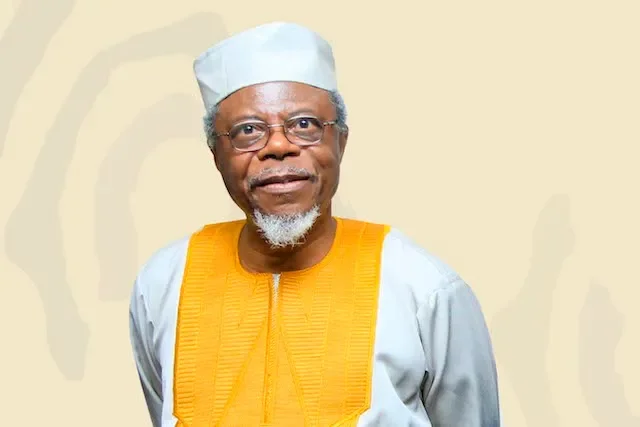
Toyin Falola, a professor of History, University Distinguished Teaching Professor, and Jacob and Frances Sanger Mossiker Chair in the Humanities at The University of Texas at Austin, is the Bobapitan of Ibadanland.
PS: Excerpts from Seminar on Leadership and Governance for Africa’s Renewal, UNISA, 22 July 2026.