Trump says Iran facing ‘last chance before decapitation’
WASHINGTON – US President Donald Trump said Monday that negotiations with Iran were ongoing despite Tehran’s denials and the Islamic Republic was facing a “last chance before decapitation.”
Trump, speaking to reporters at the White House, said he agreed to continue to pursue talks with Iran at the request of Saudi Arabia, the United Arab Emirates, Qatar and other countries.
Iran’s foreign ministry denied on Monday that negotiations with Washington were taking place, but Trump insisted they were. “We are talking right now,” he said.
Article continues after this advertisement
“This is a last chance for them to sign a good document,” the US president added. “I want to give them every last chance before decapitation.”
The talks are focused on reopening the Strait of Hormuz, which Trump said could come “literally by tomorrow,” and the denuclearization of Iran, which he said could “take a little while.”
Washington and Tehran have been at war since February 28, when the United States and Israel launched surprise strikes against Iran, though months of on-and-off diplomacy have led to periods of relative calm.
More than five months later, Iran remains able to fire missiles and drones at US and allied targets in the region and retains its enriched uranium stockpiles.
In what has become a familiar pattern, Trump last week had threatened to hit Iran “very hard” — potentially with renewed attacks against energy infrastructure — only to pull back on Saturday, saying the “perimeters” of a deal were there.
Article continues after this advertisement
Iran, for its part, said it is not currently negotiating with the United States.
“Our negotiations are with Oman to secure passage through the Strait of Hormuz,” the critical oil corridor, foreign ministry spokesman Esmaeil Baqaei said.
Article continues after this advertisement
Hormuz
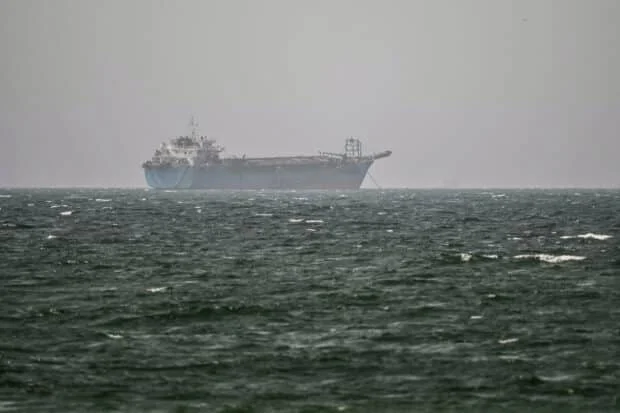
Hormuz has been a major sticking point in efforts to end the war. Since a ceasefire broke down, Iran has reprised a blockade of the waterway that it first imposed early in the war, obstructing vessels attempting to pass and firing on commercial ships.
Calling Tehran “duplicitous” for “openly and proudly” saying it was not negotiating, Trump wrote on social media: “Whether Iran wants to admit it or not, we are, in fact, talking of a solution to a problem that they have caused, for decades.”
He pointed to the United States’ counter-blockade of Iranian ports, adding: “Nothing gets through to Iran, unless we want it to, and nothing will get through, unless a Deal, or Total Surrender, is accomplished.”
Before the war, there was free passage through Hormuz, but Iran now insists on retaining control and charging fees, something the United States rejects.
Tehran has refused to let ships travel any route other than one that hugs the Iranian coast.
On Sunday, Baqaei told state television that a deal was close on managing Hormuz together with Oman, which sits on the other side of the narrow waterway.
“We are now going to reach an understanding on a route acceptable to both sides — neither the northern route nor the southern route — but one that respects the sovereign rights of both sides and safeguards our national interests and security,” he said.
But he insisted that such an agreement did not mean the reopening of the strait.
On Sunday, a tanker off the coast of Oman reported hearing an explosion nearby, the United Kingdom Maritime Trade Operations (UKMTO) Centre reported, but the ship and crew were all reported safe.
Denuclearization ‘has to happen’
The US president said at the start of the conflict that the war was necessary to deal with Iran’s nuclear program and he repeated on Monday that “the denuclearization of Iran has to happen.”
Western nations accuse Iran of seeking a bomb, though Tehran insists the program is entirely civilian in nature.
Speaking to reporters on Air Force One over the weekend, Trump said he had been asked by Iran as well as regional US partners to hold off on further strikes, which he claimed would have been “the biggest attack since World War II.”
Iranian media denied that Tehran had asked Trump not to strike.
A previous ceasefire deal fell through last month. It was supposed to open the Strait of Hormuz to ships carrying vital energy exports from the Gulf to feed the global