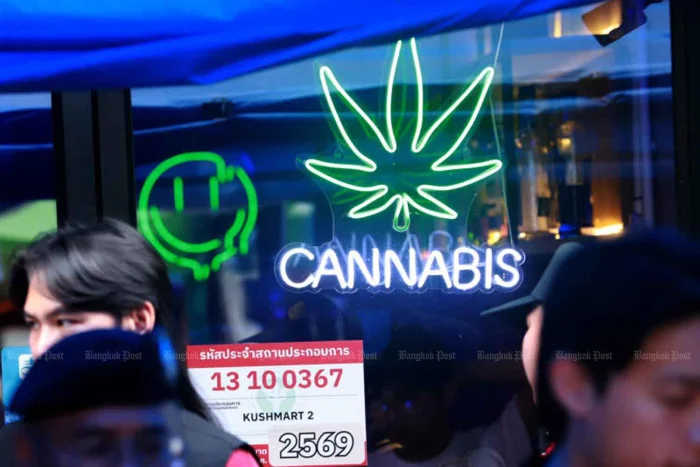
The Ministry of Public Health has stepped up enforcement of cannabis rules, revealing the results of operations conducted since October.
Public Health Minister Pattana Promphat on Monday attended a meeting on guidelines for enforcing cannabis regulations under the Protection and Promotion of Thai Traditional Medical Knowledge Act.
Mr Pattana said his ministry was pressing ahead with the draft Cannabis and Hemp Act, designed to limit cannabis to medical use while preventing recreational consumption and reducing risks to children and young people.
Since enforcement began last October, authorities have inspected 1,326 cannabis shops, carried out 83 seizures and begun legal proceedings against 40 individuals or businesses. Products worth more than 109 million baht have been seized.
Officials have also suspended 84 operating licences, revoked four and reviewed 39 appeals against suspensions or revocations.
Mr Pattana said the meeting was aimed at ensuring officials applied the rules consistently. Participants from the ministry, the Royal Thai Police (RTP) and local administrative bodies were trained on procedures covering cultivation, sales, medical use and inspection of licensed businesses.
Officials will now inspect premises nationwide. Violators could face corrective orders, licence suspension, closure or prosecution, depending on the severity of the offence.
Mr Pattana acknowledged that political turmoil had delayed cannabis legislation in recent years but said the government remained committed to accelerating the bill, dismissing concerns over ongoing uncertainty surrounding its passage.
He reiterated his ministry's long-standing position that "cannabis is for medical use only".
Extracts containing more than 0.2% tetrahydrocannabinol (THC) remain classified as narcotics under existing law, he said, but any broader move to reclassify cannabis would rest with the relevant authorities, said Mr Pattana.
If the new act takes effect, cultivators will be required to obtain permits under the framework. Licensed retailers will be allowed to continue trading until their current three-year licences expire, after which they must comply with the new rules.