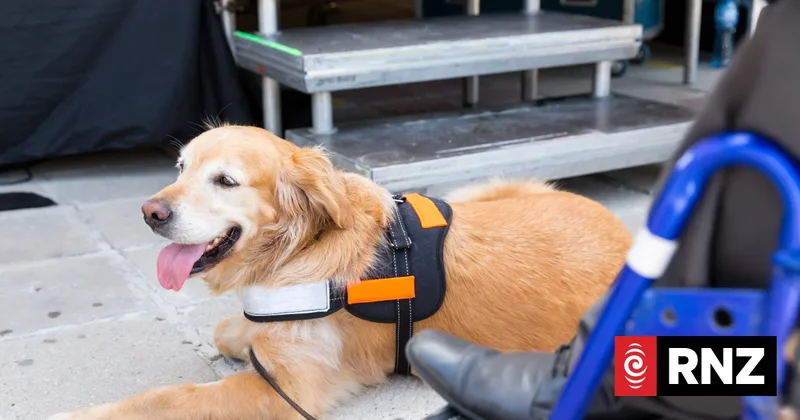
Auckland Transport has apologised after a passenger was denied a bus ride with an unmuzzled disability assist dog three years ago.
Yuchen Zheng was accompanied by a disability assist dog named Echo upon boarding an AT bus in August 2023 but was incorrectly told the dog needed a muzzle to use the service.
Zheng was asked to leave, according to the Office of Human Rights Proceedings, which represented the complainant.
"Disability assist dogs are allowed to travel the Auckland public transport network at all times without a muzzle," the office said.
AT apologised for the incident and acknowledged it did not meet the standard of service it strived to provide.
Rachel Cara, general manager of public transport operations at AT, said the incident reinforced the need for clear guidance and education across the public transport network.
"This incident highlighted the importance of ensuring our policies and training are clearly understood across our network," Cara said.
"We apologise for Yuchen's experience and are committed to continuing to improve accessibility and inclusion for all Aucklanders."
AT has since reviewed and clarified its policies relating to disability assist dogs, including updated customer information, and the provision of additional guidance and training to frontline staff and operators.
The transport agency also promised to launch an updated driver training programme that included guidance on disability assist dogs and inclusive customer service later this year.
Zheng was optimistic about the changes.
"I know accessibility is a long-term issue to resolve, and I won't be able to do this alone," Zheng said.
"I am happy to be working together with AT. I believe we can change this together, and I believe through our efforts things can become a little better than they were."
Nicole Browne, principal solicitor at the Office of Human Rights Proceedings, said accessibility was an essential right guaranteed by the United Nations Convention on the Rights of Persons with Disabilities.
"It is encouraging to see the steps taken by AT to enhance accessibility and to ensure an inclusive experience for customers like Yuchen and Echo," Browne said.
AT's website shows that disability assist dogs, which are trained or in training to assist a person with disability, may legally enter any public space.
These dogs can be recognised by the jackets they wear.
People are reminded not to pat or talk to the dogs when they are at work.
Disability assist dogs never wear a muzzle, while their handlers have access to priority seating areas on bus, rail and ferry services.
Handlers hold organisational photo or mobile app identification that can be presented if required, according to AT.