I was alarmed this week to read warnings about the deadly side effects of ADHD medication – but not particularly surprised.
I was diagnosed with the condition six years ago, at age 34, and have been taking Adderall on and off ever since. Unlike the antidepressants I’ve been taking for decades, these pills have a very pronounced impact on my mood, body and personality (and not always positive). It is certainly not a drug I would dream of giving my children, if they are ever diagnosed with ADHD.
As the Daily Mail’s Dr Max Pemberton revealed on Monday, lesser-known studies show that after five years on ADHD medication, the risk of heart disease climbs by almost a quarter. I can only assume it’s a matter of time before we get much stricter about regulating this and similar drugs, particularly given the stratospheric rise in people being diagnosed with ADHD these days. I worry some will have heart defects they don’t know about, and for whom the drugs will be dangerous.
I’m less worried about the heart implications personally, given I’ve had extensive checks and have no abnormalities. My blood pressure, too, has always been low, so the risks are negligible.
I do experience a racing pulse that makes me jumpy at times, like I’ve had too much coffee – unsurprising, given the medication is essentially pharmaceutical speed.
It’s why Justin Bieber gave up his ADHD pills in 2016. ‘I’ve been getting a lot of anxiety, and they think it’s stemming from the Adderall,’ he told GQ at the time. ‘That’s why I’ve stopped taking it. Or else I wouldn’t stop.’
He’s probably referring in the last sentence to the benefits that almost outweigh the jitters: namely that it enables him to concentrate, sit still, remember appointments and be more ‘normal’.
To people who have ADHD, the medication does just that – it quietens the noise in our heads and makes us more ordinary. Conversely, if you don’t have ADHD, it will make you feel ‘high’, which can be addictive and is why it’s a controlled substance.
Annabel Fenwick Elliot was diagnosed with ADHD six years ago and has been taking the medication Adderall on and off ever since
Justin Bieber gave up his ADHD pills in 2016, telling GQ at the time that he had ‘been getting a lot of anxiety’ which was thought to be ‘stemming from the Adderall’
The reason I have such a love-hate relationship with Adderall is what it does to my character. In the simplest terms, it makes me boring. My job as a writer suffers when I take it – rendering my work bland – and my husband finds me less interesting. More organised and less scatty, sure, but my spark is gone.
This is a good sign that the drug is doing its job, which is to mitigate the symptoms of ADHD. On days when I have to wade through admin, or wait around in long queues, or tidy up, it’s useful.
Really what it does is enable minds like mine – erratic, impulsive, forgetful – to function in a society which was built for people who are neurotypical. And yet, it is a bit like a temporary lobotomy. It takes away what makes us who we are.
Humanity has always needed a certain percentage of individuals not to fit the mould, which is why some experts don’t see ADHD as a ‘disorder’ at all. Indeed, evolutionary scientists believe ADHD, which is strongly hereditary, has remained in the gene pool precisely because it has been useful since we were cavemen.
According to the Sultan Lab for Mental Health Informatics, at Columbia University in New York: ‘In the context of hunter-gatherer societies, the traits associated with ADHD – notably novelty seeking, impulsivity, and a heightened state of alertness – likely offered considerable adaptive advantages.
‘This inherent inclination towards exploration would have propelled individuals to uncover vital resources such as food and shelter, essential for the survival and prosperity of their communities.’
My husband Julius is torn over my ADHD. If you know someone who has it, you probably find them annoying and endearing in equal measure. Annoying because they talk too fast, tend to interrupt you and are likely to be late or forget commitments altogether. Endearing because they’re also lively, kooky and entertaining.
My impulsive behaviour is one of the reasons Julius, a pilot, and I got together in the first place. We met in Santorini in Greece during the pandemic, when he was living there, and spent only 24 hours together. It was exciting enough for me to book another trip back a few weeks later; not one I could really afford.
I probably wasn’t taking my Adderall during that time. If I had been, would I have made such a reckless decision for a man I hardly knew? Maybe not, but it’s a good thing I did.
You see, there are lots of good attributes to ADHD that deserve recognition. When harnessed correctly, I consider them superpowers. We perform best under pressure, so we’re great to have around in an emergency. I can almost feel my IQ multiply whenever disaster hits.
We’re creative problem solvers, known for thinking outside the box. We take risks in a way that makes us good entrepreneurs. And when something truly fascinates or scares us, we can enter ‘hyperfocus’ – a state of concentration so intense and long-lasting that we forget to eat, drink or even use the loo until the task is complete.
ADHD is not, as it commonly assumed, a total lack of attention. It’s the inability to direct it the way a neurotypical brain does. I can’t choose – try as I might – to focus mine on mundane tasks, and I am terrible at remembering names, dates and other trivial yet useful bits of information.
But obscure topics that really interest me? I fast become an expert. It would make me an unreliable secretary or accountant, but helps in journalism when I’m tackling wacky subjects.
So it comes down to this: if you put every kid with ADHD on medication for life, you’d have a lot more secretaries and accountants in the world. But also a lot less artists.
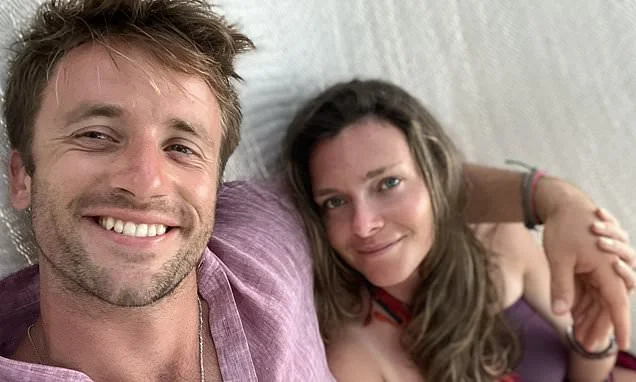
My impulsive behaviour is one of the reasons my husband Julius and I got together in the first place, writes Annabel Fenwick Elliott
When I was diagnosed by ADHD specialist Dr Frances Klemperer, she warned me that my writing would become dull and formulaic on days I took my medication.
There’s a reason, she told me, why so many of her patients are in creative fields, like art, acting, music and writing. It’s because our minds fire in ways that are unusual, off the wall, and thus interesting. She was right: my prose becomes unsatisfactorily ordinary when I’ve taken Adderall.
So, as I've said, I won’t let my children take medication if they turn out to have ADHD, which is fairly likely given the hereditary element – not until they’re adults. I’d much rather help them make the best of its advantages and accept that they might find the rigidity of school tricky.
I will probably always take Adderall when I need to, because like it or not (I don’t), I live in a world where it’s not enough for me to be the cave dweller that hunts and gathers. I have to do my taxes and be on time for meetings, too.
But the moment it starts to affect my heart, or the physical side effects outweigh the benefits, I’ll quit. I muddled through without it before I was diagnosed – albeit a little messily – and I can do it again.
We shouldn’t have to resort to taking speed in order to function in a way that satisfies society. Just like we no longer send women with ‘hysteria’ to the loony bin. Perhaps someday we’ll look back on these days in horror.