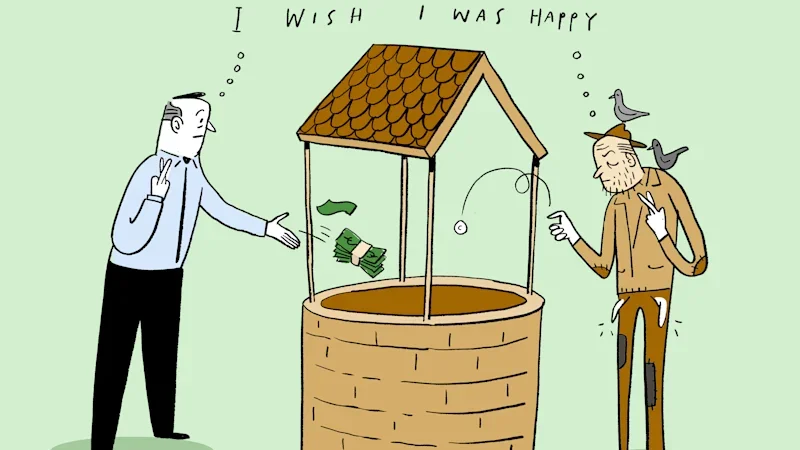
If you’ve hit a ceiling in your financial growth, today’s column is for you. Maybe you’ve been trying to increase your income or business revenue for a while, but it’s not happening.
Perhaps you’ve been diligently saving or investing, but eventually something always sets you back. You just have that feeling that no matter how hard you try – the numbers don’t seem to budge. Today, I’m sharing some of the unconscious patterns that I commonly see and work through with my clients who are struggling to break past a financial ceiling.
Fear of being seen (or judged) as greedy
What this looks like: You worry that people might judge you for having or wanting more than you “need”. You don’t want to be the odd one out. You might already be embarrassed by, or feel bad about, having more than others. You also might see some rich people in the spotlight doing unethical things and think: “I don’t want to end up like them”.
How this holds you back: If you have a negative perception of what it means to have more wealth, then you will keep finding ways to stay at a level that feels comfortable. Why would you want to become something that you think is bad, wrong, unethical or negative? You wouldn’t.
How to start to move past this: First, start to understand where you developed this negative perception from and why. Then, start to gently question the limitations of this perspective. Is it true that all people with significant wealth are greedy? Can someone be poor and greedy, or rich and generous? Does more money for you really mean less money for someone else? Do you actually think you would be greedy – or are you just scared of other people’s judgment?
Attachment to frugality
What this looks like: You got to a certain level of financial comfort through frugality. Now, it’s more than just a habit or a lifestyle; it’s a personality. You second-guess small purchases. You constantly look for the cheapest option. You don’t buy anything you don’t really “need”.
How this holds you back: There’s a saying: “What got you here won’t get you there.” Frugality can help at the start of your financial journey, but after a point, it can hold you back.
If you’ve trained yourself to live within your means and not desire more, you may now have no real incentive to take the risks that would lead to greater growth.
In the short term, this might not be the most lucrative path – but it will be the more sustainable path, long-term.
You’re not even spending the money you do have, so why would you need more? Your strategy has been to train yourself to want less, instead of increasing your capacity to create more.
How to start to move past this: You’ll want to start slowly expanding your capacity to enjoy spending money. This will be an uncomfortable transition to make because it’s going to feel like you’re moving in the wrong direction. However, as you start to enjoy spending money, you will also find yourself more inspired to want to create more wealth.
Chasing growth to ‘prove’
What this looks like: You’ve got a little chip on your shoulder, or something to prove. You want to prove – to yourself or to others – that you can achieve X milestone. Maybe you’re doing it to make your parents proud, or there’s someone in your family who you’re trying to compete with. Perhaps you were underestimated and now want to show what you’re really capable of.
How this holds you back: Wanting to prove something can be a compelling driver, but it often has a ceiling because you’re not driven by what feels inherently fulfilling and meaningful to you, personally. You’re being driven by what you think someone else will be impressed by.
This increases the likelihood of picking a path that isn’t really aligned to your natural talents, strengths and interests – but rather the one that you think will produce an impressive outcome. Eventually, this path might start to feel like a hard slog, which is difficult to sustain long-term.
How to start to move past this: First, you want to start noticing when and why you started feeling the need to “prove” anything at all. Here, you’ll discover the unresolved “wounds” that might need addressing. For many people, somewhere in their past, they learnt to earn love, praise, attention or validation through performance.
Through this process, start to ask yourself: how do you cultivate enough worth, safety and validation, internally, so that you have nothing to prove? Then, start the process of discovering. What is the path that would feel meaningful and fulfilling to you, regardless of the outcome?
In the short term, this might not be the most lucrative path – but it will be the more sustainable path, long-term.
Paridhi Jain is a money and mindset coach who combines practical strategies with mindset transformation to help clients create more freedom and fulfilment in wealth, work and life. Find Paridhi at: skilledsmart.com.au
- Advice given in this article is general in nature and is not intended to influence readers’ decisions about investing or financial products. They should always seek their own professional advice that takes into account their own personal circumstances before making any financial decisions.