- Published
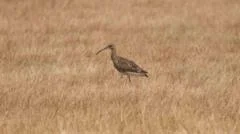
Rare birds have returned to nest at the nature reserve where they were hatched as part of a conservation project.
A total of 33 curlews were released in 2026 at Elmley Nature Reserve on the Isle of Sheppey, Kent after being raised in captivity for a project to bring back the at-risk species to lowland Britain.
Estate manager Gareth Fulton said that "really excitingly" birds from previous releases had paired up and returned to nest at the site.
Numbers of the largest European wading birds have declined by about 50% since 1995, according to the British Trust for Ornithology, putting the curlew on the organisation's conservation concern red list.
Elmley curlew keeper Simon Higgs said the ground-nesting birds' decline was mainly been due to changing farming practices and an increase in predators.
"Once upon a time curlews would have nested in almost any hay meadow," he told the BBC.
Elmley is one of three sites involved in the South of England Curlew Recovery Project.
Natural England licensed the sites to receive and rear curlew eggs.
The privately owned reserve is working closely with conservationists in upland areas, such as the Yorkshire Dales, where the curlew population is healthier.
Eggs were removed from nests in vulnerable locations, such as near footpaths or in fields that would be cut for grass before the chicks were ready.
They were then transported to Elmley for hatching.
Curlews like to return to their place of birth to nest and so conservationists hope the birds will choose the Sheppey reserve as the place to raise their young in the wild.
This is year four of the project and so far more than 100 birds have been released on to the reserve.
Fulton says the birds which have returned are "very young" and "take a long time to mature".
"They're kind of teenagers at the moment," he told the BBC.
"We're hoping next year they'll just be old enough to start having their own chicks."
Follow BBC Kent on Facebook, external, on X, external, and on Instagram, external and listen to BBC Radio Kent on Sounds. Send your story ideas to southeasttoday@bbc.co.uk, external or WhatsApp us on 08081 002250.