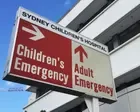
Sick patients in New South Wales have been told to avoid the emergency room unless their life is at risk after a record day for winter presentations put the hospital system under strain.
The New South Wales health minister, Ryan Park, said just under 10,000 people presented to emergency departments in Sydney on Monday, the “biggest ever recorded winter day in history”. It was around 1,000 more people than the average.
“That is a demonstration of the sort of pressure our staff in the health system are under right now,” he said, adding west and south-west Sydney had been the hardest hit.
There were also 4,100 ambulance callouts, which was “far more” than predicted, Park said. On Tuesday, the state government announced a permanent command centre to coordinate peak hospital demands this winter, working with the 17 local health districts and NSW ambulance to redirect patients away from EDs with high numbers of presentations.
Park said operational hours would also be extended for some hospital services later in the day and for weekends.
“We know that we are in the middle of winter, and that is what we are likely to see over the next few weeks: ongoing presentations around influenza, Covid, and RSV,” he said. “There is no need to go to an emergency department unless it is an emergency.”
Instead, Park urged people to use Healthdirect, a phone service that connects users to registered nurses for advice and referrals, or urgent care services, which typically operate from 8am until 8pm. He said the government was looking at whether this could be extended.
The latest respiratory surveillance report from NSW Health, for the week ending 25 July, found influenza and RSV was at a “moderate level” and Covid-19 was at a “low level”. ED presentations for influenza were hovering at around 400, well below a peak of more than 1,000 in July 2025 but an increase on recent weeks. There were 2,509 notified cases of influenza in the same time period, which health authorities expected would grow.
Park told ABC Radio Sydney that the situation had been exacerbated by vaccine hesitancy. He said there had been a challenge in encouraging uptake of the influenza vaccination ahead of winter, which costs $15 unless you are under five, over 64 or vulnerable.
“We have had vaccine hesitancy off the back of Covid … and this is what health systems are dealing with, not just in our country, but around the world,” he said. “We need to change that.”
Park also took aim at the NDIS, claiming there were 1,300 people “stuck in our state’s hospitals who are age care or NDIS [patients]”.
“I spoke to an emergency director this morning from Westmead … and they said … one of the frustrations is trying to get people … out of those beds, and back into the community,” he said.
The NSW premier, Chris Minns, told 2GB the state’s emergency health services were bracing for the “worst three weeks of the year”.
“The cold weather’s really set in now. And I’ve spoken to emergency departments in Maitland, in Cessnock, in Western Sydney … who have said it’s a late starting season, but it’s hitting us hard now,” he said.
“To the extent that you can go to an urgent care clinic or see your GP … If it’s not life-threatening, we genuinely suggest that you do that, so the doctors can focus and nurses can focus their efforts and attention on people that are about to die.”
He said resuscitation bays, located immediately behind emergency department waiting rooms, were “all occupied”.
“It’s that serious,” he said.
“If you feel or you’ve got any suspicion that your life might be in danger, please go to the emergency department, please call 000.”
An ED nurse at a major metropolitan Sydney hospital, who wished to remain anonymous, said it had been “extremely busy” on Monday, with wait times of up to 10 hours. She urged people who weren’t experiencing a severe emergency to visit urgent care clinics, but said the issue was “people don’t know it’s available”.
“Work needs to be done with GPs and primary health networks on what their responsibility is,” she said. “We aren’t an outpatient clinic.”
National data from the Australian Institute of Health and Welfare shows urgent and semi-urgent cases account for the vast majority of presentations at EDS.
Minns claimed part of the problem was a historical “underinvestment” in health infrastructure, particularly in Western Sydney. “We’ve done a massive redevelopment of Westmead [Hospital], but the pressures are real,” he said.
The latest data from the Bureau of Health Information (BHI) found there were 791,987 ED attendees in NSW hospitals from January to March, up 0.9% compared with the same quarter the previous year.
The leader of the opposition, Kellie Sloane, said it was a “shocking state of affairs” to have the government telling people not to go to emergency departments “unless you absolutely have to”.
The president of the NSW Australian Medical Association, Dr Fred Betros, said it wasn’t an “unforeseen crisis”.
“Telling patients to stay away from emergency departments is not a health strategy,” he said. “NSW needs more consultant doctors, properly staffed beds, modern industrial arrangements … and serious investment in prevention, general practice and public outpatient care.”