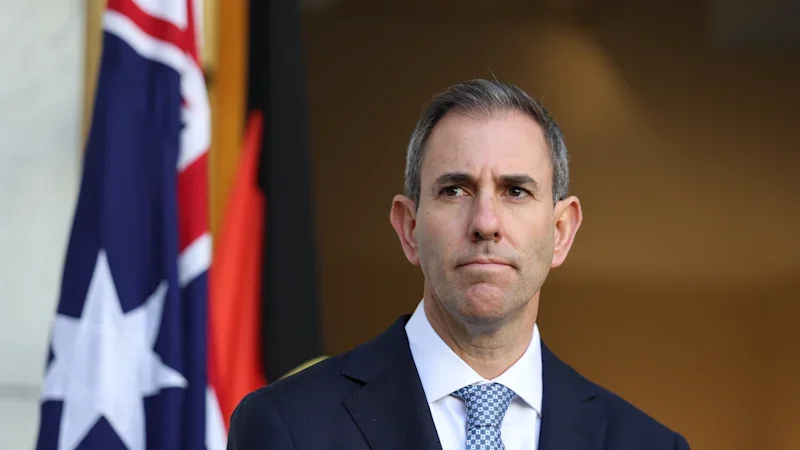
Widows and divorcees who faced losing access to capital gains and negative gearing concessions under the federal government’s budget overhaul of property taxes will be protected under a suite of changes revealed by Treasurer Jim Chalmers.
Amid growing criticisms of Chalmers’ handling of the reforms aimed at making housing more affordable for younger Australians, the treasurer on Tuesday confirmed key details of the government’s planned amendments to controversial tax legislation.
It was revealed in June that jointly owned assets, such as a property owned by a couple, would not qualify for the grandfathered exemptions to the budget changes to negative gearing and capital gains tax if they were transferred to single ownership.
Newly built properties continue to qualify for negative gearing concessions under the budget’s changes. But there were concerns this measure would hurt women, after a partner’s death or a relationship breakdown, if they acquired an existing property but lost access to the tax concessions, undermining their financial position.
Independent senator David Pocock introduced an amendment to protect access to grandfathered tax concessions in the event an asset was transferred “because of a family law court order or the death of a joint tenant”.
He withdrew the amendment in June after Labor agreed to make the changes themselves in the next tranche of budget legislation.
Those changes were released on Tuesday night with the biggest confirming the protection of spouses who may acquire a property on the death or divorce of their partner. Residential dwellings now acquired from a spouse “as a result of inheritance or relationship breakdown” will retain their negative gearing protection.
In some cases, spouses are not listed on official property ownership documents. The changes will protect spouses who may be considered tenants or where they may not be explicitly listed as a joint owner.
The government has also shifted on its definition of a “new property” which, under the proposed changes, continue to qualify for negative gearing concessions.
Originally, a property was considered “new” if it was bought within 12 months of being issued a certificate of occupancy. But the construction sector said this could force them into a fire sale of existing stock, this will be extended to 24 months.
The changes to the legislation include the government’s promise to exempt capital gains distributed from testamentary trusts, deceased estates and special disability trusts from the minimum tax on capital gains, following an earlier campaign that described this as “death taxes”.
The reforms to CGT will also apply to taxpayers who are only Australian residents for the period they directly hold an asset.
Chalmers said consultation would continue as further tranches of tax legislation were introduced.
He said this would include outstanding aspects of the CGT reforms and how that applied to foreign, mixed and temporary residents and for tax consolidated groups.
“The government is continuing to implement the ambitious tax reform package announced in the budget to deliver tax cuts for millions of Australians, a fair go for first home buyers, and a fairer tax system that better aligns the treatment of labour and asset income,” he said.
“These reforms will help level the playing field for first home buyers, preserve the gains investors have made, and support investment in new housing supply.”
Pocock was happy to see the release of the draft legislation.
“The substance of the announcement appears to address many of the most urgent concerns with the bill,” he told this masthead.
“However, the timing for passage of this legislation is important. It’s critical that lenders are able to consider preserved benefit in assessing loan serviceability in decisions they are making now and in coming months.”
Acting Coalition leader Jane Hume earlier attacked the government’s apparent refusal to move on the situation which she labelled a “widows tax”.
“The fact that Labor has specifically targeted widows, those who have lost a spouse at a time when they are at their most vulnerable and have decided to tax them more-terribly sorry for your loss, please pay up, well, I think that speaks volumes of exactly what Labor’s toxic taxes can do in action, and what Labor feels about those that are at their most vulnerable,” she said.
The government will take public comments on its proposed laws until August 21.