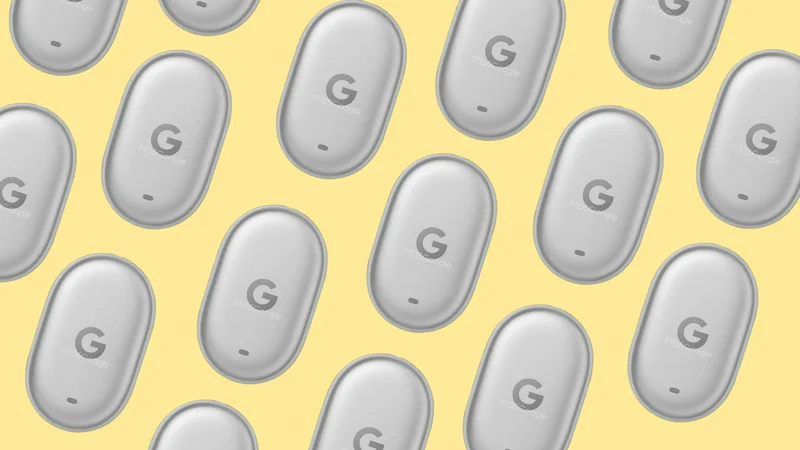
I've used AirTags for years. Google's new Pixel Tag needs these 4 things to succeed
Aug 4, 2026 — 5:00 AM ET
There’s one tiny piece of tech that has rescued me from my own forgetfulness more times than I’d like to admit. It has stopped me from leaving important things behind and, dare I say it (please forgive me, Mom), helped me recover my car keys after I had completely lost track of them. That little lifesaver is an AirTag, and it might be the best $30 I’ve ever spent.
Naturally, that means my AirTags have found their way onto almost everything I care about: my car keys, work bag, car, and even the folder containing my important documents. There’s just one frustrating catch. My primary phone is a Pixel 10 Pro, which means I need to carry an iPhone just to use my trusty AirTags.
That’s why the rumors about Google finally making a Pixel Tag immediately caught my attention. It could fill one of the most obvious gaps in the Google ecosystem and, more importantly, let me leave the house with just one phone. But simply making an AirTag alternative won’t be enough. After using AirTags for years, there are a few features I believe Google needs to get right with the Pixel Tag.
Which AirTag feature should Google steal?
The Pixel Tag absolutely needs UWB
One of the AirTag features I really hope Google brings to the Pixel Tag is Precision Finding. Let’s say you know your keys are somewhere in the house, yet you’ve already checked every room, emptied your pockets twice, and even looked under the couch cushions. It’s frustrating, and that’s exactly the kind of situation Precision Finding is built for.
Instead of simply making the AirTag play a sound, Precision Finding points me in the right direction. Whenever I lose something, my iPhone shows an arrow along with the exact distance to the tracker, and both update in real time as I move. Even better, the phone starts vibrating as I get closer, which is a reassuring sign that I’m almost there.
One of the AirTag features I really hope Google brings to the Pixel Tag is Precision Finding.
Behind the scenes, the feature uses ultra-wideband (UWB) technology, which is accurate enough to tell not just that your tracker is nearby, but also the exact direction and distance to it. So, all you have to do is open the Find My app, follow the arrow, and in most cases, you’ll have your missing item back within seconds.
The good news is that Google doesn’t have to start from scratch. Several Pixel Pro models, including the Pixel 9 Pro and Pixel 10 Pro, already support UWB, so much of the groundwork is already in place. With the Pixel 11 series expected to arrive soon, there’s also a good chance Google could expand UWB support to more models. If the Pixel Tag is indeed on the way, I believe Precision Finding should be at the heart of the experience.
Google has to go all-in on Find Hub
For me, a Bluetooth tracker is only as good as the network behind it. You could pack it with every feature imaginable, but if it can’t help me find my belongings when they’re actually lost, it’s missing the one job it was built for.
That’s where I think Apple still has a huge advantage. AirTags don’t have GPS or a cellular connection built in, so they can’t report their location to my iPhone on their own. For instance, if my suitcase ends up at the wrong airport or I accidentally leave my backpack at a cafe, the AirTag waits for another Apple device to come along and help.
I never actually see the network working, but that's exactly what makes it feel so magical in everyday use.
Thankfully, that’s exactly how Apple’s Find My network works. Whenever an iPhone, iPad, or Mac comes within Bluetooth range of my AirTag, it anonymously and securely relays its location to Apple’s network. The person carrying that Apple device never knows they’ve helped me, and thanks to end-to-end encryption, neither they nor Apple can see whose AirTag it is.
What I love is that none of this requires me or anyone else to do anything. Someone unknowingly walks past my lost item, another person passes by a little later, and before I know it, I have a fresh location waiting for me in the Find My app. I never actually see the network working, but that’s exactly what makes it feel so magical in everyday use.
Google already has a solid foundation with Find Hub, and that’s a great start. But if the Pixel Tag is going to compete with AirTags seriously, I think Google needs to make that network just as seamless and dependable. Right now, Android users have to manually enable the Network in all areas setting to get the broadest crowdsourced coverage.
In contrast, Apple’s Find My network is active by default across its massive ecosystem. To me, that’s the bigger challenge. The Pixel Tag itself might be the product I buy, but Find Hub will ultimately decide whether I can trust it when something important goes missing. That’s the biggest lesson I hope Google takes from Apple.
Swappable batteries are the way to go
One thing I hope Google doesn’t overcomplicate is the Pixel Tag’s battery. What I love about AirTags is that they use a standard replaceable coin-cell battery instead of a built-in rechargeable one. A single battery lasts a long time, replacements are inexpensive, and you can find them at almost any store. More importantly, swapping one out takes less than a minute. There’s no waiting around for it to charge and no complicated teardown process. You simply twist the back, pop in a fresh battery, and you’re good to go.
For a gadget that’s meant to stay attached to your keys, backpack, or luggage for months at a time, that kind of convenience makes a huge difference. It’s one less thing to think about, which is exactly how a tracker should be. If Google follows the same approach with the Pixel Tag, owners won’t have to worry about remembering yet another device that needs charging. Instead, they’ll get a tracker that’s always ready to do its job, with a quick, cheap, and easy battery swap whenever the time finally comes.
Google, please give us a lanyard hole
While those are the three biggest things I hope Google borrows from the AirTag, there’s one area where I think it can do even better than Apple. Please, Google, give the Pixel Tag a built-in lanyard hole. As small as it sounds, it’s one of my biggest annoyances with AirTags. Apple never built a hole into the tracker itself, which means if I want to attach it to my car keys, I have to buy a separate key ring. My keys are probably the one thing I misplace the most, so the tracker needs to stay attached to them at all times. Having to spend extra money to make that possible feels like an unnecessary inconvenience.
Samsung understood this with the Galaxy SmartTag 2, and Tile has been doing it, too. You take the tracker out of the box, clip it onto your keys, and you’re done. That’s exactly how simple the experience should be.
Ironically, the latest Galaxy SmartTag 3 leak suggests Samsung could be removing the built-in hole as well. If that turns out to be true, it’ll be a disappointing step backward for something that genuinely improves everyday usability. So, if Google is really building a Pixel Tag, here’s my final request: don’t overlook the little things. Sometimes, a tiny design choice can improve the experience far more than a long list of new features.
Everything is lined up. Now, Google has to deliver
The Pixel Tag still isn’t official, so for now, all I can do is hope the rumors come true. If they do, I genuinely believe Google has a chance to build one of the best Bluetooth trackers on the market. The company already has most of the pieces in place; it just needs to put them together the right way.
I’ve spent years relying on AirTags, so I know exactly what makes them great, and what still needs improving. If Google can get those details right with the Pixel Tag, I might finally have one less reason to keep an iPhone around.