Orchard Towers’ Naughty Girl nightclub loses High Court battle to sell alcohol after midnight
AI generated
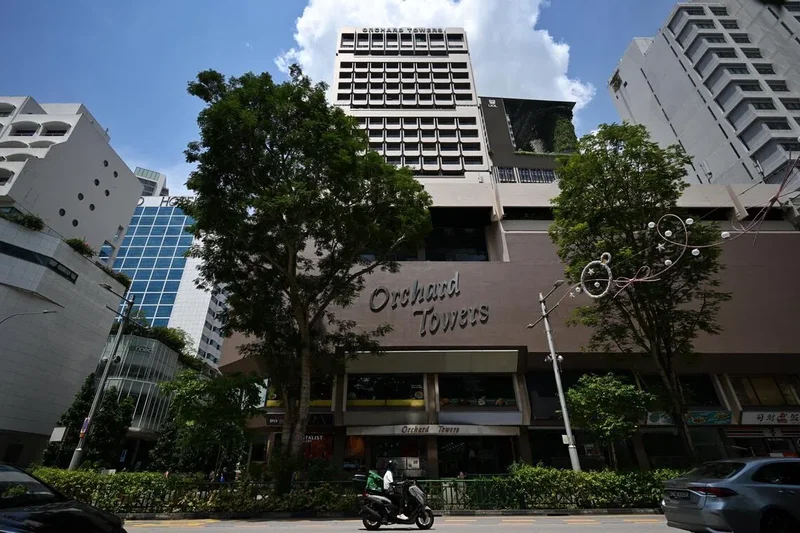
SINGAPORE – The Naughty Girl nightclub, which has operated at Orchard Towers for more than two decades, lost its three-year battle to continue selling alcohol after midnight after the High Court ruled that police acted lawfully in refusing to extend its liquor sale hours.
In a judgment released on July 31, Justice Chua Lee Ming dismissed the nightclub operator’s challenge to a Singapore Police Force (SPF) policy that bars all establishments at Orchard Towers from selling alcohol after 11.59pm.
The judge rejected the nightclub’s argument that the policy was irrational or unconstitutional, finding that police introduced it to address longstanding law-and-order problems in the area and that it had achieved its objective.
The case was brought by Naughty Girl’s operator, Abe Isaac Pte Ltd. Since July 2023, it has been allowed to sell liquor only until 11.59pm. Before that, its licence allowed it to sell alcohol around the clock.
In December 2024, it applied to sell alcohol from midnight to 6am. But the SPF licensing officer rejected the application under a policy introduced in July 2023 that bars all Orchard Towers establishments from selling alcohol after 11.59pm.
The nightclub sought a High Court judicial review, arguing that the policy was irrational because other nightlife districts, including Boat Quay and Clarke Quay, were allowed extended liquor sale hours. It also argued that allowing it to sell alcohol until 11.59pm but refusing sales after midnight was logically inconsistent.
Justice Chua rejected those arguments.
“The applicant bears the burden of demonstrating irrationality,” he said, noting that the legal threshold was high and that a policy would have to be “so absurd that no reasonable decision-maker could have come to it”.
He accepted the police’s evidence that Orchard Towers had long been associated with serious public order problems.
Before July 2023, the mixed-use development housed numerous nightclubs, bars, karaoke outlets and massage establishments. Police “would commonly receive reports and complaints of public order crimes”, while the building had also become known for vice activities, the judgment noted.
In 2012, Orchard Towers was designated an exclusion area where no new public entertainment outlets or massage establishments would be approved in an effort to reduce such businesses and tackle public order problems.
But the problems persisted.
Between 2017 and 2023, Orchard Towers recorded more reported public order crimes than other Orchard Road nightlife areas, including Cuppage Plaza and Orchard Plaza. Police deployed additional resources, including Special Operations Command officers, and carried out at least 264 anti-crime operations between 2017 and 2019. Yet, complaints about crime, vice activities and public nuisance continued.
Fatal brawl that started inside Naughty Girl
The judgment also referred to the fatal July 2019 brawl outside Naughty Girl that drew national attention.
A dispute between two groups of patrons began inside the nightclub shortly after 6am before spilling onto the ground floor of Orchard Towers, where one man died after being “slashed, punched and kicked”. Six people were later convicted of offences including murder, while another received a conditional warning. The incident was debated in Parliament.
In response to the persistent problems, the authorities first decided in July 2022 to phase out all public entertainment licences at Orchard Towers, effectively ending live music and dance performances there.
While most other public entertainment outlets shut after their licences expired in July 2023, Naughty Girl found a loophole. It continued operating by playing free-to-air radio music – which did not require a public entertainment licence – instead of live entertainment, while continuing to serve alcohol.
“This was not within the licensing officer’s original contemplation when formulating the public entertainment licence policy,” the judgment noted.
The licensing officer concluded that ending public entertainment licences alone was insufficient. That prompted the introduction of the policy banning alcohol sales after 11.59pm.
The judge accepted evidence that the combined licensing measures had worked.
Before the after-midnight liquor ban took effect, 27 liquor-related public order crimes were reported between January and July 2023. After the policy was introduced, only one such case was reported in August 2023 and another in October 2023.
Justice Chua also rejected the nightclub’s argument that allowing alcohol sales until 11.59pm but not beyond midnight was irrational.
He accepted police evidence that alcohol remained a major driver of crime, noting that 78 per cent of liquor-related public order crimes recorded at Orchard Towers between 2017 and 2023 occurred after midnight.
He also rejected comparisons with Boat Quay, Clarke Quay and Upper Circular Road, accepting the police’s explanation that those areas were not designated public entertainment “hot spots”, were subject to different policy considerations and were later included in a separate one-year government pilot to boost city-centre vibrancy.
The judge concluded that the police had been entitled to decide that Naughty Girl did not deserve an exception.
Exempting one operator would likely require similar treatment for others, and allowing late-night alcohol sales again risked reviving the very law-and-order problems the policy was designed to eliminate.
The judge found that the nightclub had failed to show either that the policy itself was irrational or that the refusal to exempt it was irrational.
“The licencing officer realised that he was wrong in his original assessment that the public entertainment licensing policy would be sufficient to address the law-and-order concerns at Orchard Towers,” Justice Chua said.
“His decision to remedy this by implementing the extended trading hours policy could not be said to be irrational in view of the evidence that a very significant percentage of liquor-related public order crimes recorded at Orchard Towers took place after midnight”.
The judge also criticised the nightclub’s lawyers for advancing legal arguments beyond the limited scope of the judicial review, which concerned only irrationality. He described the move as a “flagrant disregard” of the court’s earlier order and “an abuse of the process of the court”. He ordered the nightclub to pay $29,000 in legal costs, excluding disbursements.
Naughty Girl was represented by lawyers Vijay Kumar Rai and Jasleen Kaur from Arbiters Inc Law Corporation, while a team from the Attorney-General’s Chambers represented the Attorney-General.