Think smarter is always better? Consider the barnacle. The parasitic barnacles of the genus Sacculina, to be exact. They begin life as free-swimming larvae before growing a clam-like carapace, developing their brain, and seeking out a crab host. The brain isn’t very big, but it meets the challenge of identifying a suitable crab—and, if the barnacle is male, of identifying a crab already parasitized by a virgin female—and exploring its body in search of an ideal attachment point. The barnacle then settles in, metamorphoses into something like a syringe, and injects a cell mass into the crab (or, for a male barnacle, into the female). From then on, the barnacle is more like a root system with gonads than an animal. Their brain, along with everything else they no longer need, is left behind.
The barnacles are a striking embodiment of a phenomenon that runs counter to how most people think about intelligence and evolution. Sacculina become less intelligent during their lives and have done so across evolutionary time, too: their ancestors were free-living barnacles who kept their brains into adulthood. That’s not how it’s supposed to work in a world where the value of intelligence seems self-evident and becoming smarter is assumed to be a useful adaptation.
Read more: “Where Did the Brain Come From?”
Scientists have argued for decades about how humans and other extra-brainy animals got that way: by living in groups, learning from others, navigating complex or unpredictable environments, or all of the above. Whatever the reasons, more intelligence is supposed to be better. Plenty of research demonstrates this principle: birds whose bigger brains help them survive in cities, fast-learning fish with greater breeding success, mouse lemurs for whom cognitive performance predicts survival rates.
Not much is said about cognition going the opposite way, but sometimes it does. A surprising number of creatures don’t seem to benefit from greater intelligence. Many have become less intelligent across evolutionary time or even in their lifetimes—and these trajectories are not dead ends, they’re improvements.
“High intelligence is just one evolutionary strategy,” says Georg Striedter, a neurobiologist at the University of California, Irvine and author of Principles of Brain Evolution. “Some species do well in evolutionary terms precisely because they invest in other features, not intelligence.”
Intelligence, of course, is a tricky word. Capacities that probably ought to qualify are downplayed while others are overvalued. Quickly answering complex math problems will show up on a kid’s report card, but emotional awareness and conflict mediation probably won’t.
But with that caveat, there’s still a common currency: solving problems, recognizing patterns, making choices, learning from experience, remembering things, applying concepts from one domain to another, being flexible rather than routine bound. When biologists at Switzerland’s University of Fribourg exposed fruit flies to pineapples and oranges injected with quinine—a bitter, harmful substance—and observed whether the flies subsequently avoided similar fruits, they could fairly be said to be testing the bugs’ intelligence.
The researchers went on to breed the faster-learning flies, tested them again, bred the highest performers, and so on. Twenty generations later, the flies had dramatically improved powers of association, but they didn’t live as long as standard-issue flies and were outcompeted as larva by their slower-learning brethren.
The exact mechanisms behind the results—replicated years later by other researchers who bred fruit flies for longevity and found them to be especially poor learners—were unclear. But it seemed that genes linked to learning also affected physiological processes linked to longevity. This fit with a principle first articulated in the “expensive brain” hypothesis: Because neural tissue requires so much energy to produce and maintain, cognitive gains come at a price. Originally this was thought to be a smaller gut, as digestive tissue is also quite expensive, but it can include reductions in growth, reproduction, or other tissues.
Such trade-offs are particularly well-described in insects. In addition to the fruit fly studies, experiments have found that learning may come at the cost of fecundity for cabbage white butterflies and result in bumblebees with shorter lifespans. “Enhanced cognitive traits are not necessarily beneficial to the foraging performance of individuals or colonies,” wrote the scientists who studied the bumblebees, led by Lisa Evans and Karen Smith of the Royal Holloway University of London.
Fewer such studies exist in vertebrates, although one experiment found that bigger-brained male guppies had smaller guts and fewer offspring. (Big brains are not always correlated with intelligence—but sometimes, as with guppies, they are.) In some circumstances, though, it’s not the high energetic cost of intelligence that matters, but the behaviors that intelligence produces.
One study by psychologists at the University of Exeter in England found that pheasant chicks with an aptitude for reversing previously-learned associations—a capacity considered indicative of intelligence, as unlearning isn’t easy—were less likely to survive than their slower-unlearning peers. The likeliest explanation, surmised by the researchers, was that reversal was maladaptive. The pheasants lived in managed landscapes where food was easily and predictably available.
A bird could do well by sticking to one feeder rather than trying alternatives, and in the process, they’d cover less ground and thus be exposed to fewer predators. “Exaggerated cognitive performance may lead to maladaptive, costly behavioral outcomes, at least under some circumstances,” wrote the researchers, who thought that might explain “why we do not commonly see instantaneous learning, perfect memory, or immediate and flexible executive control.”
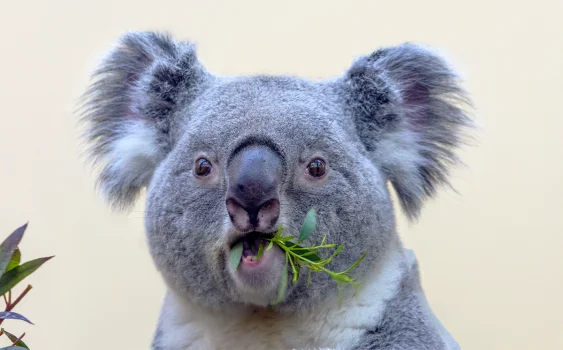
The pheasants’ circumstances were temporary—life isn’t always so easy—but long-lasting conditions may shape a species. Koala bears are an iconic example. Compared to kangaroos, wallabies, and other members of their family, koala brains are smaller, smoother—brain convolution is another anatomical trait that doesn’t always signify greater intelligence but does point that way—and use less energy. This appears to be a consequence of their diet: eucalyptus leaves, their primary food, are nutrient-poor and toxic.
Koalas sleep for up to 22 hours each day and make only occasional trips to the ground, a lifestyle that “indicates very little in the way of cognitive demands,” says Ken Ashwell, an evolutionary neuroscientist at the University of New South Wales. While their cognition hasn’t been formally tested, he notes, “I think the observed behavior speaks for itself.”
A much more pronounced change occurred in myxozoans, a class of microscopic aquatic parasites whose ancestors were jellyfish-like creatures. Granted, jellyfish are not considered smart—although research suggests they show some cognitive behaviors like curiosity—but they’re university graduates compared to spore-like myxozoa, which lost many of their neural genes and possess a much-simplified nervous system.
That trajectory is typical of many parasites. Tapeworms, for example, also evolved from free-living ancestors and simplified as they adapted to life inside a host. “Evolution does not necessarily maximize complexity or intelligence. It optimizes organisms for reproductive success in a particular ecological niche,” says Klaus Brehm, a developmental biologist at the University of Würzburg in Germany. The ancestors of fairy shrimp also had complex brains that are now much-reduced; clams and oysters descended from bottom-grazing, snail-like creatures possessing a head that was eventually lost. They didn’t need it anymore.
Read more: “Evolution, You’re Drunk”
Finally, there are creatures, like the Sacculina barnacles, whose transformations occur during their own lives. It’s often reported that marine invertebrates called sea squirts, who begin life as free-swimming, tadpole-like larva, eat their brains once they’ve settled and spend their adult lives without one. That’s only partly true: sea squirts do digest much of their brain during metamorphosis but regrow a new and larger one. And consider Dehnel’s phenomenon, in which the brains of certain shrews, stoats, and moles shrink by up to 25 percent each autumn. This reduces their cognitive performance but also means they’ll need less energy to survive the coming winter. Come spring their brains regrow.
All these trajectories from more to less intelligent are certainly not universal, but they undermine the assumption that evolution necessarily moves toward higher intelligence—and even the very premise of “higher” intelligence.
“It is frequently suggested that a high intelligence from the evolutionary standpoint can be equated with ‘superiority,’” wrote the late Eugene Robin, a medical professor and physiologist at Stanford University, in a 1973 paper, “The Evolutionary Advantages of Being Stupid.” “This type of thinking has resulted in an anthropocentric view in which man because of his intelligence is regarded as the pinnacle of evolution.” To Robinson that that was a self-serving human conceit.
Evolution, wrote Robinson, did not proceed in some unidirectional way from simple to complex, low to high. He quoted the great science-fiction author Isaac Asimov: “Which is the fitter, a man or an oyster?” It was a rhetorical question. Were Earth suddenly flooded, oysters would prevail. Fitness depends on circumstances, and circumstances can change.
Once-helpful adaptations can become handicaps. The enormous bodies that once served dinosaurs so well had also been their downfall, noted Robin; and the brain that designed spaceships and composed the Eroica symphony also built hydrogen bombs and Auschwitz. Were Robin alive today, he might also remark on how the fruits of human ingenuity have led to our destabilizing the biosphere itself.
“Under a given set of conditions it might be more useful from the standpoint of survival to be simple rather than complex or to be general rather than specialized,” Robin wrote. “It might be more useful to be ‘stupid’ rather than ‘intelligent.’”
Lead image: Luis / Adobe Stock