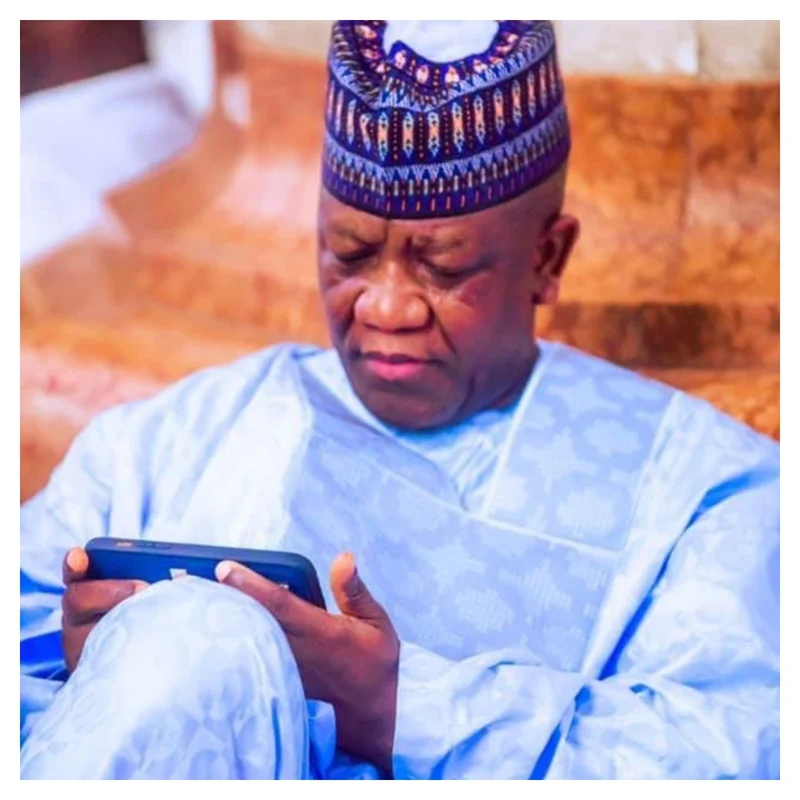
A year ago today, Senator Abdulaziz Yari made an investment that would not produce a single ribbon-cutting ceremony.
There was no bridge to commission. No road to name after a politician. No gleaming airport terminal whose glass facade could dominate campaign posters.
Instead, there were 2,055 names.
Each belonged to a young person, many from poor households and some orphaned, spread across every one of North West Nigeria’s seven states. Their tuition fees had been paid.
Their registration completed. Their education secured. More than N216 million had been committed, alongside a monthly stipend of N15,000 for every beneficiary until graduation.
It was, in many ways, an unusual political investment.
Nigerian politics has long rewarded the visible. We celebrate projects that can be photographed, roads that can be driven on, buildings that can be pointed at from helicopters. Education is different. It rarely offers immediate political returns. The dividends arrive years later, quietly, in hospitals, classrooms, laboratories, courtrooms and businesses. The beneficiaries often become successful long after the politician has left office. That is precisely why it matters.
today, the North West remains home to some of Nigeria’s deepest educational challenges.
Millions of children across the region remain out of school, with insecurity, poverty and social barriers combining to keep classrooms empty. UNICEF estimates that Nigeria still has one of the world’s largest populations of out-of-school children, with the burden falling disproportionately on the North West and North East. Humanitarian assessments suggest that nearly half of Nigeria’s out-of-school children are concentrated in the North West alone.
Statistics like these have become so familiar that they risk losing their emotional force. We speak casually about “millions of out-of-school children,” forgetting that every number represents a future interrupted.
Every child who leaves school early is not merely absent from a classroom. They are absent from tomorrow’s economy. They are absent from tomorrow’s civil service, hospitals, engineering firms and research laboratories. A region does not simply lose students; it loses doctors it never trained, teachers it never prepared and entrepreneurs it never gave the opportunity to emerge.
This is why scholarships matter differently. Not because they solve the education crisis overnight. They do not. But because they interrupt its inheritance.
One beneficiary, a second-year engineering student whose father died before he completed secondary school, described the scholarship simply:
“I had already started thinking I would have to suspend my education because my family could not continue paying my fees. This scholarship did not just pay for school. It gave me back my future. Now I only think about graduating.”
It is difficult to quantify the value of restored possibility. Yet this intervention did not emerge in isolation.
Years earlier, as Governor of Zamfara State, Yari had already placed education unusually close to the centre of his administration. Thousands of new classroom blocks were constructed during his first year in office. A teachers’ training centre with capacity for 7,000 educators was established in Gusau and equipped with ICT facilities. His government released N1.7 billion as counterpart funding for basic education and retrained approximately 1,300 teachers to improve classroom quality.
The investments extended beyond buildings. Records from that period show that over 400 schools were rehabilitated with furniture and library resources, while roughly 4,000 primary school classrooms were constructed across the state. Three girls’ secondary schools were renovated, reflecting an explicit effort to improve female education in a region that often forgets the girl-child. During those years, Zamfara recorded notable improvements in girls’ enrolment and completion, with state reports attributing rising participation rates to sustained investment in educational infrastructure and access.
Whether every target was fully realised is ultimately a matter for historians and independent evaluation. But the direction of travel was unmistakable: education under Governor Yari was treated as a strategic investment in the state’s future. Seen in that context, last year’s scholarship programme begins to look less like charity and more like continuity.
The philosophy appears remarkably consistent. Build classrooms. Train teachers. Encourage girls to remain in school. Then help the poorest students reach university. It is a sequence rather than a collection of isolated gestures.
There is, of course, a legitimate argument that no private scholarship programme can substitute for a properly functioning public education system. That criticism is correct. The responsibility for educating millions ultimately belongs to government institutions, supported by sound policy and sustained public investment.
But leadership has never been an either-or proposition. Sometimes institutions move too slowly. Sometimes needs arrive before budgets do. Sometimes one person’s intervention becomes the difference between another person’s future and permanent exclusion.
We often repeat the proverb that it is better to teach a man to fish than simply to give him one. But before anyone can learn to fish, someone must first make sure they can reach the river. For thousands of young people across the North West, education is what makes that journey possible.
Every scholarship is, in the end, a wager on the future. It asks society to believe that a young person, given the chance, will return more than was invested in them. One year after Senator Yari placed that wager on 2,055 students, the returns cannot yet be measured. That is the nature of education. Its victories arrive slowly, almost invisibly, until one day a doctor walks into a hospital, an engineer designs a bridge, or a teacher opens a classroom, and nobody remembers that years earlier someone else quietly paid the fees that made it possible.
—Malumfashi writes from Katsina State.