Leader’s advisor draws Iran’s red line in Hormuz, warns US against maritime provocation
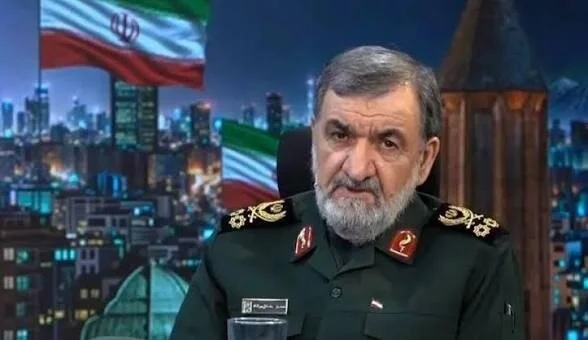
TEHRAN - The strategic posture outlined by Mohsen Rezaei, senior advisor to the Leader of the Islamic Revolution and former commander of the Islamic Revolution Guard Corps (IRGC), marks a decisive reaffirmation of Iran’s sovereign authority over the Strait of Hormuz.
In a comprehensive special television interview on Monday, Rezaei delivered a direct warning to the United States regarding Persian Gulf security. He declared that Iran is fully prepared to execute immediate precision strikes against any American warship attempting to impose a navigation route other than the single corridor officially approved by Tehran. Emphasizing that Iran’s strategic patience in safeguarding global economic stability has reached a critical threshold, Rezaei asserted that the Islamic Republic will not permit a second corridor in the strait under any circumstances.
This high-level warning extends far beyond immediate maritime lanes to highlight the severe dangers facing American assets throughout the region. Rezaei explicitly cautioned that the United States faces direct threats to its warships and military bases if Washington continues its coordinated naval blockade against Iran. Asserting that Tehran will no longer remain passive while its national sovereignty and maritime security are systematically challenged, Rezaei framed this confrontation as the latest chapter in what he termed Donald Trump’s third war against Iran—a strategic failure for Washington that has already stalled midway, following two earlier failed cycles of escalation.
In a detailed military analysis of the "battle of Hormuz," Rezaei argued that the United States violated regional understandings by deliberately bypassing established conflict-resolution committees involving Qatar and Saudi Arabia. Instead of utilizing diplomatic channels, Washington opted for military aggression by launching direct strikes in southern Iran aimed at destroying communication bridges, radar systems, and key infrastructure to degrade Iranian logistics. According to Rezaei, these maneuvers were intended to clear the battlefield for a ground operation to forcibly open the Strait of Hormuz or strike Iran’s nuclear facilities. However, he stated these objectives were completely thwarted as Iranian defensive forces countered the offensive.
Rezaei pointed to a significant intelligence and operational failure within the American military hierarchy, arguing that after initial strike waves failed to enable a ground invasion, Trump demanded heavier attacks. As Rezaei mentioned, CENTCOM commanders admitted failure to political leadership, reporting they had already deployed their maximum available capabilities yet remained unable to achieve their primary strategic goals due to underestimating Iranian logistics and tactical readiness. Rezaei stated that Iran executed intense counter-strikes against US bases, disrupting American plans and forcing the US command structure to retreat from Qatar to Jordan, and ultimately to Israel for protection.
Addressing regional dynamics, Rezaei attributed Israel’s lack of an overt role in the fighting to the regime being overstretched across multi-front conflicts in Gaza, the West Bank, and Lebanon, as well as a political move by Washington to project an image of acting independently.
Regarding peripheral incidents, Rezaei revealed that Tehran had prepared a retaliatory operation targeting three distinct locations inside Ukraine following a Ukrainian strike on an Iranian vessel. Although Tehran suspended the mission after Kyiv claimed the incident was an error, Rezaei stressed that financial compensation remains a mandatory obligation under international expectations. He warned that Washington’s desperation risks drawing other nations into a conflict that could spiral out of control, asserting that the potential for a catastrophic World War III in West Asia currently exceeds that of Europe on the eve of World War II.
Rejecting claims that Iran is the aggressor, Rezaei maintained that a global poll would identify the United States as the world’s primary warmonger. He insisted Iran has negotiated in good faith, only for Washington to repeatedly betray agreements by misinterpreting Iranian willingness to negotiate as a sign of weakness. Rezaei declared that the cycle of war, negotiation, and ceasefire must end, noting that diplomacy can only succeed if the United States fundamentally changes its behavior and rectifies its conduct.
This declared posture signals a fundamental shift in regional power dynamics, demonstrating that the era of uncontested Western hegemony in West Asia has come to an end. Rezaei’s statements underscore a core reality: Iran’s sovereignty over the Strait of Hormuz is non-negotiable. By defining clear red lines for maritime navigation, Tehran is exercising its legitimate right to defend its territorial waters and critical economic choke points against illegal foreign intrusion. The stance highlights that Iran's long-standing strategic patience was never a sign of vulnerability, but rather a deliberate policy to preserve global trade stability—a policy that has now reached its limit in the face of ongoing American hostility and economic warfare.
From a military and geopolitical perspective, the analytical takeaway is clear: Washington's doctrine of coercion and escalation has encountered a formidable counter-power. Rezaei’s detailed account of the operational failures surrounding US attempts to forcefully alter maritime corridors reveals the deep limitations of American military projection when confronted with Iran's sophisticated defensive infrastructure and asymmetric capabilities. The forced repositioning of regional command structures illustrates that US assets are no longer bulletproof deterrents, but vulnerable targets within range of Iran’s precision strike inventory. Far from capitulating to military pressure or unilateral blockades, the Islamic Republic has successfully shifted the cost-benefit analysis for CENTCOM and its allies.
Furthermore, this analysis exposes the systemic failure of the United States to act as a reliable regional partner. By bypassing established diplomatic channels and regional mediation frameworks—such as those involving Qatar and Saudi Arabia—Washington demonstrated a preference for unilateral aggression over stability. Yet, as the battlefield dynamic proved, Iran's tactical readiness and logistical resilience completely neutralized these offensive objectives.
Ultimately, this confrontation reaffirms that peace and stability in West Asia cannot be engineered through external force or broken agreements. True regional security requires full respect for national sovereignty and an immediate end to foreign military overreach. Tehran has made it abundantly clear that the cycle of deceptive diplomacy backed by economic blockade is over. If the United States wishes to avoid an escalating broader conflict, it must acknowledge the military reality on the ground, respect established maritime boundaries, and fundamentally transform its aggressive posture toward the Islamic Republic.