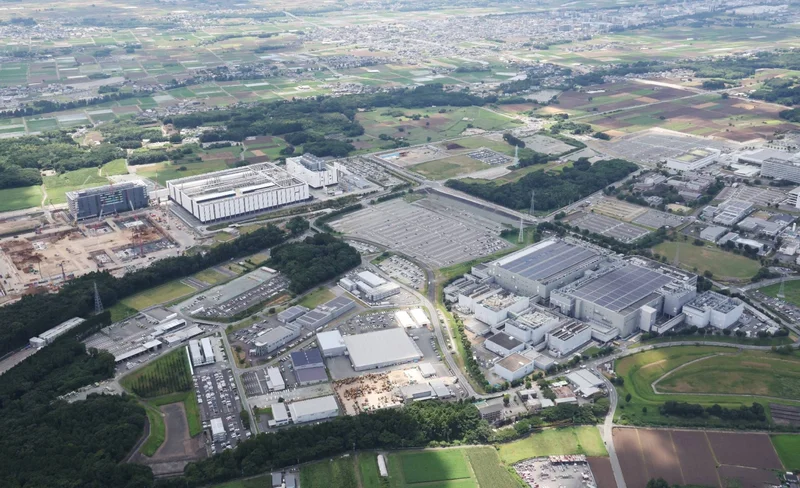
Chipmaking plants in Kumamoto Prefecture are gradually restarting operations following their suspensions caused by the 7.1-magnitude earthquake that struck the prefecture late last month.
Production is expected to return to the levels before the quake by the end of this month. The July 28 temblor measured up to shindo 7, the highest level on the Japanese seismic intensity scale.
The quick recovery comes as damage was relatively limited compared with that from the two successive major earthquakes that hit the prefecture about 10 years ago. Companies’ experiences in restoration efforts after the April 2016 quakes also paid off this time.
Sony Group’s Kumamoto Technology Center in the town of Kikuyo, which manufactures image sensors, is resuming production in stages.
The facility is expected to fully restore operations within a month of the latest quake, compared with three and a half months 10 years ago. This is because the factory made rules on the confirmation of the situation at the production site, and its staff members repeatedly conducted disaster drills in preparation for a possible future earthquake.
Taiwan Semiconductor Manufacturing Co., the world’s largest chip foundry, said Monday that its plant in Kikuyo has been brought back online.
Mitsubishi Electric is gradually expanding operations at two plants for power semiconductors, which control electric currents.
Of the two plants, one in the city of Koshi strengthened its earthquake-resistant equipment after part of the building was damaged by the 2016 disaster. A seismic isolation structure was adopted for the other factory in the city of Kikuchi, which was built last year.
Renesas reopened its plant in the town of Nishiki the day after the quake. Its Kawashiri factory in Kumamoto resumed operations Tuesday, with its production seen returning to the predisaster level in about three weeks.
“We have secured inventories, so the impact of the earthquake on our earnings will be minimal,” Renesas President Hidetoshi Shibata said.
Waseda University professor Atsushi Osanai said that chipmakers and others in Kumamoto are able to restore production more quickly than 10 years ago thanks to their experiences from the 2016 earthquakes.
He said, however, that infrastructure and logistics networks in Kumamoto were severely damaged by the latest quake, “affecting the lives of citizens, who are also workers.”
The central and prefectural governments “need to take the initiative to normalize the situation as soon as possible,” Osanai said.