Cebu City Council seeks Archival report on delayed upland moratorium
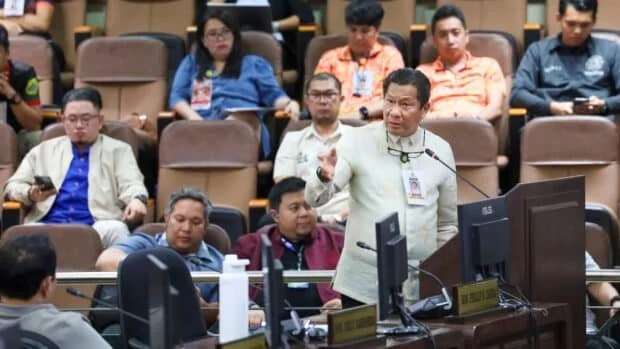
CEBU CITY, Philippines — The Cebu City Council on Tuesday directed Mayor Nestor Archival to explain within 30 days what his administration has accomplished since supporting an upland development moratorium more than seven months ago, as councilors questioned whether delays in protecting the city’s watersheds have contributed to recurring flooding.
Through a resolution that stemmed from an environmental privilege speech delivered by Councilor Joel Garganera, the council asked the mayor to submit a comprehensive report detailing all actions undertaken since Dec. 16, 2025, when Garganera first urged City Hall to halt new upland developments and review existing projects.
The report must include executive actions, policy directives, technical studies, inter-agency coordination, and other measures adopted to protect Cebu City’s watersheds and mitigate flooding.
The council also asked the mayor to disclose whether the city had engaged hydrologists, watershed specialists, geologists, environmental planners, climate adaptation experts, and other technical consultants in crafting its flood management and watershed protection programs.
‘231 days have passed’
In his privilege speech, Garganera recalled that he first proposed a citywide moratorium on new upland developments on Dec. 16, 2025, warning that unchecked development in the city’s watersheds would continue to aggravate flooding despite investments in downstream flood-control infrastructure.
READ: Archival backs moratorium on new upland developments
A day later, Archival publicly supported the proposal, saying the city would review upland activities and issue cease-and-desist orders against projects that violated environmental laws or lacked permits.
But Garganera noted that 231 days had passed without the council receiving an update on what happened after the mayor’s commitment.
“The rainy season has once again put those warnings to the test,” Garganera said.
He pointed to communities repeatedly inundated by floodwaters, rivers clogged with garbage and sediment, and obstructions along river easements that continue to restrict the natural flow of water.
“These recurring floods remind us that the problem is not rainfall alone, but years of environmental degradation, inadequate watershed protection, poor river management, and the lack of sustained long-term intervention,” he said.
Garganera stressed that the council sought accountability rather than assigning blame.
“These questions are not intended to assign blame. They seek accountability, transparency, and progress,” he said.
Councilors back inquiry
Several councilors supported Garganera’s call.
Councilor Philip Zafra reiterated an earlier proposal urging the executive department to issue cease-and-desist orders against upland developments until developers could demonstrate adequate flood-mitigation measures, particularly water impoundment systems.
Zafra argued that land development replaces vegetation and permeable soil with concrete roads and structures, reducing the ground’s capacity to absorb rainwater and increasing runoff into downstream communities.
He also urged the city to consider declaring a state of calamity in flood-hit barangays and renewed his proposal to acquire property in Sitio Kamagong for the construction of a large water impoundment facility.
Vice Mayor Tomas Osmeña also backed the resolution, cautioning against using isolated rainfall events to justify the adequacy of existing detention ponds.
Osmeña cited data from Typhoon Ruping, saying extreme rainfall events remained possible and should guide flood-control planning instead of smaller storms.
“After the development, the developers are gone, but the people remain,” he said, urging government planners to prepare for future disasters rather than reacting only after major flooding.
Councilor Harry Eran, meanwhile, questioned the effectiveness of the City Mining Regulatory Board’s oversight of upland developments.
Garganera, who sits on the board as a non-voting observer, said the body had met only three times since November last year despite the growing number of upland projects.
He also noted that no executive order followed the mayor’s public support for the moratorium.
Calls for science-based planning
During the discussion, Garganera urged the city to abandon project-by-project flood interventions and instead adopt a watershed-wide approach guided by science.
He said flooding should not be addressed solely through drainage projects tied to individual developments because runoff accumulates across an entire watershed.
“What we really need is a holistic water catchment,” Garganera said.
He urged the city to seek guidance from hydrologists and other technical experts to ensure flood-control projects reduce flooding instead of unintentionally worsening it.
Another council member, Eran, also called for revisiting Cebu City’s drainage master plan, saying repeated flooding across multiple districts highlighted the need for a coordinated, citywide strategy instead of isolated infrastructure projects.
Archival orders fresh review
Earlier this week, Archival said his administration had already directed the Department of Engineering and Public Works (DEPW) to conduct another review of upland developments following recent flooding.
The mayor said engineers would identify waterways, drainage outlets, and determine which major developments contributed to downstream flooding.
“Atong ipa-review asa ang kasapaan, asa padulong ang outlet. The second one, kinsa nga mga institution, mga dagko nga developer nga naa sa ibabaw nakahatag og contribution sa pagbaha,” he said.
(We will review where the rivers are, where the drainage outlets lead, and identify which major institutions and developers in the uplands have contributed to flooding.)
Archival said the city would also evaluate whether existing subdivisions had adequate water catchment facilities.
Older developments without catchment systems could face new requirements if engineering studies found they contributed to flooding, he said.
For newer developments that already maintain detention ponds or catchment facilities, the city would assess whether those structures adequately contained stormwater.
“Kung maka-contribute sila, then i-require nato sila pag-have additional nga catchment,” he said.
(If they still contribute to flooding, we will require them to construct additional catchment facilities.)
The council’s resolution now requires the mayor’s office to formally report those actions to the legislative body within 30 days.
Disclaimer: The comments uploaded on this site do not necessarily represent or reflect the views of management and owner of Cebudailynews. We reserve the right to exclude comments that we deem to be inconsistent with our editorial standards.