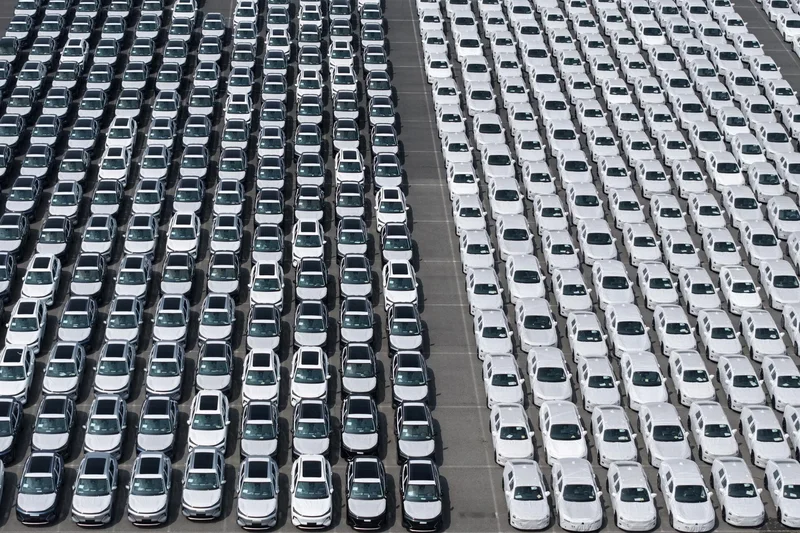
A drone view of new cars lining up at an export terminal at the port in Shanghai, China, July 14. Reuters-Yonhap
The U.S. Senate Commerce Committee is set to consider bipartisan legislation to toughen a U.S. government ban on Chinese automakers entering the American market, but some provisions remain under debate ahead of an expected vote Wednesday.
Republican Senator Bernie Moreno of Ohio and Democratic Senator Elissa Slotkin of Michigan proposed legislation in April to codify a regulation imposed by the Biden administration that effectively bans all Chinese automakers from selling passenger vehicles in the U.S. and takes other steps to prevent China from entering the U.S. light-duty market.
"We're preventing an absolute, total, and complete destruction of our industrial base," Moreno said in an interview. "I think we landed a really good place... the bill has gone through many, many, many iterations of feedback."
The bill would prohibit vehicle sales by automakers that are more than 15 percent owned by Chinese entities, which would apply to Mercedes-Benz, which has nearly 20 percent Chinese ownership.
Mercedes-Benz is lobbying to change the provision, U.S. lawmakers say. Mercedes-Benz has not commented.
Moreno noted that General Motors plans to shift production of its Chinese-made Buick Envision to the United States for the 2028 model year and said Ford has agreed to move Chinese-made Lincolns to the U.S.
"I view that as a big victory," Moreno said.
He added Google's self-driving unit Waymo, which had been talking with Chinese automaker Geely about platforms coming from China "has committed to looking at a Detroit-based manufacturer for their future platforms."
One issue that may come up Wednesday is battery management software and some automakers have sought changes.
"We're not going to create dependency on China for battery management," Moreno said.
Last month, Polestar said the Trump administration was forcing the electric-vehicle maker to stop selling vehicles in the U.S. beginning in the 2027 model year. The Sweden-based company is majority-owned by China's Geely Holding.
Polestar's sister brand and co-founder, Volvo Cars, said in May it received an authorization, though it said it still must meet the rule's specifications across its lineup sold in the U.S.
Bluetooth, Wi-Fi, cellular connectivity and some satellite communications technologies are covered under the rules based on national security concerns linked to the ability of vehicles to collect sensitive data on American owners.