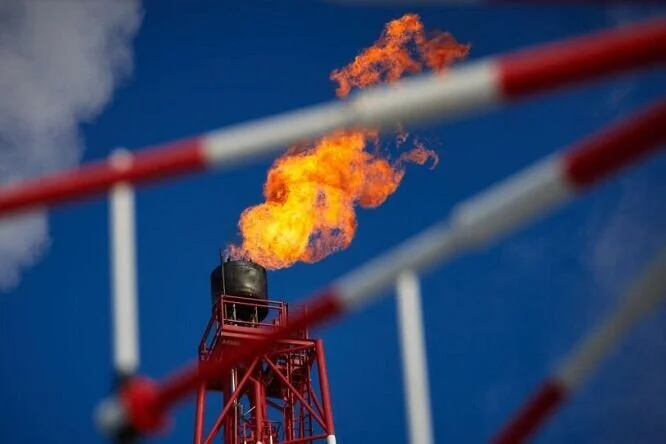
Capacity for collecting flare gases increases
TEHRAN- The capacity for collecting associated petroleum gases has increased with the implementation of new projects, and the target of reducing flaring to 35 million cubic meters per day is being pursued.
According to Mehr News Agency, the collection of flare gases in Iran's oil industry has reached over 16 million cubic meters per day, up from about 7 million cubic meters per day before the start of the fourteenth government, through the operation of new processing units and the execution of short-term projects.
Associated petroleum gases, which are generated during crude oil production, are burned in flares if the necessary infrastructure for collection, transmission, sweetening, and processing is lacking. This process, in addition to wasting energy resources, has significant environmental impacts in oil-rich regions and can affect air quality and the health of residents in these areas.
Based on available estimates, approximately 80 million cubic meters of associated gas are currently produced daily in the country. A portion of this volume is delivered to NGL units, downstream facilities, and the processing network, but depending on crude oil production levels and operational capacities, between 40 and 50 million cubic meters of gas are still flared daily.
Increased crude oil production also raises associated gas output, and for this reason, the simultaneous development of processing capacities and transmission lines is essential to prevent flaring from rising again. In recent years, production growth at some fields has increased the need to review and expand associated gas collection programs.
The flare gas collection program is being pursued through both short-term and long-term pathways. Short-term projects are designed with an implementation period of 18 to 30 months to bring a portion of flare gases into the value chain in a shorter time by assigning them to private sector investors and buyers.
Within this framework, projects including Marun 5 in the National Iranian South Oil Company, the Dehloran gas booster station, and the Haftkel gas injection station modification project have become operational. The implementation of the Haftkel project has made it possible to collect and inject flare gases from this region after many years.
Simultaneously, five long-term projects have been defined to create sustainable associated gas processing capacity. These projects include two flare gas collection contracts in East Karun, the construction of the NGL 3200 plant in West Karun, NGL 3100 in Dehloran, and Kharg NGL for collecting associated gases from the Bahregan and Kharg regions.
The construction of refineries and large processing units to fully control flare gases typically requires 7 to 10 years. However, the commissioning of NGL 3200 in 2023 and NGL 3100 in August of this year has brought part of the projected capacity for associated gas processing online.
Reza Khilaei, Director of Oil and Gas Production Supervision at the National Iranian Oil Company, has announced that the sustainable capacity projected in long-term flare gas collection plans is about 1.9 billion cubic feet per day—a capacity that covers part of current flare gases and the needs of future development projects.
This capacity is estimated to be close to the production of one phase of South Pars and, in addition to preventing the formation of new flaring, can provide more sustainable feedstock for downstream industries, petrochemicals, and part of the country's industrial consumption.
Expanding flare gas collection projects requires significant investment in the construction of pipelines, booster stations, sweetening equipment, and processing units. The dispersion of over 90 flare points across seven provinces has increased the cost of transmission and the establishment of collection networks.
A considerable portion of flare gases is also sour, and processing them requires specialized equipment. Supplying this equipment, especially under conditions of foreign exchange restrictions and the complexity of the order registration process, is one of the factors affecting project timelines.
To collect the bulk of flare gases, an estimated investment of about $6 billion is required, of which approximately $4.5 billion has so far been provided by the private sector. The main model for project implementation is based on selling flare gas to investors—meaning that companies receive the gas, process it, and generate revenue from the project by extracting gas products and gas liquids.
To enhance the economic attractiveness of projects, the base price of flare gases in tenders is determined based on gas type, composition, recoverable liquid content, and transmission costs. In some locations with high transmission costs or difficult access, the base gas price has been reduced to zero to provide greater incentives for investors to enter projects.
Of the more than 90 flare points in the country, about 30 have so far been assigned to the private sector. The assignment of the remaining points is contingent on the presence of investors, finalization of negotiations, obtaining permits, and project financing. The Oil Ministry has also invited petrochemical companies and downstream complexes to enter these projects, as their participation can increase the stability of their feedstock during the cold months of the year.
In the Seventh National Development Plan, a mandate has been set for the annual collection of 16 billion cubic meters of flare gas, of which 14 billion cubic meters falls under the jurisdiction of the National Iranian Oil Company and 2 billion cubic meters under the National Iranian Gas Company. Previous plans to achieve this target have been rearranged, and assignment calls have also been expanded.
The government has set a target to reduce flare gas volumes to about 35 million cubic meters per day by the end of the fourteenth government. Achieving this goal depends on completing ongoing projects, resolving contractual and banking obstacles, supplying equipment, and increasing investor participation.
To monitor project progress, visual equipment and online monitoring systems are being installed to transfer project information to the national observatory. This mechanism is expected to enable more precise tracking of project timelines and faster resolution of implementation bottlenecks.
EF/MA