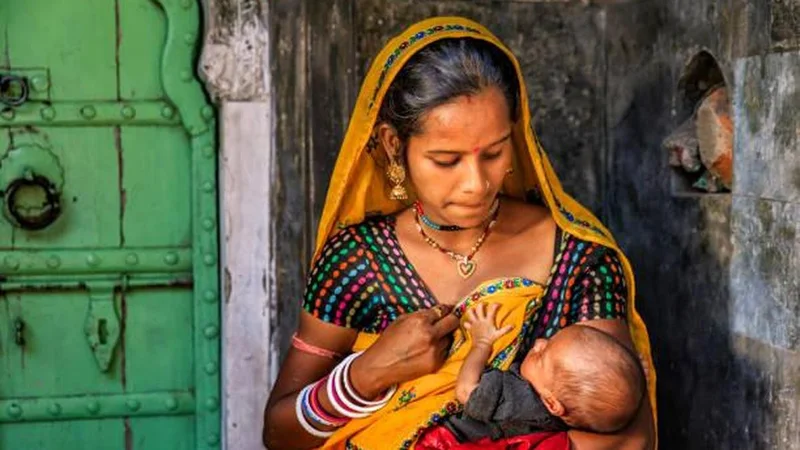
Open any social media page and look for posts on motherhood and you’ll be deluged with narratives about how glorious, rewarding and fulfilling it is. And while all of that may be true, what is also true is that mothers in our country often do not get even a fraction of the support they need to safeguard the health of both newborns, and their own.
This week, as the globe observes World Breastfeeding Week from August 1 to 7, we’re going to give you a lowdown on women’s health, along with four other important developments and more.
Why breastfeeding, and what’s happening in India?
Globally, medical advice for newborns is the same: exclusive breastfeeding for six months is ideal, not just to support a baby’s growth but to also ensure protective immunity. Just how does it do that? Do read Smruthi Prabhu’s article that explains how breastmilk, which contains a perfect blend of nutrients in proper balance, ‘programmes’ an infant’s health by shaping their gut microbial composition.
And how is India doing when it comes to exclusive breastfeeding? Not so well, as this story by Sonali Mishra and Karan Babbar details: the percentage of exclusively breastfeed infants dropped from 63.7% in the National Family Health Survey-5 to 55.8% in NFHS-6. What is urgently needed, is better support services for mothers to be able to breastfeed, starting from the time of delivery at the hospital, to the home and at workplaces. The spike in C-section deliveries -- linked with delayed breastfeeding initiation -- may also have contributed, and needs to be looked into, the authors say.
And finally, do watch Ramya Kannan explain how a human milk bank works, who can donate breast milk, who receives it, and why does it matter for vulnerable newborns.
The battle against junk food
This week saw the Karnataka government issuing an advisory prohibiting the sale, distribution, advertisement and promotion of foods high in fat, sugar and salt (HFSS), in schools and colleges and within a 50-metre radius of educational institutions. The Maharashtra government has issued a similar directive.
Why was this considered necessary? As Afshan Yasmeenexplains, the government hopes to reduce children’s easy access to unhealthy foods during school hours, amid growing concerns over children’s diets.
Frequent consumption of HFSS foods displaces healthier foods from the diet and increases the risk of obesity, diabetes, hypertension and cardiovascular diseases later in life. And this is not a unverified concern: Athira Elssa Johnsondecodes a study that found prediabetes and obesity among adolescents in Chennai rose sharply over 17 years between 2006 and 2023.
Our edit this week points to another important factor: the necessity to start taxing foods high in fat, sugar, and salt.
An update on infectious diseases
They never really go away do they? Kerala has had it especially bad: all major hospitals in Kochi, have been running at full capacity for the past several weeks, with a surge in admissions for fever and influenza cases. And at the same time, the case fatality rate of leptospirosis has been spiralling with 49 deaths (30 confirmed and 19 probable) just in July. Why is this happening? C. Mayaexplains that Kerala’s unique monsoon-heavy environment makes it a hotspot, while late diagnosis contributes to lethality.
Bindu Shajan Perappadan, meanwhile, reports on a study that finds India may be entering a more perilous phase in its dengue epidemic, with multiple strains of the virus now circulating simultaneously across much of the country.
In Gujarat, Abhinay Deshpande reports that 22 children have died due to Chandipura virus infection this monsoon season, with seven others currently undergoing treatment
And internationally, the Ebola outbreak in the Democratic Republic of Congo has become the fastest-growing such outbreak in history, killing more than 1,500 people. Abhinaya K.writes on why it is so hard to contain.
The drug menace
A new study that looked at over 6,000 teenagers from across 108 schools in India has found that over a fifth might be at moderate-to-high risk of substance use.
The government is aware: PM Modi has launched the Nasha Mukt Yuva for Viksit Bharat Sankalp Abhiyan (Drug-Free Youth for Developed India Pledge Campaign) as Devesh K. Pandeyexplains, and Abhinay Lakshman reports that higher educational institutions, starting with IITs and IIMs this year, have begun suggesting that incoming students submit a voluntary urine test for drugs along with their admission paperwork.
Social media effects
A lot has been said about what social media does to young people’s brains and emotions. This week, igniting the debate about whether bans really work, Australia has defended its ban on social media for children under 16, even as the country’s internet regulator found that more than eight in ten Australian teenagers were still using social media three months after the restrictions took effect.
But in a closer look at what the effects of social media could be, Sahana Venugopal explores the multiple suicides and violent deaths that have been linked to an OpenAI’s model that is now no longer available: GPT-4o. She also asks if social media is encouraging dangerous home births, following the death of a 32-year-old woman in T.N. after a medically unassisted birth at home.
And more
Dr. Melissa Sathyan says persistent itching without a cause is a symptom you must not ignore
Dr. Sameeta Mercy Prabhu notes that delays or problems with gross motor skills beyond a particular age may point to neurological issues
Here’s why women in Bihar reach menopause in their thirties
Misconceptions about women’s reproductive health are busted here
And Dr. Jaydev Panchawagh stresses the need for awareness about surgical treatment available for hemifacial spasm
Published - August 04, 2026 02:35 pm IST