5.5 million bottles and cans returned under recycling scheme, with over 1 million successful refunds
AI generated
Follow our live coverage here.
SINGAPORE - Over four months, 5.5 million used bottles and cans have been dropped off at reverse vending machines islandwide, with 1 million successful returns by residents, Senior Minister of State for Sustainability and the Environment Janil Puthucheary told Parliament on Aug 5.
He was responding to a question by Sembawang GRC MP Mariam Jaafar who had asked for updates on the Beverage Container Return Scheme since it was launched on April 1, including the amount refunded to consumers who returned their used containers.
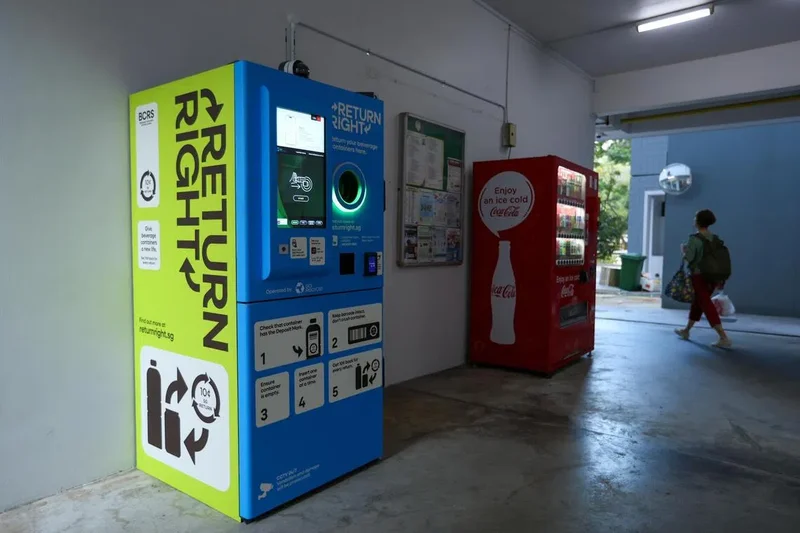
Under the scheme, customers pay an extra 10 cents for each canned or bottled drink, but get the money back when they drop the used containers in a reverse vending machine, also called a Return Right machine. The payments are done digitally, through ez-link card and DBS PayLah! wallets.
The 1 million returns refer to transactions where residents have been successful in getting their 10-cent refund for every bottle and can returned.
“Most transactions and returns at reverse vending machines have been successful. For the handful of issues that occurred at the (machines), the scheme operator BCRS worked closely with the operators to respond quickly to resolve them,” said Janil.
There have been online reports about residents returning their bottles without getting refunds right away due to errors with the machine. They had to send in emails to receive their deposits.
Mariam also asked about how any non-refunded 10 cent deposits are accounted for, and where the money goes. Janil said deposits which have been paid by consumers but are not redeemed may be used by BCRS to cover the costs of implementing the scheme.
He said this is a common model adopted in other countries and regions with similar return schemes. BCRS is a not-for-profit company funded through producer fees paid by drink producers and importers, as well as revenue from the sale of recyclables collected.
BCRS is required to submit an annual report - which includes an account of its finances - to the National Environment Agency (NEA).
The scheme remains in its transition phase until Sept 30, when all bottles and cans from 500ml to 3 litres must be labelled with the 10 cent deposit mark. According to media reports, about 40 per cent of drink containers in 7-Eleven outlets now carry the labels.
The mix of labelled and unlabelled drink containers has caused confusion among residents, but the six-month transition was put in place for drink producers and retailers to clear old stocks.
In early 2026, small drink producers and importers were reported to be struggling with the costs and logistics involved in complying with the scheme. Some of them had said the additional costs and work might force them to push up their drink prices by between 25 cents and 60 cents.
Janil reiterated on Aug 5 that drink prices are a commercial decision influenced by multiple factors, including fuel and logistics costs, consumer demand patterns, and marketing strategies.
Market players who raise the prices of their beverages will face direct competition with other industry players given the wide variety of beverages, he added.
Members of the public who notice improper practices among retailers may alert NEA.
Janil added that all 1,070 reverse vending machines planned for the initial roll-out are operational, allowing over 90 per cent of HDB residents to be within a 5 minute walk of a blue return machine. They are placed in void decks and large supermarkets, for instance.
The goal to increase the number of return points to around 2,000 within the first year of implementation is on track, he said.
All hawker centres will have a reverse vending machine on-site or nearby. Many coffeeshops are also located within HDB estates and would have convenient access to machines, he pointed out.
West Coast-Jurong West GRC MP Hamid Razak asked how eateries farther from the machines could return bottles more efficiently without passing on the cost to their consumers.
Janil said several thousand eateries and restaurants have already signed up for the Return Right F&B scheme, where the food establishments will handle the returns on behalf of customers. They will not charge customers the 10-cent deposit, and customers can leave their used cans in the restaurant.
Within the Beverage Container Return Scheme’s first year, the aim is to have 60 per cent of bottles and cans in the market returned for recycling. Within three years, the goal is to reach an 80 per cent return rate. The scheme covers more than one billion beverage containers used each year.