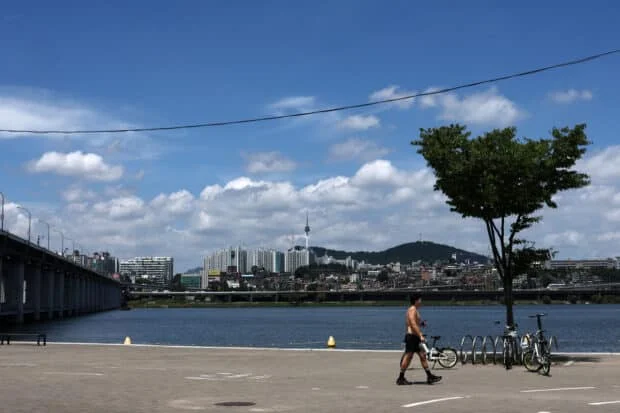
Summer returns in S. Korea, so does debate over shirtless runners
Shirtless male runners may be a common sight in some overseas cities and beach resorts, but the practice remains relatively unfamiliar and controversial in South Korea.
Yet as summer temperatures climb, a growing number of men are taking off their shirts along the Han River and in other public spaces, fueling complaints and debate over public etiquette.
While some view it as a matter of personal freedom, local governments continue to receive complaints from residents who say shirtless running can make public spaces uncomfortable, particularly for families with children.
Article continues after this advertisement
The controversy can intensify when runners have visible tattoos, with some residents saying the combination causes greater discomfort in shared public spaces. Others, however, argue that people should be free to choose how they dress while exercising as long as they do not violate the law.
Regarding shirtless running along the Han River, a Seoul Metropolitan Government official said the activity itself is not subject to legal penalties or fines. The city is nevertheless considering strengthening public guidance in response to complaints.
The debate over men going shirtless in public has persisted in Korea for years.
In 2016, the Constitutional Court ruled that the “obscene exposure” provision of the Minor Offenses Act was unconstitutional because it was overly vague. The case was brought by a man who had been fined 50,000 won ($35) for sunbathing shirtless in a park.
Article continues after this advertisement
The law was later revised to clarify that the offense applies only to those who expose their genitals, buttocks or other intimate body parts in public.
Article continues after this advertisement
Some public facilities also restricted shirtless activities during the COVID-19 pandemic, citing hygiene concerns and the possible spread of bodily fluids. Such restrictions have since largely faded as public spaces returned to normal operations.
Still, the debate has persisted.
Last November, a foreign jogger who ran shirtless near Gwanghwamun drew criticism online, with some arguing that visitors to cultural heritage sites should be more mindful of local norms.
“Of course, people can run, but they should follow basic etiquette in public spaces,” Sungshin Women’s University professor Seo Kyoung-duk said at the time. /dl