Illegal Gold in Colombia Now Rivals Coffee at US$3.5 Billion
Economy: Bogotá
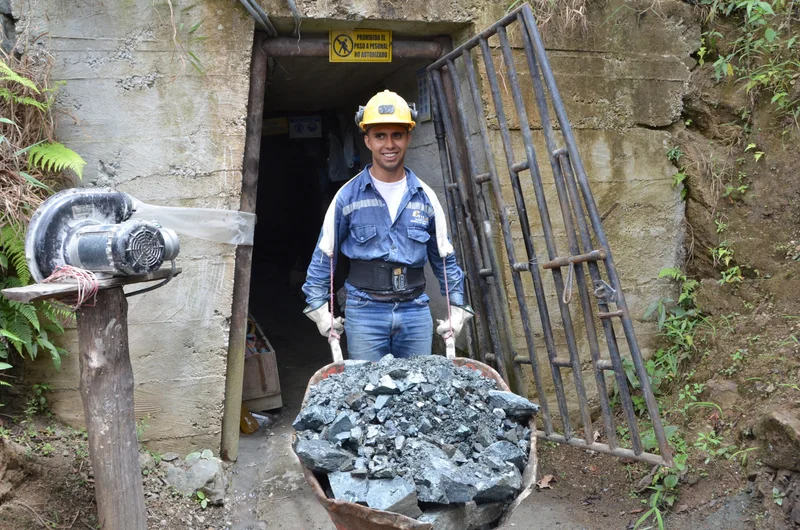
Illegal gold has become one of Colombia’s most lucrative criminal economies, moving an estimated US$3.5 billion a year — a haul that a new Universidad EAFIT study says now rivals the country’s coffee exports.
A Criminal Economy the Size of Coffee
A study by Valor Público, the research center at Medellín’s Universidad EAFIT, estimates that illegal gold in Colombia moves about US$3.5 billion a year, generates roughly US$3 billion in added value and now accounts for about 0.8% of gross domestic product.
That scale, the researchers say, is comparable to Colombia’s coffee exports and equal to roughly a third of the cocaine economy. The weight of illegal gold in GDP has nearly doubled over the past decade, from about 0.4% in 2014 to 0.8% in 2023.
Colombia keeps no official estimate of the activity, so the team built its figure from public data, combining mining-production records, foreign-trade statistics and satellite imagery to size the illegal metal’s economic footprint.
Most ‘Legal’ Gold Exports Trace Back to Illegal Mines
One of the study’s central findings is that about 72% of Colombia’s legally exported gold actually corresponds to illegally mined metal that acquires legal documentation somewhere along the supply chain. Only about 28% has a fully verifiable origin.
In 2023 Colombia formally exported roughly US$3.4 billion in gold. On top of that, the researchers estimate an additional US$600 million to US$1.6 billion left the country through smuggling.
The laundering typically happens, the study says, when traders, processing plants and smelters fold gold of uncertain origin into the formal chain, turning it into an exportable product with legal paperwork.
Where the Mining Happens
The estimate draws on the EVOA program run by the UN Office on Drugs and Crime (UNODC) and Colombia’s mines ministry, which tracks alluvial gold mining by satellite. In 2023 it identified 105,060 hectares under alluvial gold extraction.
Of that area, 76% was unlicensed or illegal, while only about 20% held environmental and technical permits. The main clusters sit in the Bajo Cauca and northeast of Antioquia, the lowlands of the Pacific coast in Chocó, and southern Bolívar.
Scaling productivity from legal mines, researchers estimate illegal operations produced around 40 tonnes of alluvial gold; adding underground extraction and smuggled metal, total illegal gold traded in 2023 reached about 55 tonnes.
Why Gold Is Different From Cocaine
The study highlights a key contrast with the drug trade: where the money ends up. Cocaine earns much of its value during international transport and distribution, so a large share of the profit is generated abroad.
Gold, by contrast, sells at the international price the moment it leaves the country, so almost all of the economic value stays in Colombia and benefits those who control extraction and illegal trade. The Organization of American States has identified gold as the top financing source for several armed groups, above drug trafficking.
The researchers note that although illegal gold represents about 0.8% of GDP against an estimated 2.5% for cocaine, the cash reaching criminal groups may be far closer than those headline shares suggest.
Buriticá, Smuggling and the Role of Panama
The study devotes a section to Buriticá, in Antioquia, where it says the Clan del Golfo controls roughly 60% of the illegal tunnels operating within the concession of Chinese miner Zijin. In 2023, illegal miners there are estimated to have extracted about three tonnes of gold, worth around US$200 million.
The criminal organization is thought to take about 10% of that output as payment for allowing access to tunnels under its control. Beyond Buriticá, the report identifies Panama as a main route for smuggled Colombian gold, sometimes disguised as jewelry to evade controls.
Record gold prices, which have pushed toward US$5,000 an ounce, have made the business more profitable and helped drive its expansion, with new mining fronts appearing especially after 2019.
What Colombia Could Do About It
The researchers argue that fighting illegal mining only at extraction sites is insufficient, because those operations can relocate quickly. Instead, they say the state should focus on traders, processing plants and smelters, the points where illegal gold takes on a legal appearance before export.
Strengthening traceability at those chokepoints, they contend, would curb the laundering of illegal metal and squeeze one of the main financing streams for armed groups, particularly while international prices remain high.
The findings land amid a broader surge in Colombian gold exports, which official figures show jumped sharply in early 2026, intensifying scrutiny of how much of that flow is genuinely legal.
Frequently Asked Questions
How much money does illegal gold move in Colombia?
A Universidad EAFIT study estimates illegal gold moves about US$3.5 billion a year and generates roughly US$3 billion in added value, equal to about 0.8% of GDP. Researchers say that scale is comparable to Colombia’s coffee exports.
How does illegal gold become a legal export?
The study says about 72% of Colombia’s legally exported gold is actually illegally mined metal. It gains legal paperwork when traders, processing plants and smelters mix gold of uncertain origin into the formal supply chain before it is shipped abroad.
How does illegal gold compare with cocaine in Colombia?
The study puts illegal gold at about 0.8% of GDP versus an estimated 2.5% for cocaine, or roughly a third of the cocaine economy. Crucially, almost all gold revenue stays in Colombia, and the OAS ranks gold as the top financing source for several armed groups.
Sources: El Colombiano (Universidad EAFIT / Valor Público study); Infobae Colombia.
This article was produced by The Rio Times’ automated newsroom system. How we use AI · Report an error