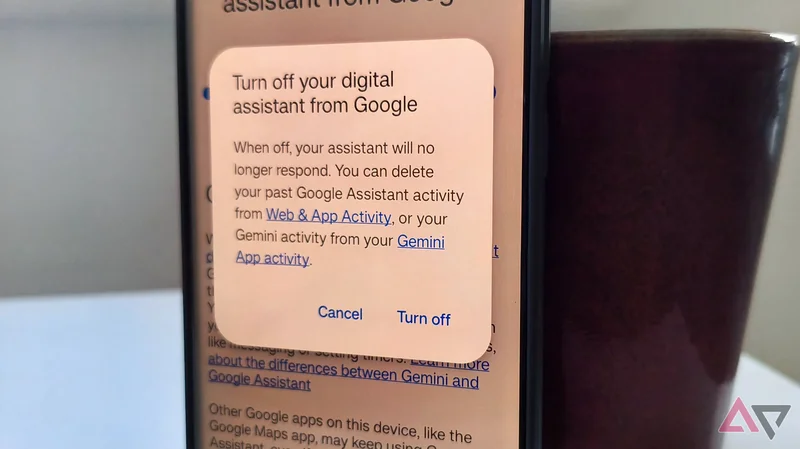
After initially announcing Google Assistant’s demise before the end of 2025, Google pushed the deadline to 2026 at the last moment. Back then, the company was vague about exactly when it would phase out Assistant this year. That countdown has officially begun, with Google emailing users to inform them that Google Assistant will start shutting down on September 4, 2026.
In its email to users (via Reddit), Google says that it is transitioning the mobile experience from Google Assistant to Gemini. It will cut off access to Assistant starting on September 4, with the process taking a few weeks to complete.
The shutdown will initially affect Android phones and Wear OS watches. On Assistant-compatible earbuds and headphones, Gemini will replace Assistant after the transition.
Besides phones and watches, the shutdown will also affect Assistant access on Android Auto. However, Google Assistant will continue to be available on cars with Google built-in even after the September 4 deadline. Smart displays, speakers, and other Assistant-compatible devices will also not be affected by this change.
Once the shutdown is complete, invoking the assistant on your Android phone by saying “Hey Google” or long-pressing the power button will trigger Gemini.
Google's delay ultimately paid off
When Google delayed Assistant's demise late last year, it mentioned that it would complete the transition to Gemini by March 2026. That timeline ultimately slipped by six months. That's not a bad thing, though, as Gemini has received major improvements throughout the year. It's now a much better Assistant replacement than it was a few months ago. And things will only get better as Google continues to improve Gemini.
Chances are, you have already switched to Gemini, so this transition won’t have much impact when Google flips the switch. If, for some reason, you are still using Assistant, you have little choice but to make the switch within the next 30 days.
While Gemini was not as good as Assistant at first, it now surpasses its predecessor in almost every way. It still has a few rough edges, but its superior natural language understanding and conversational abilities make it a far more capable assistant for everyday tasks.