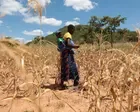
About 50 million people are likely to be pushed into acute hunger before the end of next year by the rapidly developing El Niño weather system, according to forecasting.
This is in addition to the hundreds of millions of people already facing dangerous levels of hunger, owing to years of drought in parts of Africa and pressure on food prices from the war in Iran.
Even if the forecast El Niño is less strong than some models predict, it will tip many countries over the edge, adding more than a fifth to the 225 million people in 45 countries currently in acute food insecurity, the UN’s World Food Programme (WFP) warned on Wednesday.
Central and South America, the Caribbean and southern Africa are likely to be worst affected, according to the analysis. In south and south-east Asia there is likely to be less rainfall than usual, which would cause serious problems for agriculture and farmers.
This year’s El Niño – a weather system that develops every few years in the Pacific Ocean and brings changes to rainfall patterns around the world – is shaping up to be the strongest in at least 70 years. Some are calling it a “super El Niño”, though this term is not officially recognised.
What is certain is that its impacts and strength are being strongly affected by the climate crisis. Earlier this year, experts said a strong El Niño could work in tandem with global heating to deliver the hottest year on record either this year or, more likely, in 2027.
Private sector forecasters have already warned of the impact of the gathering El Niño on global food prices, but the report published by the WFP is the first to look closely at global hunger. The WFP said it was hoping to reduce the effects of the extreme weather through early warning systems and “anticipatory” relief efforts, for which at least $80m (£60m) is budgeted.
The consequences will still be far-reaching, as farmers may take more than one season to exhaust their food supplies. In southern Africa, for instance, the main growing season stretches from October this year to March 2027, but it will be about nine months later, during the lean season following the harvest, that the worst impacts will bite.
“The biggest food security impact, in southern Africa, will be during the 2027 to 2028 lean season,” said Richard Choularton, the WFP’s director of the climate and resilience service.
Farmers should be somewhat cushioned by the lingering benefits of last year’s harvest, which was an unusually good one. “At the end of 2025, food prices were in favourable ranges, though there has been upward pressure from the war in the Middle East,” said Jean-Martin Bauer, the WFP’s director of food security.
During the 2015-16 El Niño, about 60 million to 100 million people were affected by acute food insecurity, the term WFP uses to denote hunger that falls below the level of famine. In those years, the WFP was not yet rolling out its updated anticipatory actions, so its experts hope this year’s extreme weather will have a lower impact even if the El Niño is more severe.
However, Choularton said efforts had been hampered by a lack of data, as some collection efforts had been cut for lack of funding.
The WFP’s data covers the 45 countries it works in where baseline estimates for food insecurity are available. There could be additional impacts outside these hard-hit areas.
Food prices could come under pressure across the world, as well as in the 45 countries examined, said Bauer. “This will also depend on the choices that exporting countries make. It’s very important to avoid a situation where large countries stop food exports,” he said. “At the regional level, there could certainly be high prices and [problems with] food access.”
In the UK and Europe, farmers have been warning of the impact of extreme heat and lack of rainfall on their harvests, with retailers braced for higher prices.