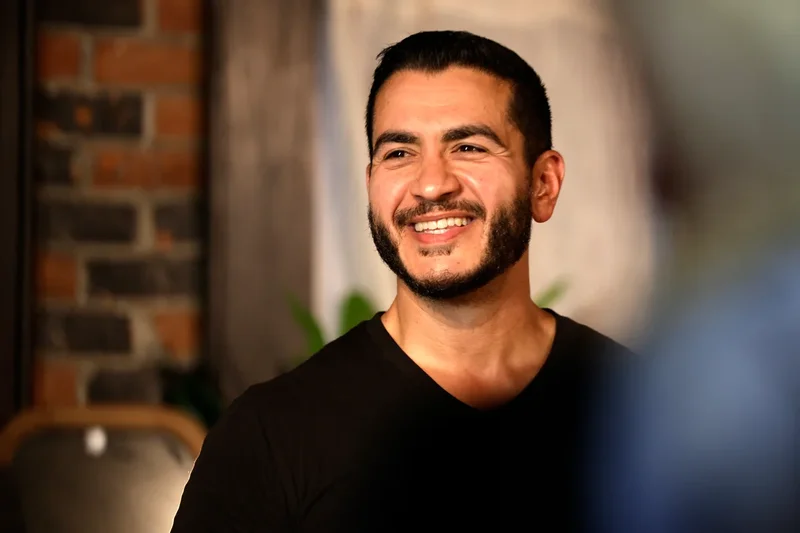
Abdul El-Sayed won the Democratic primary in Michigan on Tuesday, setting up a pitched battle to hold a Democratic Senate seat in November.
El-Sayed was the clear frontrunner coming into Tuesday and his victory over Congresswoman Haley Stevens did not come as a surprise to many.
But it was a shock for the Democratic establishment and for AIPAC, D.C.’s top Israel lobby, which spent tens of millions of dollars supporting her campaign both in fear of what it would mean for the party's electoral chances to nominate a progressive for the seat and to block a clear opponent of Israel from taking the nomination.
He ran as the clear progressive choice in a three-way race that narrowed in July with the exit of state senator Mallory McMorrow, who was once seen as a middle candidate that could reach out to both progressives and centrists. McMorrow gained initial steam but ultimately collapsed after criticizing El-Sayed for appearing on a Twitch stream with Hasan Piker, a popular progressive streamer whose comments about Israel have been criticized as anti-Semitic by some.
El-Sayed locked up support from the party’s progressive wing in Congress, including from Sens. Bernie Sanders, Elizabeth Warren, and Rep. Alexandria Ocasio-Cortez. As a result, his win will be a major rallying cry for the movement, which scored a number of commanding victories in House primaries against Democratic incumbents this cycle and was eager to take on a bigger prize in the form of a statewide office in a swing state.
“Shockwaves are being felt across the political world,” said Adam Green, founder of the Progressive Change Campaign Committee.
“The old guard Democratic establishment, with nearly $70 million from AIPAC and corporate interests, tried to buy this election. But Michigan voters said our votes aren't for sale and we want change. AIPAC went all in and lost,” said Green on Tuesday evening. “Abdul’s primary victory sends a signal to every other Democratic politician – if you fight powerful interests, you can win. Ironically, the dark money attacks on Abdul made his ‘money out of politics’ mantra even more clear for voters – bolstering his outsider credibility going into the general election.”
Stevens and El-Sayed fought a campaign that turned intensely bitter over the last month. Supporters of both candidates attacked each other for language and social media attacks that Stevens supporters like Rep. Hillary Scholten (D-Mich.) called sexist, and language regarding both Piker and El-Sayed himself that many viewed as Islamophobic.
Concerns about electability also hovered closely over the race. El-Sayed’s ties to the progressive wing and support for progressive stances remain, rightly or wrongly, viewed by establishment-lane Democrats as a hindrance as he faces Mike Rogers for the seat in the fall. Sen. Gary Peters, the moderate incumbent who chose not to run for re-election this year and put the seat into play, endorsed Stevens in the waning weeks of the race, as did Michigan Gov. Gretchen Whitmer — making the rejection of Stevens by voters tonight all the more notable.
Part of the reason for his victory was that progressives were able to fire those arguments right back at their centrist opponents. Stevens’ support from AIPAC, which was at times providing the majority of her campaign’s overall financial support and the sheer scale of the out-of-state and corporate PAC money backing her bid led many to question how strong of a candidate she could be if she was still losing to El-Sayed despite massively outspending him. Some of those same progressives questioned why AIPAC, which famously supports both Republicans and Democrats, including MAGA-aligned conservatives, would continue spending on her behalf against Rogers, who is also pro-Israel like Stevens.
El-Sayed and Rogers will face off for a seat that is central to Democrats’ pathway to winning back the Senate this year. The party needs to pick up four seats to win a majority, and holding the Michigan seat is key to that calculus. Aside from holding the line in the Great Lakes State, the party is eyeing pickup opportunities in Texas, Alaska, Ohio, North Carolina and Maine.