The world's development system is undergoing unprecedented turmoil, with foreign aid cuts, climate shocks, and geopolitical turmoil all leaving aid groups struggling to keep up. But one climate leader believes that the current moment could in fact be the beginning of something much better.
Santiago Gowland, CEO of sustainability certifier the Rainforest Alliance, believes that a growing understanding of the economic value of climate resilient supply chains - with ‘climate’ no longer a branding exercise - could herald a new era of transformational global change.
“Right now, the whole NGO sector is changing, and the whole corporate sustainability agenda is changing too,” he tells The Independent. “We could be on the brink of a transformational moment.”
Many developing countries are reeling from the impacts of rich countries slashing foreign aid budgets. The closure of the United States Agency for International Development (USAID) drove down total aid from rich countries by 23 per cent in 2025, and the UK set to slash aid to most of its African partners by over 80 per cent in the next few years.
At the same time, the escalating climate crisis and coming super El Niño - as well as the knock-on effects of the closure of Strait of Hormuz and an intensifying global debt crisis - are all pushing more and more people into crisis around the world.
Led by Donald Trump in the US, a rightwing political backlash against the climate agenda is also growing, while everyone from multinational corporations to UN agencies are talking much less about climate change and its impacts than they were a few years ago.
Despite all of this, Gowland remains optimistic that things could be moving in the right direction.
The story of the global sustainability agenda, he suggests, began initially with a focus on climate impacts and emissions reporting, before an era where the “value” of sustainability - for example in branding or marketing efforts - became the focus.
Now, even if the brand value of “climate” is perceived to have declined in some quarters, we have entered a new era of “system transformation”, Gowland believes. In this latest phase, it is increasingly being understood that new kinds of partnerships and investment-led solutions will be able to deliver much bigger gains in sustainability and development, while also generating greater profits for consumer goods companies in the Global North.
“What the development sector needs to do is move on from a mindset of incremental improvement to a genuine shift of the entire system,” he explains. “When I am meeting with CEOs this is the conversation that I am having: that we must commit as an industry to change, and we will boost climate adaptation, development outcomes, and corporate competitiveness.”
Founded in 1987 and now present in more than 70 countries, much of Rainforest Alliance’s own focus for this kind of “system change” is on small-scale farmers: a critical sector that empoys more than 60 per cent of people in Sub-Saharan Africa, with the crops that they grow continuing to be the most valuable export for many African countries.
Ubiquitous on coffee, tea, tropical fruit and chocolate products sold in UK supermarkets, the green frog seal of the Rainforest Alliance indicates that farmers who produce certain agricultural products have adopted a set of core environmental and social standards covering everything from deforestation and pesticide use to wages and working conditions.
The Rainforest Alliance’s theory of change is that increased demand for certified products will benefit growers by attracting higher prices, while more nature-friendly practices can increase agricultural output and help farms better adapt to the climate crisis.
“Farmers stop deforesting, while also gaining productivity. This benefits their returns, and also helps the environment, to the point where farming is no longer extractive, but is net positive for the environment,” explains Gowland. “This is not hypothetical: it exists in our projects around the world. Now we just need to scale.”
That theory of change also reflects how Gowland – who originally hails from Argentina – believes development efforts should, where possible, move on from aid- or grant-dependent models and instead harness market dynamics to help lift as many people as possible out of poverty.
“It is very difficult to respond at the speed and scale the world needs today with models that add price premiums or try to change economic conditions in a way that goes beyond responding to market supply and demand,” he suggests.
“As a representative of developing countries who has worked in corporate sustainability, I kind of hated some other colonialist approaches to sustainability that claim to put people first, but often only patronises them,” he adds. “People are smart: they don’t need you to tell them what to do.”
A growing sustainability movement
Rainforest Alliance’s annual report, published this summer, shows an organisation with a rapidly expanding footprint around the world, with some 390 million consumers buying Rainforest Alliance-certified products last year, and with more than 10 million farmers and farmworkers supported by the charity.
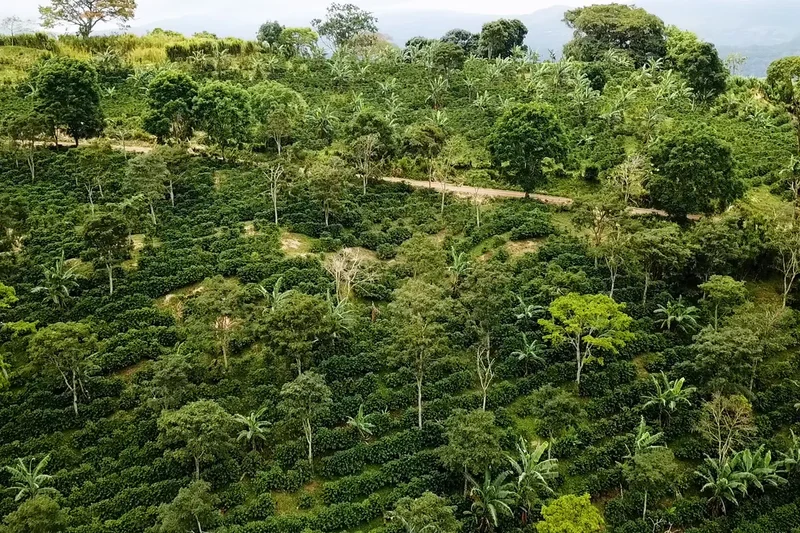
The charity is also expanding its offering, publishing a new “regenerative agriculture” standard last year, which certifies an even greater standard of soil health, biodiversity protection, and nature-compatibility on a farm. La Cumplida, a 2,200-hectare coffee farm in Nicaragua's northern highlands, became the first farm certified with the standard, with farmers reporting results that include returning bees, spiders, and bird species that are naturally deterring pests, slowing soil erosion, and stablising microclimates.
“As NGOs, we have to operate as efficiently as possible, with all management systems, governance processes, and business models tuned to be as effective as possible,” Gowland says of his management philosophy. “We must be more efficient than [asset manager] BlackRock even, because our mission deserves nothing less.”
Crucial to Rainforest Alliance’s model, as well as Gowland’s broader theory of “system transformation”, is that investors must increasingly understand that models like that of the Rainforest Alliance are not simply charitable, but are in fact vital to boost resilience as climate change and other shocks increasingly threaten agriculture around the world.
“What we are doing is a win-win for everyone: Nature is restored, farmers benefit from higher production, governments benefit from stronger export sectors and more resilient agricultural economies, and investors in rich countries have more stable returns due to the climate resilience of their supply chains,” he says.
Some have criticised the Rainforest Alliance for adding costs and compliance requirements to farmers’ plates without doing enough to address root causes of problems like price volatility or land tenure insecurity, and also for not ensuring farmers get a fair minimum price for their products. But Gowland is adamant that their approach is the best way to help the most people possible.
“Our research, and other people’s research, shows that the single biggest booster of income for farmers is to increase farm productivity. It’s incredible what being more nature-friendly and climate-resilient can achieve,” he says.
While Gowland believes supply and demand dynamics for products like coffee and tea are crucial to lifting millions out of poverty, he does not believe that market forces can put the world on a more sustainable pathway on their own. Foreign aid from wealthy governments is still vital to supporting healthcare systems and lifting people out of poverty, he says - as he shares how the Rainforest Alliance witnessed the impacts of the “grotesque” aid cuts first hand.
“We set up an immediate resilient fund for communities hit by aid cuts,” he explains. “We had to step into climate resilience projects in Guatemala, Peru, Mexico, Colombia and Ghana that were originally supported with foreign aid.”
Gowland continues: “Moving from aid donor to investor is logical in many contexts, but foreign aid remains fundamental to unlock economic value and to get projects off the ground before they scale. Aid was also moving in the right, efficient direction before it was cut.”
**UK government ‘missing in action’ **
The other crucial way that Gowland believes rich countries can help the development agenda is through implementing supply chain laws that would require big companies to have better oversight of human rights and the environment among their suppliers.
The Rainforest Alliance’s advocacy team has, as a result, played an active role in shaping laws to that end, including the German Supply Chain Act, the EU Deforestation Regulation, and the EU Green Claims Directive.
Campaigners have been pushing for the UK to produce its own supply chain law, after a review into responsible business conduct policy was announced last year as part of the UK’s Trade Strategy. But it is now five months since the government’s response to its sustainable business review was expected to be announced - and during that period of delay, the War in Iran has hugely pushed up costs for farmers, while the super El Niño promises to wreak further havoc on crops and livelihoods.
“Having promised they would share their views on it in March, the Government currently seems to be missing in action when it comes to pushing through this vital piece of legislation,” Sophia Ostler, senior policy manager at the Fairtrade Foundation, previously told ____ The Independent. Fairtrade has subsequently called on
__new PM Andy Burnham__to set out a clear path to a new Human Rights and Environmental Due Diligence law.
Owen Gibbons, senior global advocacy manager at the Rainforest Alliance, agrees that the UK government should be doing more to ensure supply chains are not exploitative, but instead help meet development efforts.
“We urge the UK Government to introduce robust human rights and environmental due diligence legislation, so that responsible business practices become the norm rather than the exception,” he tells The Independent.
“With the Government still to respond to its review of responsible business conduct, every further delay means more forests lost, more pressure on farming communities, and an uneven playing field for companies that are already investing in responsible sourcing.”
In response to the concerns raised here, a UK Department for Business and Trade said: “We launched a review of the UK's approach to responsible business conduct policy as part of the Trade Strategy. The review has been completed, and we are considering its findings.”
This article has been produced as part of The Independent’s Rethinking Global Aid project